
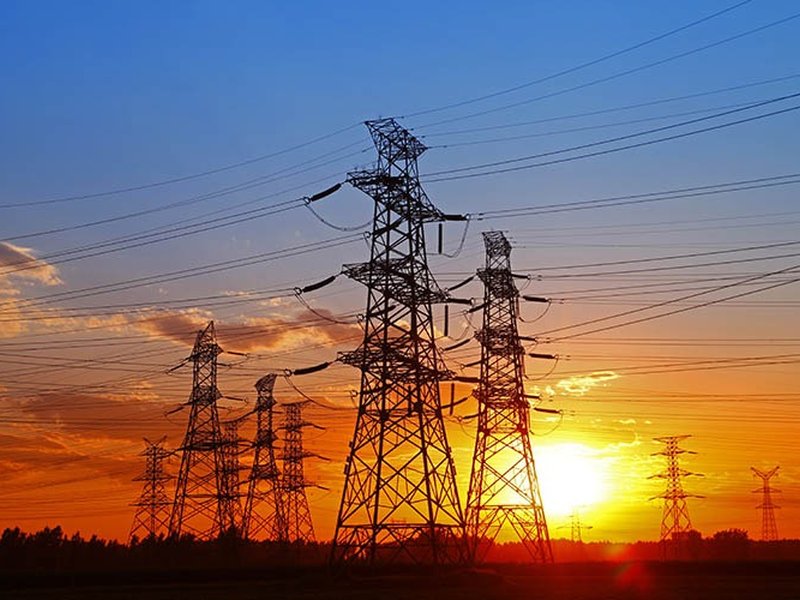
New Delhi, Dec 8 (IANS) India has achieved 50 per cent of its electricity capacity from non-fossil fuels, as well as boosted its carbon sink, the government informed the Parliament on Monday.
In a written reply in the Lok Sabha, Union Minister of State for Environment, Forest, and Climate Change (MoEFCC) Kirti Vardhan Singh stated the country’s achievement in reducing carbon emissions.
“India has achieved its Nationally Determined Contribution (NDC) goal of the share of non-fossil fuel-based power generation capacity of more than 50 per cent five years ahead of the deadline (2030),” Singh said.
“India has created an additional carbon sink of 2.29 billion tonnes CO2 equivalent from forest and tree cover,” he added.
Citing the Fourth Biennial Update Report (BUR-4) submitted to the United Nations Framework Convention on Climate Change (UNFCCC) in 2024, Singh noted that the net national greenhouse gas (GHG) emissions of India in 2020 were 2,437 million tonnes CO2 equivalent -- 7.93 per cent lower than the emissions in the year 2019.
The decrease is mainly attributed to sectors of energy, where emissions decreased by 5.7 per cent, and Industrial Process and Product use, where emissions decreased by 9.5 per cent from 2019 to 2020.
“India submitted its Nationally Determined Contribution (NDC) under the Paris Agreement in 2015 and updated it in August 2022, setting enhanced targets i.e, reducing emissions intensity of GDP by 45 per cent by 2030 from 2005 levels, achieving 50 per cent cumulative electric power installed capacity from non-fossil fuel sources by 2030, and creating an additional carbon sink of 2.5 to 3 billion tonnes of CO2 equivalent through increased forest and tree cover,” the Minister said.
As per BUR-4, between 2005 and 2020, India’s emission intensity of Gross Domestic Product (GDP) reduced by 36 per cent, he added.
India’s Long-Term Low-Carbon Development Strategy (LT-LEDS), submitted to the UNFCCC in November 2022, provides a framework with seven key strategic transitions in electricity, transport, urban, industry, carbon dioxide removal technologies, forest and financial resources for achieving net-zero emissions by 2070 based on the principles of Common but Differentiated Responsibilities and Respective Capabilities (CBDR-RC), equity, and climate justice.
--IANS
rvt/