
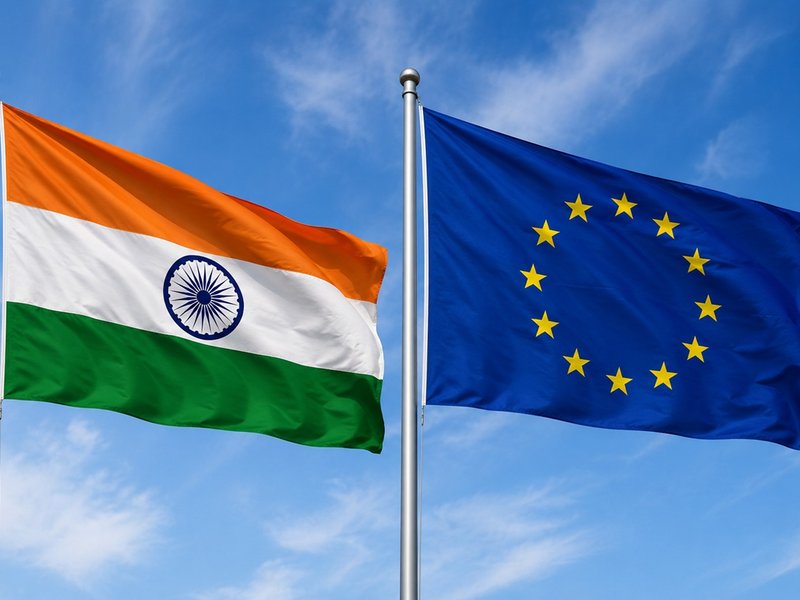
New Delhi, May 14 (IANS) Senior Greek and Israeli diplomats welcomed plans for the India‑Middle East‑Europe Economic Corridor (IMEC), saying the proposed trade route could unlock huge economic opportunities and help stabilise a region long ridden with conflict, a report has said.
Greek Deputy Foreign Minister Alexandra Papadopoulou described IMEC as “the real long‑term certificate for stability in the region", adding that the project "would change the whole region from India all the way to Europe", according to a report in eKathimerini.com.
Israel’s Deputy Foreign Minister Sharren Haskel said Israel sees huge room for collaboration in security and economic links, specifically in the infrastructure and energy sectors.
"I think our relationship goes back thousands of years. These are two ancient civilisations that have shared so much with the world as well,” said Haskel.
Papadopoulou said the project has approval of the majority of Greek political leaders.
“We can serve as a good example of close cooperation between two countries that share similar goals and similar objectives about stability, peace, and prosperity in the entire region,” the diplomat said.
The India-Middle East-Europe Economic Corridor (IMEC) is designed to offer India’s international partners a “values-based” alternative to China’s Belt and Road Initiative (BRI), thereby reducing Beijing’s leverage over Eurasian trade and energy flows, the article points out.
Over the past decade, Beijing has leveraged large-scale investments in transportation, energy, and telecommunications to establish a strong presence across the Middle East, South Asia, and Europe, a recent report said.
This has created a structural interdependence in which economic relationships are inextricably linked to Chinese strategic interests, it noted.
From a strategic perspective, IMEC represents an effort to break up this monopoly. It serves as a normative counterweight to China’s model of state-centric control and top-down financing, the report added.
—IANS
aar/ag