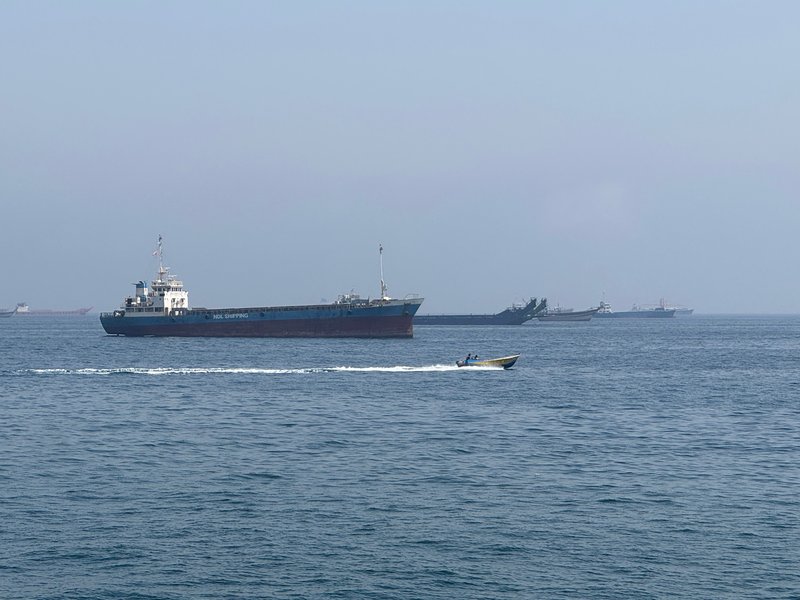

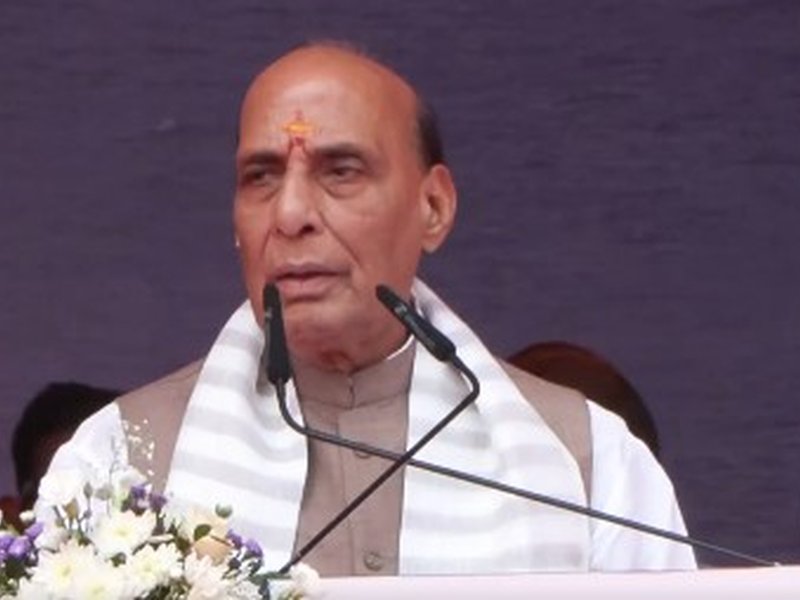
Visakhapatnam, Oct 6 (IANS) Defence Minister Rajnath Singh on Tuesday called for making Indian shipyards globally competitive to provide ships and maritime services to friendly nations and international markets.
“Our goal is not just to become self-reliant. We need to become globally competitive. Self-reliance is an important milestone on our journey; global competitiveness is our next big leap. India must achieve a position where our shipyards can provide ships and maritime services not only for the Indian Navy, but also for friendly nations and international markets,” he said.
Asserting that India has immense potential in shipbuilding, he said converting this potential into capability and capability into global competitiveness is the next challenge. "In this direction, we will need to pay special attention to some key areas such as timely delivery, productivity, indigenous design capability, supply chain resilience, skilled manpower, capacity and cost competitiveness," he said.
The defence minister was speaking at the launch of Fleet Support Ship-1 (FSS-1) at Hindustan Shipyard Limited (HSL) in Andhra Pradesh's Visakhapatnam. He also laid the keel of Fleet Support Ship-5 (FSS-5) and inaugurated the upgraded Slipway-4 and 300-tonne Goliath Crane.
“Launch is a symbol of our achievement, Keel Laying is a symbol of our resolve, and the new Slipway is a symbol of our growing capacity. Today at HSL, along with building ships, we are further strengthening the foundation of India's maritime power for the future,” he said.
He noted that over the past decade, a significant transformation has taken place in India's defence manufacturing ecosystem. “Moving beyond dependence on imported platforms, we are advancing towards designing and manufacturing increasingly sophisticated systems and platforms in India. Today, Indian shipyards are playing a crucial role in the construction of advanced warships and submarines,” he said.
The Defence Minister said the Indian Navy has repeatedly proven its capability in the Indian Ocean region as a first responder and preferred security partner. “Be it humanitarian assistance and disaster relief, anti-piracy operations, evacuation missions, or maritime security, our Navy has demonstrated its readiness and resolve in every situation.”
Stating that India's maritime strength cannot be built by the Navy alone or by shipyards alone, he called for an integrated national maritime ecosystem, saying it is essential. He said the Navy, HSL, DRDO, academia, industry, MSMEs, and startups should work as an integrated team.
He stated that the launch of the Fleet Support Ship is a significant step towards further strengthening the Indian Navy's reach, endurance, and operational effectiveness.
Rajnath Singh said that HSL is the custodian of India's national maritime capability. He noted that for over eight decades, HSL has played a crucial role in meeting the country's maritime and defence requirements.
“Following its placement under the Ministry of Defence, through the efforts of the Ministry and your hard work, HSL's financial position has seen significant improvement. In 2025, HSL attaining the Miniratna Category-I status is a testament to its transformation and the remarkable efforts made in the previous years.”
Stating that the objective should not merely be to strengthen a single shipyard, he emphasised the need to develop a complete shipbuilding ecosystem around the shipyard. “Visakhapatnam should not be viewed merely as an individual shipyard location. We should develop it as a comprehensive Maritime Industrial Hub.”
Rajnath Singh said HSL should increasingly connect with the wider industrial ecosystem of Andhra Pradesh. “The State's MSMEs can become suppliers. Universities can become research and skill development centres. Technology companies can contribute to digital shipbuilding. Startups can develop maritime technologies. And logistics and port infrastructure can support a broader shipbuilding and ship-repair ecosystem,” he added.
--IANS
ms/dpb