
Washington, June 5 (IANS) The Chinese government's efforts to silence critics beyond its borders have come under fresh scrutiny in the US Congress, as lawmakers, state officials and democracy activists described what they called an expanding campaign of intimidation, surveillance and coercion targeting people living in America.
At a hearing of the Congressional-Executive Commission on China (CECC), held on the 37th anniversary of the Tiananmen Square crackdown, lawmakers argued that Beijing's methods have evolved from domestic repression into what they described as a global strategy of "transnational repression".
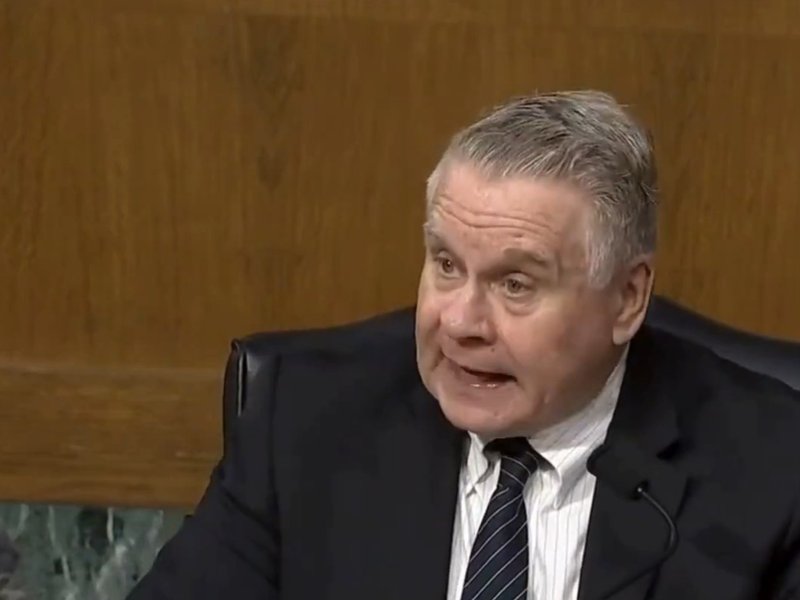
Opening the hearing, Co-Chair Representative Chris Smith said the Chinese Communist Party (CCP) was using a range of tactics, including "detaining family members in China, doxing, the use of spyware, deepfakes, Hong Kong bounties, and illegal police stations right here in the United States."
"Tiananmen cannot be erased," Smith said. "You either stand with the tank man or you stand with the tank. There is no middle ground."
Co-Chair Representative Jim McGovern said China remained "the world's worst perpetrator of transnational repression", citing data from Freedom House showing 319 reported incidents since 2014. He urged Congress to advance the bipartisan Transnational Repression Policy Act, which would establish a statutory definition of the practice and strengthen federal, state and local responses.
Among the most striking testimony came from Arthur Liu, a former Chinese democracy activist who fled China after the 1989 Tiananmen crackdown and later settled in California.
Liu told lawmakers he believed political persecution had ended when he arrived in the United States. That changed in 2021, when the FBI warned him that a Chinese operative was allegedly tracking him and seeking personal information about him and his daughter, Olympic figure skater Alysa Liu, ahead of the 2022 Beijing Winter Olympics.
"The FBI told me to watch out for my surroundings and be careful," Liu testified.
He said agents informed him that a suspected Chinese spy would monitor his movements, place a GPS tracker on his vehicle and attempt to obtain passport information.
"I was terrified for the safety of Alisa when she goes to Beijing to compete for the United States of America," Liu said.
Anna Kwok, board chair of the Hong Kong Democracy Council, described what she called an intensifying campaign against pro-democracy activists living in the United States.
After testifying before Congress in 2023, she said Hong Kong authorities issued a HK$1 million bounty for her arrest. She said she subsequently received threats online and faced intimidation during protests held in San Francisco during Chinese President Xi Jinping's visit to the United States.
"Feeling safe is a privilege," Kwok told lawmakers. "I am among hundreds of thousands of rights defenders in America who live every single day knowing we are being watched and threatened."
She also described the imprisonment of her father in Hong Kong, saying authorities had used family members as leverage against activists abroad.
State officials told the commission that local governments were increasingly taking steps to counter perceived Chinese influence operations.
Eliot Bostar, a Nebraska state senator, outlined a series of laws enacted in his state to address foreign influence, protect critical infrastructure and combat transnational repression.
"The People's Republic of China is a threat to every state and every community in our country," Bostar said.
Stephen Cox, counsel to the Governor of Alaska and a former US attorney, argued that state authorities have a growing role to play because threats increasingly intersect with consumer protection, technology and infrastructure issues.
"Consumers are on the front lines of our geopolitical conflict with China," Cox said.
The hearing came as lawmakers renewed calls for passage of legislation designed to improve coordination among federal, state and local authorities in responding to transnational repression cases.
--IANS
lkj/akl/dpb