

No proof YouTube promoted anti-vaccine content amid Covid-19 pandemic: Study
San Francisco, Sep 16 (IANS) Researchers found no strong evidence that YouTube promoted anti-vaccine sentiment during the Covid-19 pandemic.
New Delhi, Sep 17 (IANS) Although the World Health Organisation (WHO) in May declared that the Covid pandemic is no longer a public health emergency, newer variants continue to emerge and drive infections.
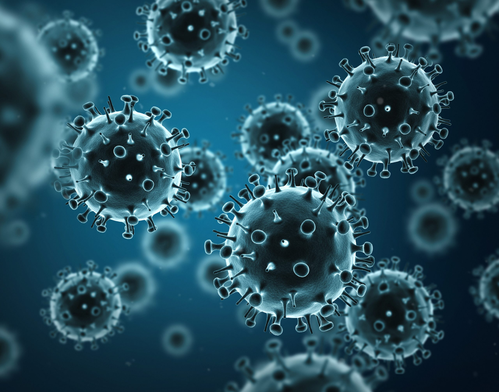
New Delhi, Sep 17 (IANS) New Covid variants XBB.1.5, EG.5 and BA.2.86 have led to a resurgence in cases of Covid-19, particularly in the US, Europe and Asia.
New Delhi, Sep 17 (IANS) Although the intensity and severity of the pandemic has reduced, Covid-19 has not gone away by any stretch of the imagination. For instance, it is currently making several people ill in the UK, Ireland as well as the US, to name a few countries.
New Delhi, Sep 17 (IANS) More than three years after the pandemic, as the northern hemisphere moves towards winter and new variants of Covid continue to rise, talks about the return of masks, maintaining personal hygiene and controlled lockdowns are gaining momentum.
New Delhi, Sep 17 (IANS) Amid reports of cases of the new Omicron sub-variants BA.2.86 (Pirola) and EG. 5.1 (Eris) in several countries, experts here on Friday expressed concern over the new variants and emphasized continuous monitoring in the country.
London, Sep 16 (IANS) A team of scientists in the UK has claimed to have found the reason behind brain cell death which leads to Alzheimer’s, offering hope for a future new line of drugs which could cure the disease.
New York, Sep 16 (IANS) Degeneration of dopaminergic neurons is widely accepted as the first event that leads to Parkinson’s. However, a new study has challenged this common belief.
Chennai, Sept 16 (IANS) Tamil Nadu Health Minister Ma Subramanian on Saturday said that no Nipah virus cases have been detected in the state.
Tokyo, Sep 16 (IANS) A 90-minute nap followed by a 30-minute nap is more effective in putting off drowsiness and fatigue than a single 120-minute nap during the overnight duty, according to a new study.