
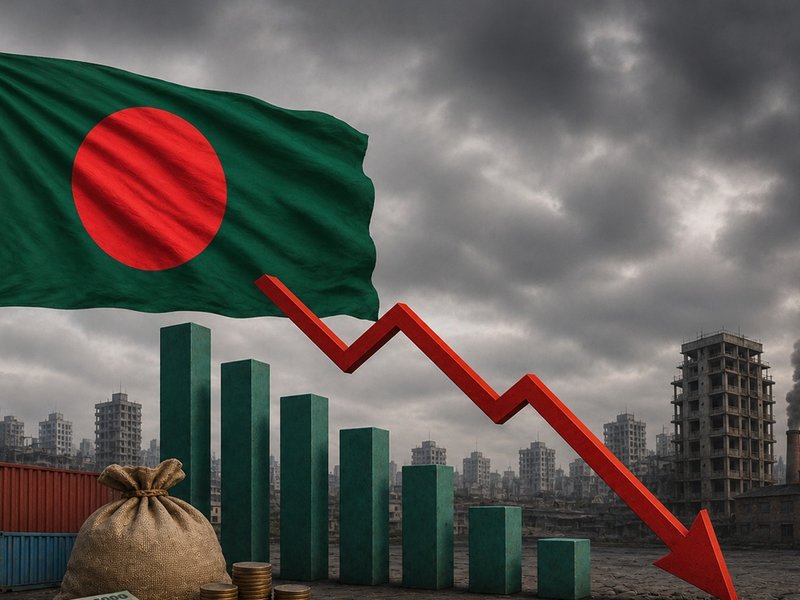
New Delhi, Nov 15 (IANS) Millions of Bangladeshis are facing mounting economic hardship as rising living costs, slowing job creation and growing food insecurity intensify pressure on household finances, raising concerns about a reversal in the country's poverty reduction gains, a report has said.
Workers in the informal sector, including day labourers, agricultural workers, construction workers, rickshaw pullers and small traders, are among the hardest hit as irregular employment and inadequate incomes struggle to keep pace with rising expenses, according to The New Nation report.
Middle-income families are also increasingly finding it difficult to manage household budgets amid higher food prices, housing costs, medical expenses and education fees.
Recent studies and surveys suggest that many families are borrowing money to meet everyday needs, cutting back on essential spending and compromising on nutrition.
Economists warn that households living close to the poverty line remain highly vulnerable to shocks such as illness, unemployment, natural disasters or sudden price increases, as per the report.
According to the World Bank's Bangladesh Poverty and Equity Assessment 2025, the country's national poverty rate fell to 18.7 per cent in 2022 from 37.1 per cent in 2010.
However, the report estimated that nearly 62 million people remained at risk of slipping into poverty following an economic shock.
Concerns have intensified after the World Bank warned in October 2026 that poverty and inequality had increased during fiscal year 2026, with an estimated 2.1 million additional people falling below the poverty line compared to the previous year.
A survey conducted by the Power and Participation Research Centre in 2025 found that nearly 28 per cent of the population lived below an adjusted upper poverty threshold, while more than 9 per cent were below the lower threshold, as per the report.
The survey highlighted severe financial strain among poorer households, with the bottom 10 per cent earning an average monthly income of Tk 8,477 while spending around Tk 12,294.
--IANS
pk