
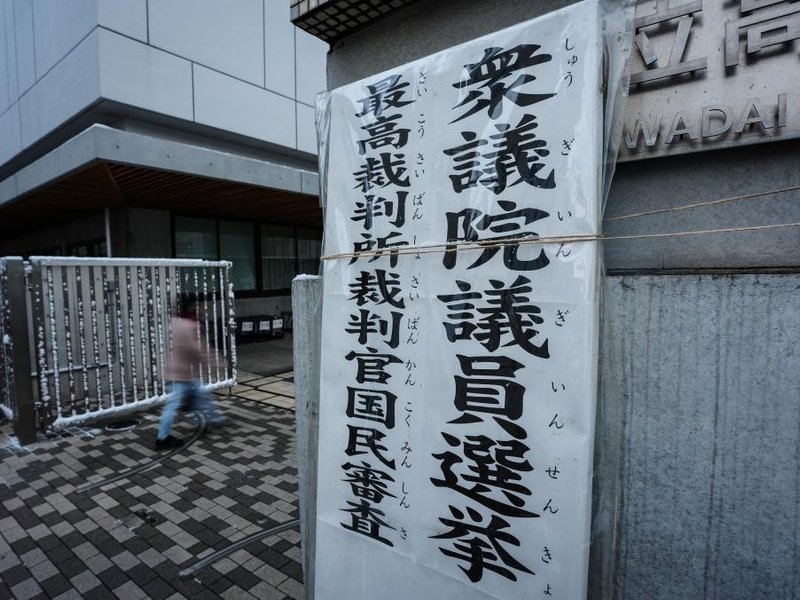
Tokyo, Feb 8 (IANS) Voting in Japan's general election began on Sunday morning, with a total of 1,284 candidates competing for 465 seats in the House of Representatives, the powerful lower chamber of parliament.
The primary focus of the election is whether the ruling coalition of the Liberal Democratic Party (LDP) and the Japan Innovation Party will secure a majority and allow the administration of Prime Minister Sanae Takaichi to continue, or whether the opposition will expand its strength and block that outcome, Xinhua news agency reported.
Polling stations across the country will close at 8 p.m. local time, and ballot counting is expected to last late into the night.
Of the 465 lower house seats, 289 will be elected from single-member districts and 176 through proportional representation in 11 regional blocs.
Recent polls by major Japanese media outlets suggested that the ruling coalition is likely to secure a majority of seats. At the same time, the newly formed opposition Centrist Reform Alliance, formally launched by the Constitutional Democratic Party of Japan and Komeito, a former ally of the LDP, appears to be losing ground compared with their pre-election seat counts, a Kyodo News poll said.
Yet despite these projections, polls also noted that a significant share of voters remain undecided, leaving room for last-minute shifts, and the lingering slush fund scandals of the LDP continue to inject uncertainty into the race.
Takaichi abruptly dissolved the lower house for a snap election on January 23, marking the first dissolution at the start of a regular parliamentary session in 60 years. She has vowed to step down if the coalition loses its majority in the election.
Her decision has been criticized for putting political considerations ahead of parliament's enactment of an initial budget for fiscal 2026 starting in April, despite her pledge to prioritize policy implementation.
It is Japan's first lower house election to be held in February since 1990. Ongoing heavy snowfall along the Sea of Japan coast has raised concerns about transport disruptions and safety risks when voters head to polling stations, which could in turn dampen voter turnout.
--IANS
int/rs