
Washington, March 7 (IANS) A US congressional hearing erupted into sharp questioning after lawmakers this week challenged a federal real estate agreement involving Pakistan’s Defence Ministry and the Roosevelt Hotel in New York, asking why Washington is involved in redevelopment discussions around a foreign-owned property.
The exchange took place during a hearing of the House Transportation and Infrastructure Subcommittee on Economic Development, Public Buildings, and Emergency Management, examining federal real estate management.
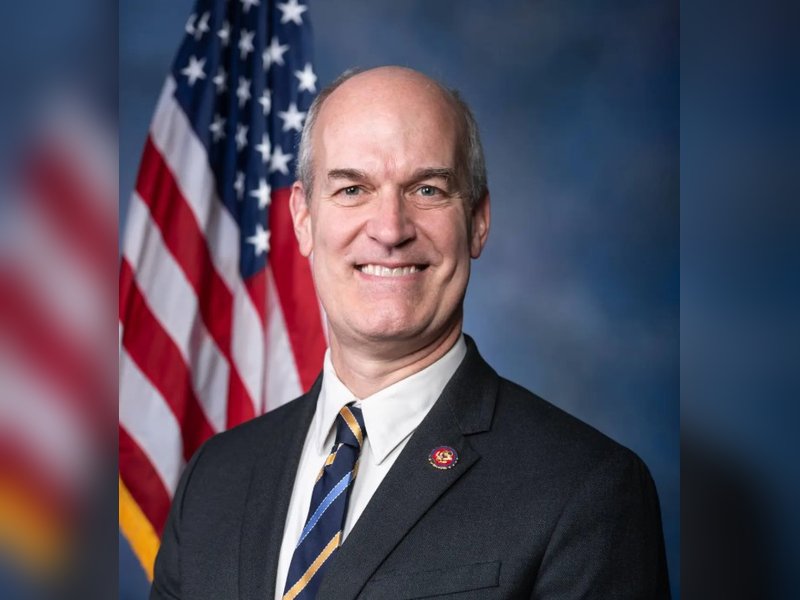
Democratic Congressman Rick Larsen questioned General Services Administration (GSA) Administrator Edward Forst over a memorandum of understanding signed with Pakistan’s Defence Ministry concerning the Roosevelt Hotel, a prominent Midtown Manhattan property owned by Pakistan International Airlines.
“You recently, as well, signed an MOU with the Defense Ministry of Pakistan to renovate the Roosevelt Hotel in New York,” Larsen said. “The Roosevelt Hotel, as far as I know, is owned by the Pakistani International Airlines. It is not a property owned by the federal government.”
Larsen pressed Forst on the legal authority behind the agreement and why a US federal agency tasked with managing government-owned buildings was engaging in discussions involving a foreign-owned commercial property.
“I want to hear about the MOU, why the federal government is involved in the redevelopment of a property that is owned by a foreign government when, in fact, the role of GSA is to manage and dispose of federal government-owned property,” Larsen said. “This doesn't make any sense.”
Forst confirmed signing the agreement but said it carries no binding obligations for the US government.
“Correct, I did,” Forst said when asked if he had signed the MOU.
He told lawmakers that the initiative began after Pakistan approached US officials about potential collaboration on the property.
“The government of Pakistan approached Special Envoy Steve Witkoff with the opportunity to collaborate on that property where they've not had good success thinking it through,” Forst said.
Describing the arrangement as exploratory, he added: “This is really a first stage conversation, begin to work together to see if there's an opportunity that also benefits the US government from a location standpoint.”
Larsen remained skeptical, arguing that the agency already has major responsibilities related to federal real estate and should not expand into projects involving foreign assets.
Forst responded that he would not have signed the agreement without legal review and said the administration would provide the committee with both the MOU and the legal advice supporting it.
Asked what the agreement requires the United States to do, Forst said it commits the parties only to further discussions.
“It obligates us to do nothing, quite frankly,” he said. “Obligates us, in good faith, to work together to see if there is a very good outcome for that particular site.”
Forst also suggested that redevelopment options could extend beyond the building’s previous use as a hotel.
“I would not, personally, get held up with the fact that it had been a hotel,” he said. “It could be anything upon redevelopment.”
The Roosevelt Hotel is a landmark property in Manhattan and a significant overseas asset for Pakistan. It has faced financial challenges in recent years, leading to discussions about redevelopment or alternative uses.
--IANS
lkj/rs