

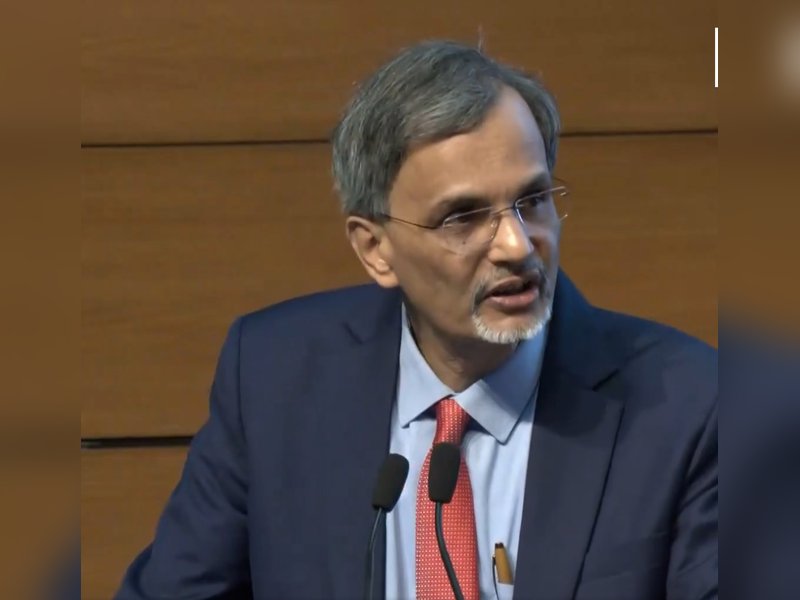
New Delhi, Jan 29 (IANS) A strong manufacturing sector can push India’s medium-term economic growth to 7.5 or 8 per cent, higher than the 7 per cent projected in the Economic Survey, Chief Economic Adviser V. Anantha Nageswaran said on Thursday.
Addressing the media after the tabling of the Economic Survey in the Parliament, the CEA said that a strong manufacturing sector, which pushes up exports, would also reduce the current account deficit and bolster the rupee.
He also said that the sector is not flashing any warning signal at present, as India’s foreign exchange position is robust and allayed fears over the depreciation in the rupee.
Nageswaran said that currency depreciation is not particular to India, as all countries with current account deficits were seeing a weakening of their currencies.
He pointed out that all countries, such as Switzerland, Japan, South Korea, and Singapore, that were not witnessing a weakening in their currencies also have a strong manufacturing base, which was boosting their exports.
Nageswaran said it was imperative for India to boost its manufacturing sector to sustain exports, which would eventually lead to a surplus in the current account instead of a deficit, which, in turn, would result in a stronger rupee.
He highlighted that the government’s emphasis on indigenisation and swadeshi is important to boost manufacturing in the country. However, protection to the industry must be given on the condition that it turns competitive and boosts exports. Protection cannot be extended indefinitely, but should be linked to productivity and exports on the part of industry, he added.
Nageswaran said that India must aim for "strategic resilience", which enables the country to withstand a breakdown in the world economy. At the same time, this strategic resilience should make India an indispensable part of the global supply chain.
He also highlighted that India’s banking sector has become much stronger in recent years, with NPAs at multi-decadal lows and credit to the commercial sector registering a robust 29 per cent year-on-year growth.
He contended that domestic demand continues to underpin India’s economic growth amid global uncertainties. This strength in consumption reflects a supportive macroeconomic environment, characterised by low inflation, stable employment conditions, and rising real purchasing power. Moreover, steady rural consumption, bolstered by strong agricultural performance, and the gradual improvement in urban consumption, aided by the rationalisation of direct and indirect taxes, reaffirm that the momentum in consumption demand is broad-based.
--IANS
sps/vd