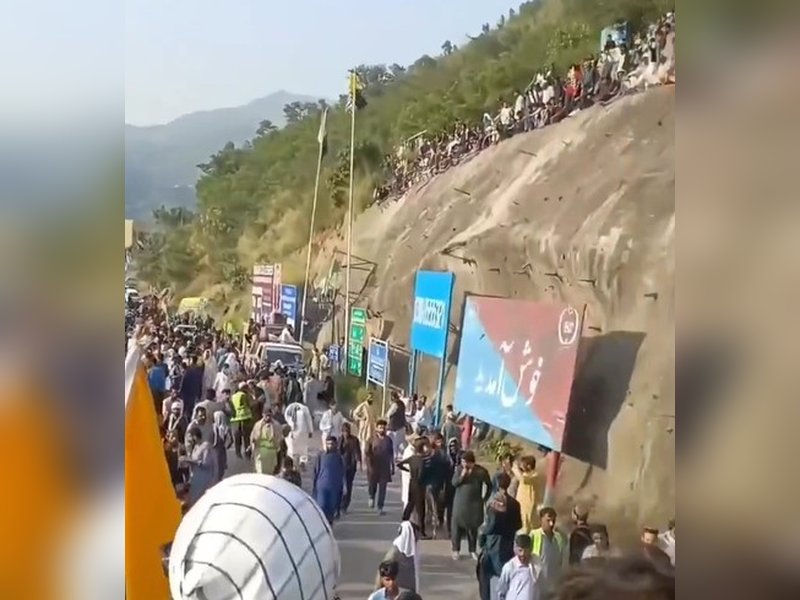

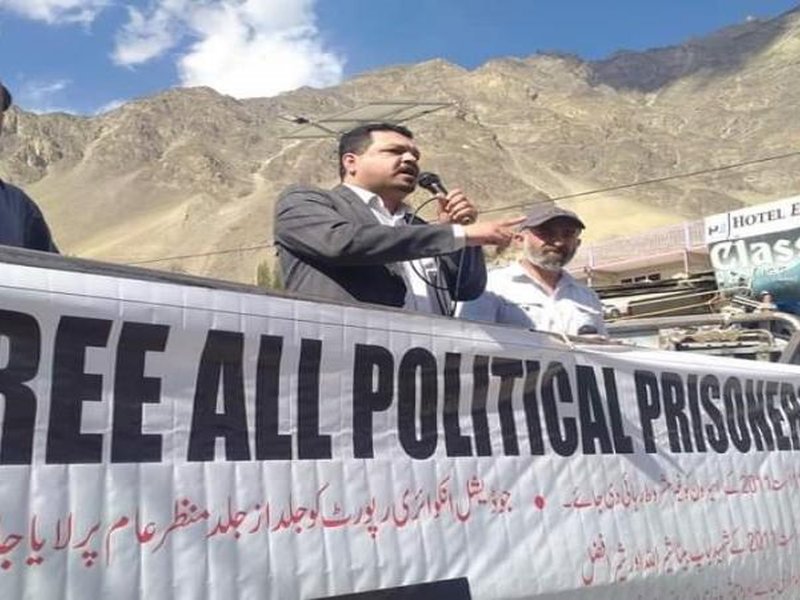
Islamabad, Jan 4 (IANS) The GB Youth Movement staged a protest in the Chinarbagh region of Pakistan-occupied Gilgit-Baltistan (PoGB) against the inclusion of controversial personalities in the so-called caretaker government, local media reported on Sunday.
Political and civil society members also announced protests in Ghanche, Nagar and Shigar districts over the lack of representation in the so-called caretaker cabinet, Pakistan's leading daily, Dawn, reported.
Protesters stated that several controversial people were included in the so-called cabinet and stressed that the inclusion of such figures in the caretaker cabinet was part of an attempt at election rigging in the upcoming general elections, and termed it unacceptable.
The protesters called for representation of educated youth and neutral people in the cabinet.
They announced that a sit-in protest will be held until the decision to appoint the so-called cabinet members is revoked. During the protest, demonstrators blocked River Road in Chinarbagh, and later, police arrested eight protesters, including the chairman of the GB Youth Movement.
Last month, a report stated that upcoming polls in PoGB would be meaningless until the region has its own provisional constitution and the Assembly has authority to legislate over resources.
Nationalists have demanded reinstatement of state subject rule, legislative autonomy, and reunification with India to secure cultural survival, resource control, and democratic self-determination.
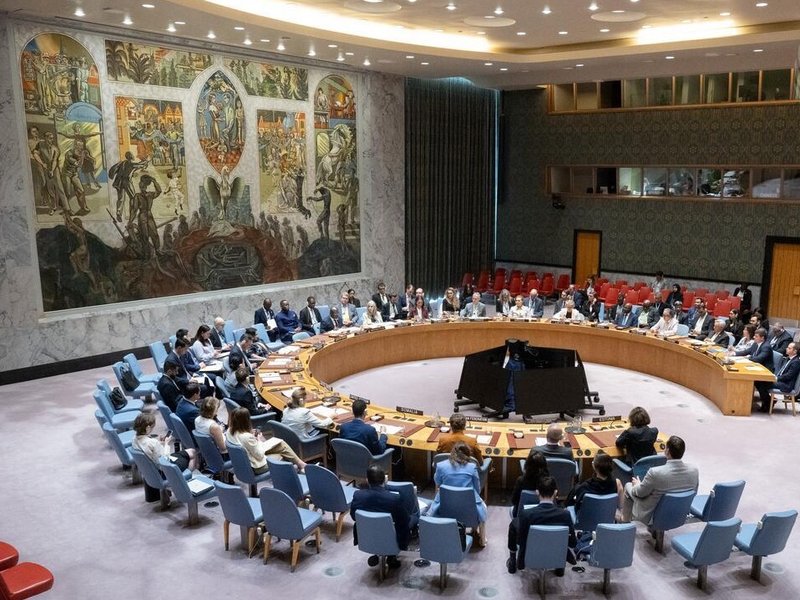
Locals have continued to remind Pakistan of the United Nations Security Council resolution, which requires the removal of all Pakistani nationals from Gilgit-Baltistan to resolve the dispute with India, Institute for Gilgit Baltistan Studies founder Senge Sering, who is based in the US, wrote in a report in the International Centre for Peace Studies.
The Pakistani colonial overlords have ignored these warnings and seized local lands, appointed their own bureaucracy to hold sham elections to elect representatives on behalf of the residents of this area.
The report in the International Centre for Peace Studies stated, "Previously, the nationalists boycotted elections in Gilgit-Baltistan because the local electoral commission requires all candidates to sign a vow of allegiance to Pakistan. In their defence, nationalists contend that since Gilgit-Baltistan is not legally a part of Pakistan and falls beyond its constitutional ambit, forcing local residents to pledge loyalty to a foreign country is not only unethical and unconstitutional but also violative of Islamic principles."
"This time, however, the nationalist coalition has resolved to field candidates in all constituencies. They have decided to involve themselves in the process since such a sham process, in reality, empowers Pakistani puppets with the ability to fill the political vacuum, control funds, and misappropriate true national identity," it said.
"The patrons in the military establishment have traditionally enabled Pakistani political parties such as the Muslim League, Tehrik-i-Insaf, and People's Party to dominate electoral politics in the terrain and form local governments, which function as a springboard for Pakistani Pashtuns, Hindkowal, and Punjabis to spawn illegal settlements in the occupied territory," the report added.
After facing deprivation and oppression for 78 years, most of the locals have fallen prey to Pakistani machinations. They are cutting their own roots without realising that Shia and Sunni settlers of Pakistan have no loyalty towards Gilgit-Baltistan.
Instead of depending on Pakistani Shias and Sunnis for survival, locals should work together to force Pakistan to honour the UNCIP resolutions and leave Pakistan-occupied Jammu and Kashmir (PoJK), according to the report. Nationalists have demanded the reinstatement of the state subject rule (SSR) in Gilgit-Baltistan.
"The upcoming Assembly elections will be meaningless until Gilgit-Baltistan has its own provisional constitution and the Assembly has authority to legislate over resources and means of production as well as collect transit tolls and taxes," the author wrote in the report.
--IANS
akl/sd/