

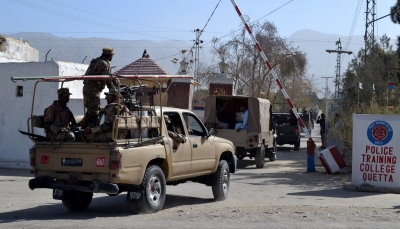
Islamabad, July 20 (IANS) Pakistan's reliance on an offensive, coercive approach has failed to bring lasting stability to Balochistan province, exposing the state's inability to move beyond the use of force and pursue a political solution built on dialogue, a report has stated.
While military operations such as 'Operation Shaban' showcase Pakistan's overwhelming use of force, they fail to address the root causes of the conflict. By prioritising coercive measures, meaningful political engagement and inclusive dialogue with regional stakeholders, the Pakistani authorities risk reducing tactical military gains to temporary fixes for a deeply entrenched political crisis, according to a report in the 'International Centre for Peace Studies' (ICPS).
“From 4 July to 8 July 2026, a wave of insurgent attacks swept through various districts of Balochistan Province. This included a raid aimed at targeting civilians near the provincial capital, an assault on a police checkpoint guarding important water infrastructure, and an ambush on a key national highway. Approximately 42 people, including 38 security personnel and civilians, died as a result of this. These incidents throw up a pattern that is too coherent to be coincidental,” the report detailed.
“Reportedly, these attacks have been attributed to Tehrik-e-Taliban Pakistan (TTP) and Balochistan Liberation Army (BLA) elements. These two groups are separated by ideology, ethnicity, and historical objective. However, they are becoming much more aligned in practice around a common rival, the Pakistani state. The Pakistani state responded with a multi-district counter-insurgency operation codenamed Operation Shaban, in which, by mid-July, over 100 militants had been killed,” it added.
The report noted that the July attacks exposed structural weaknesses in Pakistan's counterinsurgency architecture, highlighting persistent gaps in territorial control, infrastructure security, and strategic mobility.
It argued that what distinguishes the July 2026 incident apart is the compressed timeline and the rapid escalation of events, which have exposed long-standing vulnerabilities in a new tactical context.
Although 'Operation Shaban' — launched within a day of the militant attack and carried out jointly by the Pakistan Army, Frontier Corps, and provincial police — demonstrated the state's ability to deploy substantial kinetic force, the reactive nature of the response underscores deeper structural weaknesses, with significant force projected only after a major security breach.
“Also, it does not answer the more fundamental question the offensive raised, that is, whether Pakistan's counter-insurgency framework in Balochistan is structurally capable of anticipating, rather than merely avenging, the next coordinated challenge to its writ,” the report stressed.
--IANS
scor/as