
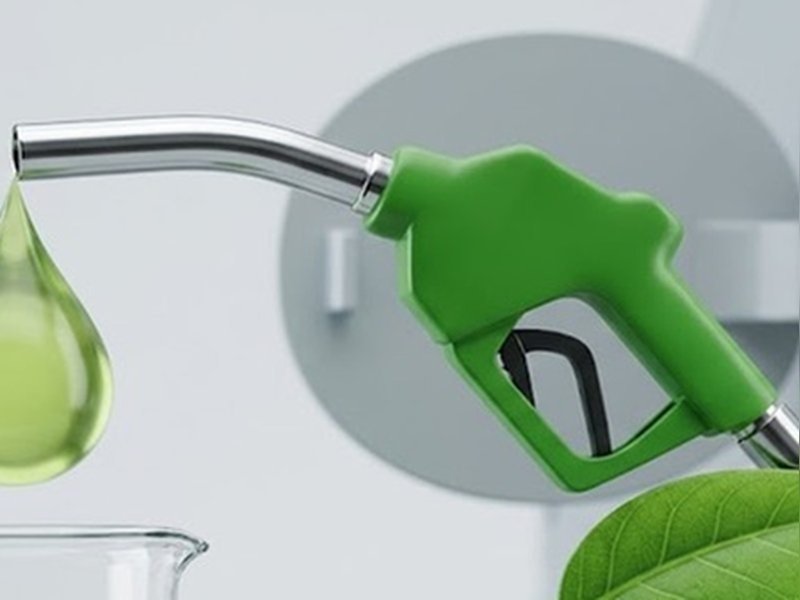
New Delhi, July 23 (IANS) The Union government told the Parliament on Thursday that no decision has been taken so far to increase ethanol blending with petrol beyond 20 per cent.
Any future decision regarding higher ethanol blends will be taken only after detailed scientific and technical studies and consultations with all relevant stakeholders, including automobile manufacturers, oil marketing companies and research institutions.
However, E85 fuel (containing 85 per cent ethanol and 15 per cent petrol) has been introduced exclusively for use in Flex Fuel Vehicles (FFVs) designed and certified for such fuel (E85) and does not constitute an increase in the nationwide base ethanol blending level of petrol, Minister of State for Petroleum and Natural Gas Suresh Gopi said in a written reply to a query in the Lok Sabha.
He also clarified that ethanol has been used globally for more than a century, with countries such as Brazil operating higher ethanol blends for decades.
In India, the Ethanol Blended Petrol (EBP) Programme has been implemented through a phased, scientifically validated and consultative process involving NITI Aayog, automobile manufacturers, oil marketing companies, Automotive Research Association of India (ARAI), Society of Indian Automobile Manufacturers (SIAM), Indian Institute of Petroleum (IIP) and other technical institutions.
The scientific studies, field validation and extensive real-world operating experience have shown that E20 is a safe, cleaner and technologically superior fuel when used in accordance with the prescribed specifications and manufacturer recommendations.
The Union government's assessment is based not only on laboratory research but also on large-scale experience after nationwide implementation, Minister Gopi said.
"E15+ blended petrol has been in widespread use for more than three-and-a-half years and E19-E20 fuel for more than two-and-a-half years. More than 20 crore two-wheelers and over 3 crore petrol cars have been operating on these blends without any verified evidence of widespread engine failure or vehicle breakdown attributable to ethanol blending. This is further validated through large-scale real-world experience. Manufacturer service data confirm that there is no abnormal corrosion, wear or reduction in vehicle life due to E20 fuel. Manufacturers continue to honour warranty obligations for vehicles using E20 fuel, providing further confidence in its safety and reliability," he added.
"One of the country's largest passenger vehicle manufacturers serviced 2.84 crore vehicles during FY 2025–26, including nearly 1.5 crore older, non-E20-certified vehicles, without reporting any E20-related engine damage or abnormal component wear. Similarly, one of the leading two-wheeler manufacturers has reported, based on extensive service records, no higher incidence of damage in vehicles operating on E20 compared with earlier fuel blends," the Minister said.
Extensive laboratory testing and field validation by the Inter-Ministerial Committee under NITI Aayog, IOCL, ARAI, IIP and SIAM confirmed that E20 fuel does not cause abnormal wear and tear or compatibility issues.
With regard to mileage, studies by government agencies and automobile manufacturers indicate that fuel efficiency is influenced by several factors, including driving conditions, driving habits and vehicle maintenance.
Any reduction in fuel economy in certain E10-designed vehicles is generally limited to about 3-5 per cent, while E20 offers a higher-octane rating, superior anti-knock characteristics, cleaner combustion and smoother engine performance.
According to SIAM and ARAI, E20 improves acceleration and ride quality while reducing carbon emissions.
Ethanol's higher-octane number supports modern high-compression engines and its higher heat of vaporisation improves combustion efficiency.
The transition to E20 has also delivered significant national benefits.
"The EBP Programme has saved more than Rs 1.97 lakh crore in foreign exchange, substituted nearly 316 lakh metric tonnes of crude oil, reduced around 952 lakh metric tonnes of CO₂ emissions and transferred more than Rs 1.66 lakh crore to farmers," Minister Gopi added.
--IANS
sps/khz