
Kabul: Pakistan is desperately trying to present itself as a State under siege, targetted by militants allegedly operating from Afghan soil, forced to take unilateral military action to protect its citizens. However, when placed against the backdrop of regional history, this narrative appears deeply contradictory. Pakistan’s frustration today is inseparable from its own long-standing policies in Afghanistan, policies that deliberately nurtured militancy, institutionalized proxy warfare, and treated Afghanistan less as a sovereign neighbour and more as a strategic instrument.
The roots of this crisis stretch back to the late 1970s. Following the Soviet invasion of Afghanistan in 1979, Pakistan became the primary staging ground for the anti-Soviet jihad. With massive financial and military backing from the United States and Saudi Arabia, Pakistan’s security establishment, particularly the Inter-Services Intelligence (ISI), assumed control over the distribution of weapons, funds, and training to Afghan fighters. Refugee camps in Pakistan’s border regions gradually transformed into militarised spaces, serving as recruitment pools and ideological incubators. While this infrastructure was initially justified as a response to Soviet occupation, it did not disappear after the Soviet withdrawal. Instead, it became permanent.
During the Afghan civil war of the 1990s, Pakistan doubled down on its involvement by backing the Taliban. Islamabad viewed the Taliban as a force capable of stabilising Afghanistan on Pakistan's terms, ensuring a friendly government in Kabul and securing what Pakistani strategists openly described as “strategic depth” against India. Pakistani madrassas supplied ideological training, Pakistani territory provided logistical routes, and Pakistani advisors offered operational support.
By 1996, when the Taliban captured Kabul, Pakistan was one of only three countries to formally recognise their regime. This was not a policy of neglect or loss of control; it was a calculated State strategy. Former Pakistani officials, Western diplomats, and intelligence assessments have repeatedly acknowledged that the Taliban’s rise was inseparable from Pakistani backing. Afghanistan, in effect, became a testing ground for Pakistan’s belief that non-state actors could be used to shape regional outcomes without long-term consequences.
After 2001, when the United States invaded Afghanistan, Pakistan publicly aligned itself with the global 'war on terror'. Yet in practice, its approach remained selective. While Pakistan did take action against some militant groups, others were quietly tolerated or shielded, particularly those that focused their operations inside Afghanistan rather than Pakistan. The most prominent example was the Haqqani Network, which continued to operate with relative freedom from Pakistani territory for years, orchestrating high-profile attacks in Kabul while maintaining safe havens across the border.
This dual policy steadily eroded trust. Afghan governments repeatedly accused Pakistan of playing a double game, providing intelligence dossiers and evidence of training camps, financing networks, and command structures operating from Pakistani soil. These accusations were routinely dismissed by Islamabad as propaganda. However, United Nations monitoring teams and independent security analysts consistently confirmed the presence of Afghan insurgent groups inside Pakistan well into the 2010s. The disconnect between Pakistan’s statements and observable realities hardened Afghan perceptions that Islamabad was not an honest actor.
Pakistan’s justification for this strategy rested on the belief that Afghanistan must remain within Pakistan’s sphere of influence. The idea of strategic depth treated Afghan territory as a fallback zone in the event of conflict with India, rather than recognising Afghanistan as an independent state with its own national interests. Militants were tools within this framework — useful as long as they served Pakistani objectives. This instrumentalization of violence hollowed out Afghanistan’s political development and normalised insecurity as a permanent condition. The consequences of this approach were inevitable. Militancy does not remain neatly contained within borders or policy categories.
Over time, ideological extremism and armed networks spilled back into Pakistan, giving rise to groups that directly challenged the Pakistani state. The distinction between “good” and “bad” militants collapsed, leaving Pakistan grappling with the very forces it had once cultivated. Yet even as violence escalated internally, Islamabad continued to externalise blame, pointing fingers at Afghanistan while avoiding serious reflection on its own role. Afghanistan, meanwhile, paid an extraordinary price. Decades of proxy warfare devastated institutions, displaced millions, and entrenched cycles of violence. Afghan civilians bore the brunt of suicide bombings, assassinations, and constant instability. For many Afghans, Pakistan’s current complaints sound less like legitimate grievances and more like selective amnesia. You cannot build militant infrastructure for decades and then disown it when it turns inconvenient.
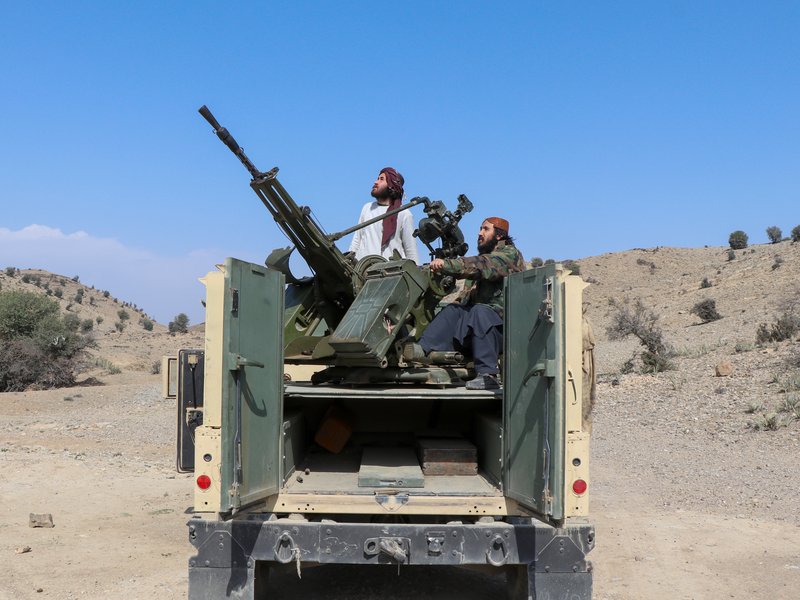
The current phase of hostility underscores how deeply relations have deteriorated. The relationship has moved beyond mutual suspicion into open confrontation. The same forces Pakistan once described as ideological allies are now being treated as adversaries, revealing how transactional and fragile that alliance always was. Border tensions further complicate matters. The disputed Durand Line remains a central point of contention. Pakistan’s efforts to fence and militarise the border are viewed in Afghanistan as unilateral and coercive, while Pakistan frames Afghan resistance as lawlessness. Each clash reinforces nationalist narratives on both sides, making compromise politically costly and militarisation easier to justify.
Islamabad is confronting the limits of a policy that relied on militancy without accountability. The tools it once used to project influence now operate independently, aligned with interests that no longer fully coincide with Pakistan’s own security needs. For Afghanistan, the challenge is navigating this hostility while attempting to assert sovereignty after decades of interference. Afghan resentment toward Pakistan is not manufactured; it is rooted in lived experience. Any durable improvement in relations would require Pakistan to abandon denial, acknowledge the consequences of its past actions, and engage Afghanistan as an equal rather than a subordinate space.
The new low in Afghanistan-Pakistan relations is not defined by a single statement or a single border skirmish. It is the cumulative outcome of decades of policy choices that privileged short-term strategic gains over long-term regional stability. Until Pakistan confronts this history honestly, frustration will continue to be framed as victimhood, and threats will continue to substitute for accountability. Geography ensures that Afghanistan and Pakistan cannot escape each other. Neither can achieve peace through coercion, denial, or proxy warfare. The present crisis highlights how far the relationship has fallen, but it also exposes a fundamental truth: stability cannot be built on the ruins of manipulated militancy. Without a decisive break from the past, this low point risks becoming not an exception, but the new normal.
--IANS
/as