
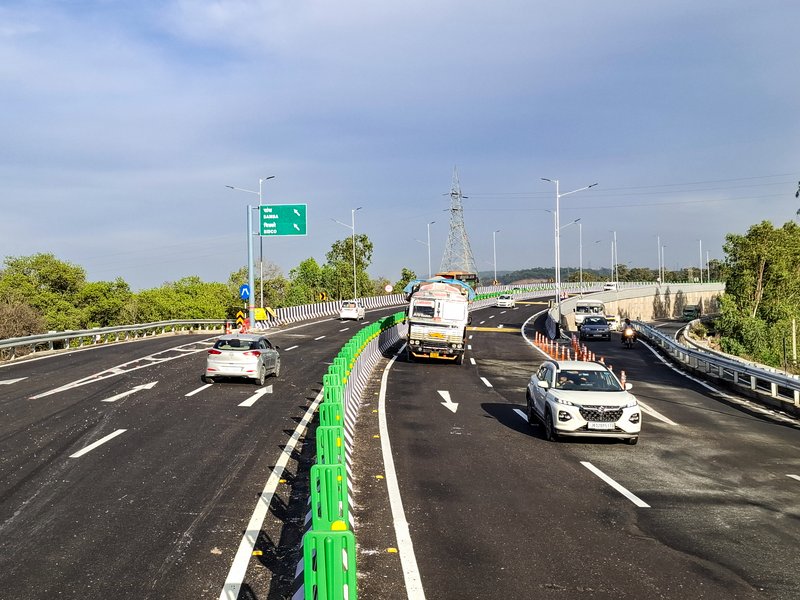
New Delhi, July 24 (IANS) Eminent road safety experts called for urgent adoption of "low‑cost, high‑impact" measures, including 30 km per hour low‑speed zones in residential and school areas to reduce road fatalities in cities, a statement said on Friday.
The statement from International Road Federation said speakers at a lecture here highlighted practical, scalable interventions such as installation of high‑visibility zebra crossings and raised pedestrian crossings, which could reduce road accidents significantly.
India can significantly reduce road fatalities through affordable and evidence-based interventions in cities, said Prof. Geetam Tiwari, Emeritus Professor and Former Chair Professor, Transportation Research and Injury Prevention Programme, outlining measures such as use of curb extensions (bulb-outs) to reduce pedestrian crossing distances and construction of median refuge islands for safer pedestrian movement across wide roads.
Prof Tiwari called for implementation of lane narrowing and chicanes to naturally calm traffic and to improve retro-reflective signage and road markings to enhance night-time visibility.
Tiwari urged implementation of international best practices, adding that tactical interventions can reduce crashes while improving mobility for all road users.
“India’s rapidly expanding cities face growing challenges as infrastructure development struggles to keep pace with urbanisation,” said K K Kapila, President Emeritus, International Road Federation (IRF).
Contrary to the common perception that road safety depends primarily on expensive infrastructure projects such as flyovers and expressways, he said that most urban crashes occur due to everyday design deficiencies on ordinary roads operating at normal traffic speeds.
“Low-cost engineering measures such as roundabouts, raised pedestrian crossings, traffic-calming measures, improved street lighting and safer intersection designs have been proven to reduce crashes by 20 to 80 per cent, often at a fraction of the cost of major infrastructure projects. Such interventions can be implemented much faster and deliver immediate safety benefits,” Kapila said.
Kapila highlighted several implementation challenges that continue to hinder progress, including the multiplicity of agencies responsible for road safety, weak enforcement of traffic regulations, the complexity of retrofitting existing urban streets, fragmented funding mechanisms, inadequate crash data and post-crash care, and resistance to reallocating road space for pedestrians and cyclists.
Akhilesh Srivastava, President, ITS India Forum, emphasised the importance of integrating intelligent transport systems with proven engineering measures.
—IANS
aar/ag