
New Delhi, May 4 (IANS) India's Left parties, once a powerful force in national and regional politics, are now confronting the possibility of being out of power across all states for the first time in more than five decades.
To understand the magnitude of this moment, it helps to revisit the past. In 1996, veteran CPI-M leader Jyoti Basu, who had already served as Chief Minister of West Bengal for two decades, came close to becoming Prime Minister as part of the United Front coalition. Although Basu was willing to accept the role, his party’s Politburo declined the proposal, a decision he later famously termed a "historic blunder".
By 2008, the Left still held significant sway at the national level. The Congress-led United Progressive Alliance government, headed by Manmohan Singh, depended on Left support in Parliament. However, the alliance fractured when Left parties withdrew backing over the Indo-US nuclear agreement, forcing the government to prove its majority in a crucial trust vote. At the time, Left parties governed three states -- West Bengal, Kerala, and Tripura -- and had a sizable presence in the Lok Sabha.
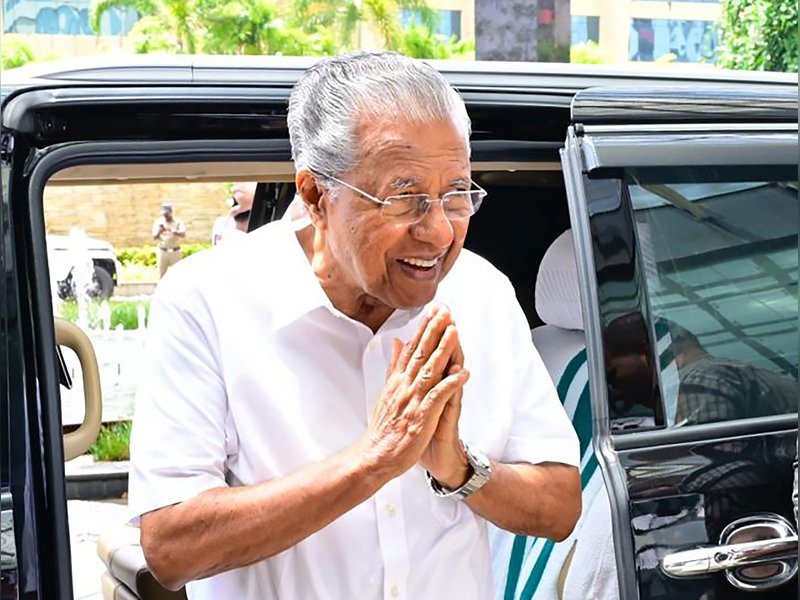
Fast forward to the present, and the political landscape has shifted dramatically. With voter preferences increasingly leaning toward right-of-centre parties, the influence of Communist parties has steadily diminished. Current trends in Kerala suggest that the Left Democratic Front (LDF), led by Pinarayi Vijayan, may lose power. If confirmed, this would mark the first instance since around 1970 that no Left party holds office in any Indian state.
The history of Left politics in India, however, is both rich and significant. In the country’s first general elections in 1951–52, the Communist Party of India emerged as the largest opposition group in Parliament. Just a few years later, in 1957, Kerala witnessed a landmark event when a Communist government was democratically elected, the first such occurrence anywhere in the world.
The late 1970s marked another high point. In 1977, the CPI-M established its dominance in West Bengal, initiating what would become the longest uninterrupted tenure by any political party in an Indian state. Under Jyoti Basu’s leadership, the Left Front governed the state for over two decades, with Basu himself serving as Chief Minister for 23 years before handing over to Buddhadeb Bhattacharya in 2000. The Left retained control in the state until 2011.
Tripura, too, emerged as a stronghold. Beginning in 1993, the Left Front secured repeated electoral victories. Leaders like Manik Sarkar became synonymous with stable governance, holding office for 20 years and cementing the party’s dominance in the northeastern state.
However, the decline began to accelerate in the last decade. In 2011, a wave of public discontent in West Bengal, fueled by protests over land acquisition in regions like Nandigram and Singur, paved the way for Mamata Banerjee and her Trinamool Congress to sweep the elections. The Left Front’s strength in the Assembly dropped sharply, signalling the end of its long rule in the state.
This further reduced the Left’s political presence to a single state, Kerala. The rise of the BJP at the Centre in 2014 was followed by a saffron wave in states, and in 2018, it conquered the Left's Tripura fortress as well. The party won 36 seats in the 60-member Assembly, bringing the Communists' tally down from 50 to a mere 16. This further reduced the Left’s political presence to a single state, Kerala.
Kerala then became the final bastion. In 2016, the Left returned to power under Vijayan and even broke the state’s long-standing pattern of alternating governments by securing a second consecutive term in 2021. This victory offered a temporary revival for the Left.
Now, with the latest electoral trends indicating a strong lead for the Congress-led United Democratic Front, even this last foothold appears uncertain. Early counting suggests the UDF is significantly ahead in the majority of constituencies, raising the likelihood of a political shift in the state.
Meanwhile, celebrations have already begun among Congress workers in Thiruvananthapuram, reflecting confidence in a decisive win. If these trends hold, the Left’s long journey in Indian governance may enter an unprecedented phase, one without direct control of any state government.
--IANS
jk/vd