

Washington, Jan 24 (IANS) Members of Congress from both parties have raised sharp concerns that immigration policies, workforce pipelines, and supply chain uncertainty are threatening the United States’ leadership in quantum science and technology.
At a House Science, Space, and Technology Committee hearing, lawmakers warned that restrictions on international students and foreign talent are weakening the quantum workforce at a time of intense global competition.
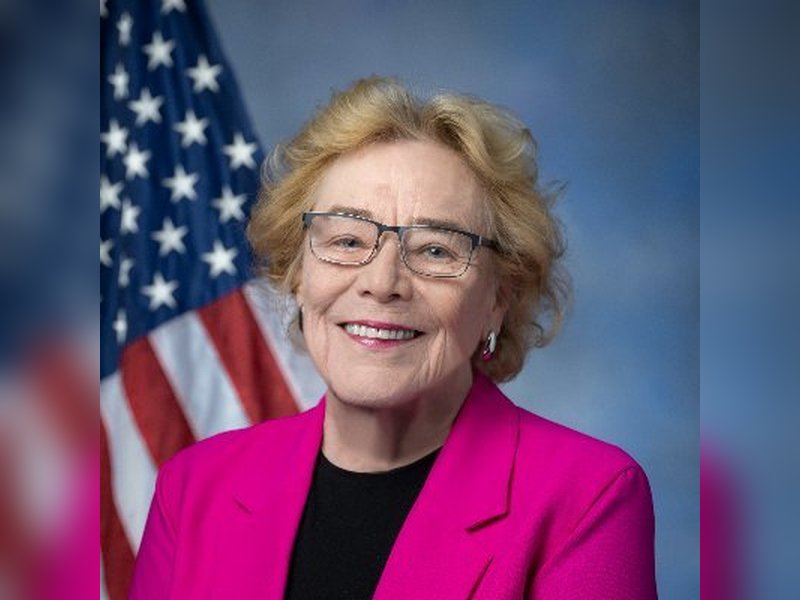
“If the United States is not the destination of global quantum talent, then other nations certainly will be,” Rep. Zoe Lofgren said, adding that the country needs each of its federal agencies “to be fully staffed and resourced.”
Lofgren said China’s investments have surged, noting: “In 2024, The Chinese Communist Party invested more than four times what the United States did in quantum R&D. And 2025, The CCP announced a $138 billion fund to support their public private partnerships in emerging technologies including quantum computing.”
Rep. Suzanne Bonamici echoed concerns about the quantum workforce pipeline. She warned that federal grant cuts and visa hurdles are dissuading foreign scholars. “If the United States is not the destination of global quantum talent, than other nations certainly will be,” she said, urging that “doors of opportunity should be open to everyone who chooses to attend higher education.”
Bonamici cited specific workforce challenges to the National Institute of Standards and Technology’s witness: “So, what specific workforce challenges pose the greatest threat to US, quantum leadership right now, and which of those can Congress most easily and rapidly address?” to which James Kushmerick responded, “So, … we need a whole of government effort to kind of increase the pipeline.”
Rep. Gabe Amo highlighted broader immigration and workforce concerns, including staffing at federal science agencies. He noted steep personnel losses: “From November 2024 to November 2025, there was a 29 per cent decrease in federal civilian employees at NSF, a 16 per cent decrease at federal civilian employees at NIST … Approximately one fifth of NASA federal employees agreed to leave an agency … under deferred resignation and early retirement.”
Amo then asked agency leaders a direct question on foreign-born scientists: “Are foreign-born scientists an important part of the US quantum ecosystem?” NIST’s James Kushmerick said “Yes, they are.” NSF’s Saul Gonzalez said, “I think, yes, they are.” NASA’s Mark Clampin said, “Yes, they are.” DOE’s Tanner Crowder said, “Uh, a month ago, you heard from my boss who is an immigrant. And so, I would say yes, they are.”
Rep. Don Beyer also touched on talent concerns with an open-ended question about quantum’s broader implications for technology: “Do you see any hope about using quantum encryption to have a personal impact on Americans protecting their own data?” NSF’s Gonzalez responded, “My personal opinion is yes…”
Rep. Deborah Ross stressed the strategic importance of talent pipelines from K-12 through advanced study: “Quantum technologies promise to redefine the frontiers of innovation.”
Ross and other lawmakers such as Rep. Andrea Salinas pressed witnesses about workforce development programs, especially for students and technicians. Salinas asked, “Could each of you tell me what specifically you are doing to recruit and retain quantum talent from across the country and across demographics?” Kushmerick replied, “We look across the whole country and we also welcome in foreign guest researchers when needed to help support this effort.”
Lawmakers also tied workforce fears to supply chain and cost issues. Rep. Chuck Fleischmann mentioned domestic quantum networks in his district, noting how federal investment can “serve as a catalyst that allows regional quantum ecosystems … to grow faster, scale responsibly and deliver real economic and workforce development.”
Witnesses stressed that while US leadership remains strong, it is fragile. NSF’s Gonzalez said, “The US has the ability, the talent and the infrastructure to not simply maintain but to grow our leadership across all critical and emerging technologies.”
--IANS
lkj/rs