
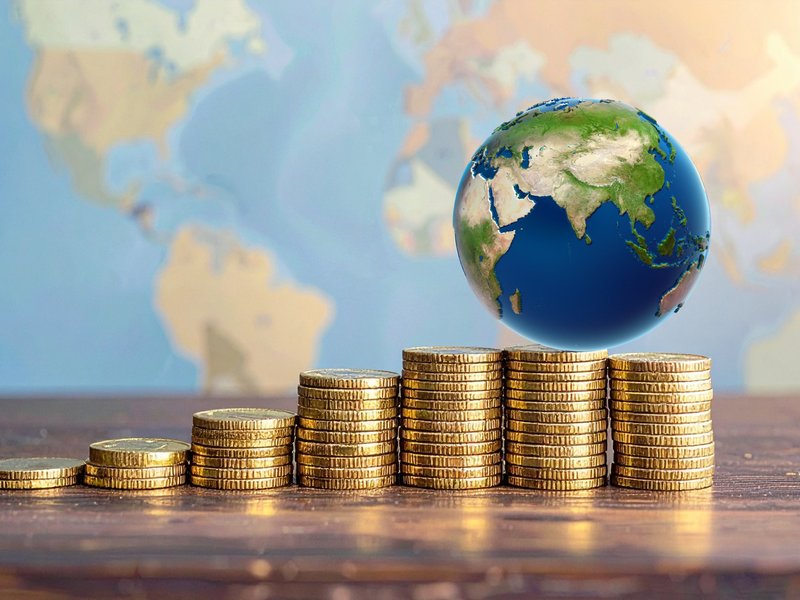
New Delhi, Jan 16 (IANS) As global markets enter a reflationary phase, India is poised to benefit as the country is projected to contribute over 15 per cent of global incremental GDP growth between 2025 and 2030, a report showed on Friday.
The report from Equirus Wealth said that India has room for growth as global investors reassess concentrated exposure to the US AI trade and seek diversification across Asia.
It highlighted that foreign institutional investor (FII) outflows of nearly $18 billion in 2025 have left India underweight in many portfolios, creating scope for selective inflows if emerging market sentiment improves.
Around 75 per cent of the MSCI Emerging Markets index is concentrated in just four markets -- China, India, Korea and Taiwan.
India will emerge a key beneficiary within emerging markets supported by policy-led growth, easing liquidity conditions and early signs of a weakening US dollar.
The country is likely to contribute significantly to global incremental GDP growth between 2025-2030, surpassing the combined contribution of Japan and Germany, the report said.
The current reflation phase differs from past cycles, driven by structural disinflation and targeted policy support that makes earnings durability and balance‑sheet strength the primary drivers of returns, the report further said.
“We are entering a reflationary phase, but this cycle is very different from past risk‑on environments. It is not about excess liquidity, but about policy‑led support for growth in a low‑inflation world. In such a regime, asset allocation becomes more selective, and India benefits from the combination of strong real growth and macro stability,” said Mitesh Shah, CEO, Equirus Family Office.
The wealth management firm favoured the 4-7 year government bond segment, particularly state development loans, and noted the 10‑year yield remains around 6.60 per cent.
Gold continues to be positioned as a long-term portfolio hedge, supported by central bank buying, geopolitical risks and declining trust in fiat currencies, while silver is viewed as a tactical, high-volatility trade, it noted.
—IANS
aar/na