
New Delhi, Dec 28 (IANS) India is building a commercially grounded relationship with Africa large enough to matter, without mortgaging sovereignty, according to a report.
The country is also engaging with Africa in the health sector. Furthermore, India is contributing to United Nations peacekeeping in Africa.
"Some actors translate this into dependency through scale or force. India stands apart, advancing its interests most effectively when African partners retain agency. This is not soft power versus hard power, but capacity power versus dependency power. Africa is not one arena but several, shaped by chokepoints. Along the Indian Ocean rim, from Djibouti down the Swahili Coast to Mozambique and across to Madagascar and Mauritius, Africa links to India through sea lanes carrying energy, food, and trade," strategic analyst Shay Gal wrote in a report in The Eurasian Times.
India's ties with Africa are social and diplomatic. Over 3 million people of Indian origin live across the continent, the legacy of labour routes, merchant networks, and migration. When India supported the African Union's inclusion in the G20, it reinforced that representation is power and Africa is not a guest in global governance.
The Eurasian Times report stated, "India-Africa trade fluctuates between 80 and 100 billion dollars annually, with cumulative Indian investment approaching 75 billion dollars, placing Africa among India’s most important economic partners. The pattern matters more than the decimal point. India is building a commercially grounded relationship large enough to matter, without mortgaging sovereignty. India’s restraint is not a weakness. It allows African states to say 'yes' without losing the ability to say 'no'."
"India’s development finance is often misread because it does not resemble Beijing’s grand packages or heavily conditioned Western programmes. Its backbone is concessional finance and project lending, with nearly 200 lines of credit extended across more than 40 African states to fund railways, transmission, vehicles, agriculture, and industrial capacity. This is not charity. It links African demand to Indian execution capacity and builds commercial ecosystems without forcing capital into single-vendor dependency. The weakness is equally clear: dispersed projects demand relentless follow-through, and delays quietly erode trust," it added.
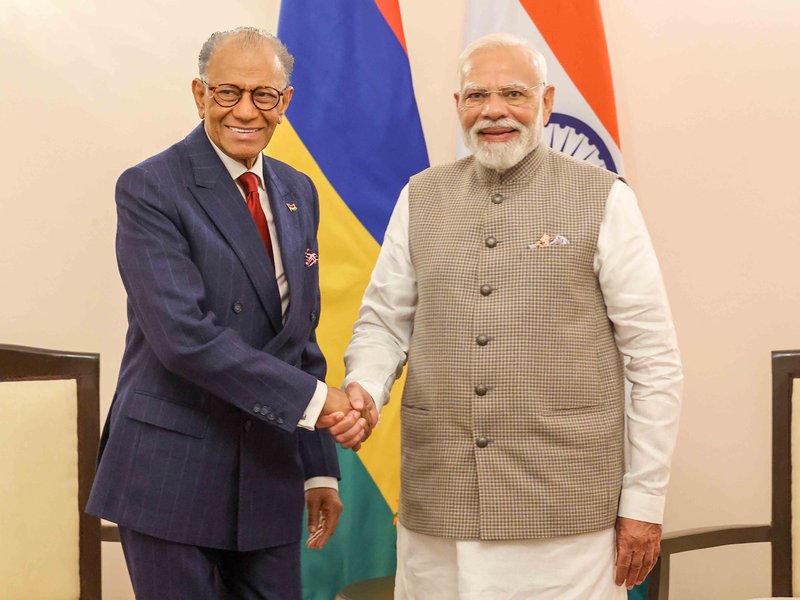
India has focused on everyday systems like introducing UPI and RuPay infrastructure in Mauritius and signing digital payment pacts with nations like Namibia and Togo. Those who develop the infrastructure of everyday economic existence influence sovereignty more lasting than those who sell drones. Mauritius showcases the nature of Indian partnership when influence is developed without a parallel state. There are no military bases, no concessions over ports or airports, no foreign-branded institutions shaping identity. Instead, India’s presence runs through everyday systems that manage sovereignty. India is also engaging with Africa in the health sector as the former supplies over half of the latter's generic medicines.
In the report in The Eurasian Times, Shay Gal wrote, "Security is where comparisons sharpen. India has long contributed to UN peacekeeping in Africa. It has expanded its maritime role from anti-piracy operations off the coast of Somalia to trilateral naval exercises with Mozambique and Tanzania, as well as coastal radar cooperation with Indian Ocean partners. Its security footprint reinforces state capacity and maritime awareness rather than substituting for sovereignty. Mozambique and Tanzania show what an Indian security partnership looks like without bases or permanent deployments."
"Training, maritime surveillance, and joint exercises strengthen local control over coastal space while leaving command, symbols, and legitimacy firmly national. The absence of an Indian security architecture is the point. Somaliland already matters in practice, even without formal recognition. Trade flows through Berbera, and Indian goods sustain its port economy. In the Gulf of Aden, India’s sustained anti-piracy deployments help secure the shipping lanes on which Somaliland’s coast depends. This is not diplomatic recognition, but de facto relevance: cooperation through commerce and maritime security, where sovereignty is disputed but daily functions are not," the author added.
--IANS
akl/uk