

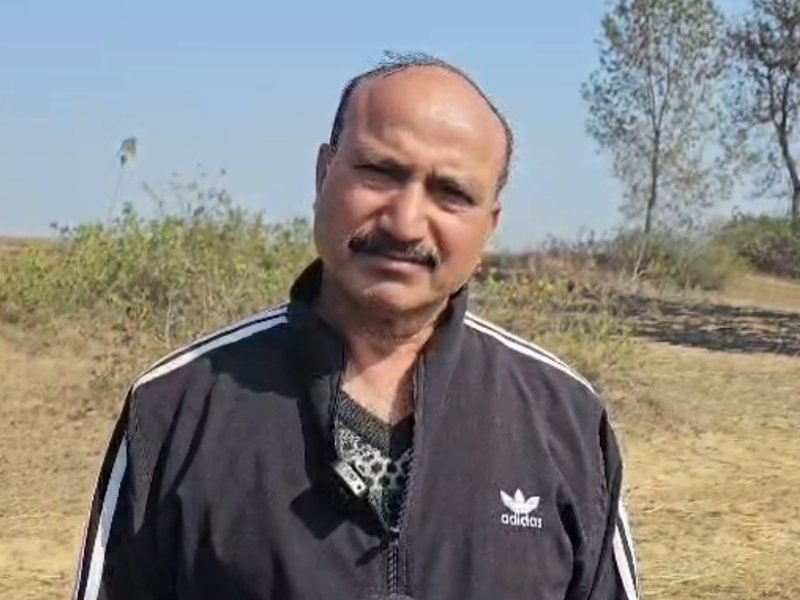
Hazaribagh, (Jharkhand) Jan 7 (IANS) As the political debate intensifies nationwide over the VB-G RAM G scheme (Viksit Bharat Guarantee for Rozgar and Ajeevika Mission –Gramin), contrasting ground-level reactions are emerging from rural India.
While the Congress has launched a nationwide protest opposing the scheme, workers and farmers in Jharkhand’s Hazaribagh district are viewing it as a fresh ray of hope for employment, income security, and curbing migration.
In several villages across Hazaribagh, the scheme has generated visible enthusiasm. Local labourers say VB-G RAM G could address long-standing gaps in the Mahatma Gandhi National Rural Employment Guarantee Act (MGNREGA), which, despite laying the foundation for rural employment, has struggled with delays in work allocation and wage payments.
“Under MGNREGA, work was not always available on time, and even when it was, payments were delayed for months,” said a daily-wage labourer from a village in Hazaribagh. “This forced many of us to migrate to cities in search of survival.”
According to workers, VB-G RAM G promises a more practical solution. One of the key features that the villagers underlined is the increase in guaranteed workdays from 100 to 125 days every year. Farm labourers and other workers believe this will provide more consistent employment throughout the year. This is how household incomes will be boosted, and economic uncertainty will be reduced, they explained.
They also expressed gratitude to Prime Minister Narendra Modi for introducing the scheme. One worker remarked that the opposition’s objection was not to the scheme itself but to the inclusion of the word “RAM” in its name, suggesting that this was the real reason behind the political resistance.
Another major change welcomed by workers is the mandatory use of geo-tagging and biometric systems. In the past, they allege, middlemen, contractors, and the use of machines often led to fake work entries and siphoning of wages.
“Now, without the physical presence of real workers, work cannot be shown on paper,” a farmer said, calling it a step toward transparency.
Villagers also point to the provision of providing work within 7 to 15 days as a potential game-changer. They say the timely availability of employment in villages will significantly reduce distress migration to cities, where jobs are often temporary and unsafe.
“If we get work and wages on time in our own villages, why would we leave our families behind?” asked another worker.
Workers as well as economists note that sustained rural employment could strengthen village economies by increasing cash flow in local markets. This scheme will also support small businesses, they remark.
For the workers and farmers of Hazaribagh, VB-G RAM G is not just another welfare scheme but a promise of stability and dignity. They say that if the programme is implemented honestly and transparently, it has the potential to transform rural life and reshape the future of India’s villages - even as the political battle over the scheme continues at the national level.
--IANS
brt/dan