

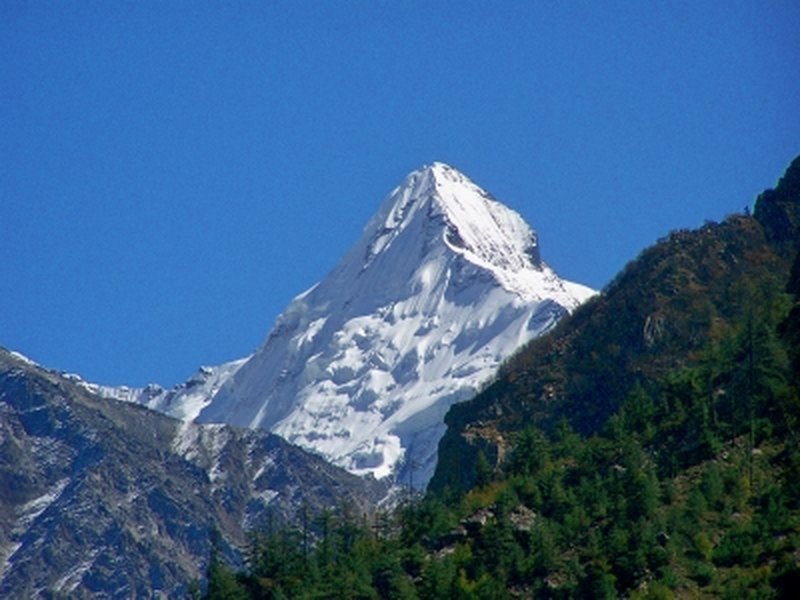
Kathmandu, Dec 16 (IANS) As Nepal’s high mountains, including Mount Everest, have been struggling with decades of waste accumulation, the Nepali government has introduced a five-year plan to keep the mountains clean.
Among the measures unveiled on Tuesday by the Ministry of Culture, Tourism and Civil Aviation, the government said it may limit the number of climbers and regulate the timing of expeditions, taking into account the short, favourable weather window for climbing and potential congestion on the mountains.
According to the Action Plan to Keep Mountains Clean (2025-2029), the government will introduce legal and policy measures to determine and regulate the number of climbers and the timing of expeditions.
The new action plan was introduced in response to a Nepal Supreme Court order last year directing the government to issue climbing permits only after specifying the number of climbers. Nepal has been collecting large quantities of waste from its mountains, including Mount Everest, every year.
More than 83 metric tonnes of waste were collected from Mount Everest, Lhotse, and Nuptse during the Spring 2025 season alone, according to the Sagarmatha Pollution Control Committee (SPCC), an agency that has long been running mountain clean-up campaigns.
The plan also includes mobilising teams of trained and experienced mountaineers with clearly defined responsibilities to collect and monitor waste and human remains above mountain base camps.
In addition, the government plans to develop and implement standards and quality benchmarks for the classification and management of waste. Members of mountaineering teams will be required to prepare an inventory list of the equipment they carry and register these items at the mountaineering entry point.
“Upon returning from the expedition, the items brought back must be mandatorily registered at the exit point,” the action plan states.
Likewise, banners, flags, prayer flags, and similar items taken above the base camp must be biodegradable (naturally decomposable), and government authorities may also specify their size or length.
“If non-biodegradable items are used, it shall be ensured that they are brought back,” the action plan reads.
The plan also calls for feasibility studies on the use of ropeways and drones for collecting waste above the base camps of major mountains that witness high levels of climbing activity.
It aims to prevent the accumulation of garbage from the very beginning of the climbing season, when rope-fixing teams first ascend the mountains, including Mount Everest.
For rope-fixing teams, a condition may be imposed requiring that all materials used for this work be mandatorily brought back after the completion of the climbing season.
“The agencies involved in waste management shall maintain records of materials used in rope-fixing activities, such as ropes and ladders, and shall ensure that the same quantity of such materials is brought back after the expedition,” the action plan states.
Given the growing complaints about the garbage problem at Mount Everest Base Camp, the action plan also provides for a feasibility study to assess the relocation of the base camp.
--IANS
scor/dan