
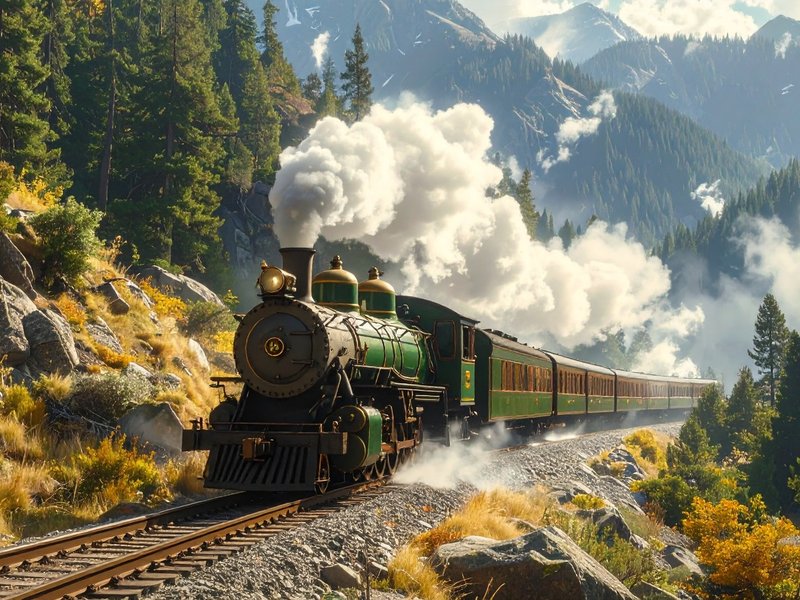
New Delhi, Oct 26 (IANS) India’s toy trains offer more than travel; they are journeys through history, heritage, and some of the country’s most stunning landscapes. Found in the hills of Darjeeling, Ooty, Shimla, Matheran, and Kangra Valley, these narrow-gauge railways were built during the British era, combining engineering skill with natural beauty. Each route has its own charm. More than just transportation, these toy trains provide a nostalgic and immersive experience, showcasing India’s hill stations in their timeless splendour.
Here is the list of India’s five iconic toy train services:
(1) Darjeeling, West Bengal – The Queen’s Rails
The Darjeeling Himalayan Railway, fondly known as the Toy Train, is one of India’s most enchanting travel experiences. Winding its way through the misty hills of West Bengal, the narrow-gauge line runs between New Jalpaiguri and Darjeeling, offering passengers a leisurely journey through tea gardens, forests, and hillside villages. The train’s rhythmic chugging and sharp curves recall an era when travel was unhurried and scenic beauty was savoured at every turn.
Built between 1879 and 1881 during British rule, the railway was an extraordinary engineering feat of its time, climbing from the plains to an altitude of over 2,000 metres through loops and zigzags. Today, it is recognised as a UNESCO World Heritage Site, celebrated both for its technical ingenuity and cultural significance. The classic steam engine still operates on select stretches, especially between Darjeeling and Ghum, the highest railway station in India.
An 8 hour journey covering 88 km
The full Darjeeling Toy Train route runs between New Jalpaiguri (NJP) and Darjeeling, covering a distance of about 88 km. The train takes around 7 to 8 hours to complete the journey, depending on weather and track conditions. It climbs from the plains at an altitude of about 100 metres in Siliguri to over 2,000 metres in Darjeeling, passing through scenic stations such as Kurseong, Sonada, and Ghum. The slow pace—averaging around 12 km per hour—is part of its charm, allowing travellers to enjoy the changing landscapes and tea gardens as the small train winds its way up the hills. For those preferring a shorter experience, the Darjeeling–Ghum round trip covers about 14 km and takes roughly 2 hours, offering the essence of the Toy Train journey with splendid views and a stop at the Ghum Railway Museum.
The best season to experience the Toy Train is from March to May and again from October to December, when the skies are clear, the weather is crisp, and the panoramic views of the Kanchenjunga range are spectacular.
The fare for the Darjeeling Toy Train varies based on the type of engine (diesel and steam), route, and class of service. For a full journey from New Jalpaiguri to Darjeeling, first-class tickets cost around Rs 1,420, while the AC chair car option is approximately Rs 1,700. Shorter rides, such as Darjeeling to Ghum, are priced at Rs 450 for first class and Rs 525 for AC. Other routes include Darjeeling to Sonada, with fares ranging from Rs 590 to Rs 700, and Darjeeling to Tung, costing Rs 610 to Rs 720. Steam engine joy rides are also available, with fares around Rs 1,300, while diesel engine rides cost about Rs 800.
Travellers are advised to check the latest fares and book in advance to secure seats on this historic and scenic ride.
Reaching Darjeeling is simple. The nearest airport is Bagdogra, about 70 km away, and New Jalpaiguri railway station serves as the starting point for the Toy Train. Taxis and shared jeeps are also available from Siliguri and Bagdogra.
(2) The Shimla–Kalka Toy Train
The Shimla–Kalka Toy Train, officially known as the Kalka–Shimla Railway, offers one of India’s most scenic and nostalgic train journeys. Stretching across 96 km, the narrow-gauge line connects Kalka in Haryana with Shimla, the former summer capital of British India. The train climbs from the plains to an altitude of over 2,000 metres, passing through 102 tunnels, 864 bridges, and more than 900 sharp curves. The entire journey takes about 5 to 6 hours, depending on the train service chosen.
History and the journey
The railway was built in 1903 and it became a remarkable engineering achievement of the colonial era. Its construction involved carving tunnels and viaducts through steep mountains, allowing the small train to weave effortlessly through pine forests, waterfalls, and hillside villages. In recognition of its heritage and craftsmanship, the Kalka–Shimla Railway was declared a UNESCO World Heritage Site in 2008.
The best time is from March to June, when the hills are lush and the weather pleasant, or between October and December, when the crisp air and clear skies offer magnificent views of the Himalayas. During winter, a light snowfall often adds to the charm of the ride.
Travellers can take a flight to Chandigarh Airport, about 60 km from Kalka. From there, taxis and local trains connect to Kalka station, the starting point of the toy train. The slow, winding ascent to Shimla captures the romance of hill travel and remains one of India’s most delightful railway journeys.
Train fares – budget to premium
The Kalka–Shimla Toy Train offers several travel options to suit different budgets and preferences. Fares vary according to the class and the type of train chosen. The most affordable option is the Second Class seat on the regular passenger service, which costs around Rs 65 per person. Travellers seeking greater comfort can opt for First Class, priced between Rs 300 and Rs 475, depending on the train. The Rail Motor Car, a small vintage coach ideal for families or small groups, charges about Rs 320 per adult and Rs 160 for children. For those who prefer a premium experience, the Himalayan Queen offers First Class seating with panoramic views at roughly Rs 470 per person, while the Shivalik Deluxe Express, known for its cushioned seats, large windows, and onboard refreshments, costs about Rs 510 for adults and Rs 255 for children.
(3) Ooty Toy Train: Nilgiri’s whistling wonder
The Ooty Toy Train, officially known as the Nilgiri Mountain Railway (NMR), is one of India’s most scenic and celebrated hill routes. Running between Mettupalayam and Udhagamandalam (Ooty) in Tamil Nadu, the train covers a distance of about 46 km and takes nearly five hours to complete the journey offering a serene glimpse into the beauty of the Nilgiris. Travelling at a leisurely pace, it climbs from 330 metres to 2,200 metres, crossing 250 bridges and 16 tunnels, and winding through dense forests, waterfalls, misty cliffs and tea plantations.
The Britishers built this railway line in 1908. The Nilgiri Mountain Railway is a remarkable example of mountain engineering. It uses a unique rack-and-pinion system to handle the steep gradient between Mettupalayam and Coonoor, a feature still rare in Indian railways. In recognition of its heritage and beauty, the NMR was declared a UNESCO World Heritage Site in 2005, joining the ranks of India’s historic mountain railways.
Best season
The best time to enjoy the Ooty Toy Train is from March to May and September to November, when the hills are lush, the air cool, and the views breathtaking. The monsoon season (June to August) also have their charm, with misty forests and waterfalls along the route.
The nearest airport is Coimbatore, about 85 km from Mettupalayam. Coimbatore is a major railway junction too. From there, taxis or buses are available to the starting station.
Fare and ticket booking process
Fares are modest—around Rs 600 for First Class, Rs 250 for Second Class, and Rs 150 for unreserved seats. Advance booking is advisable, especially during holidays and summer.
(4) Matheran: The motor-free marvel
The Matheran Toy Train, officially known as the Matheran Hill Railway, is a delightful journey through the serene Western Ghats of Maharashtra. The train runs between Neral and Matheran, about 80 km from Mumbai, covering a distance of about 21 km in roughly two hours. Matheran is Asia’s rare hill stations that has banned motor vehicles. Travelling at a leisurely pace, it winds through forested slopes, sharp curves, and misty valleys, offering striking views of the Sahyadri hills and the plains below.
The family that built it
Built by Abdul Hussein Adamjee Peerbhoy and completed in 1907, the narrow-gauge railway was financed by the Peerbhoy family at a cost of nearly Rs 16 lakh. It was constructed to provide easier access to Matheran, then a popular summer retreat for the British. The small blue-and-red coaches, pulled by a diesel engine today, still retain their vintage charm and remain a symbol of the hill station’s old-world character. The best season to enjoy the ride is from October to May, when the weather is cool and the skies are clear. The monsoon season, though lush and beautiful, often see limited services due to heavy rainfall and landslides.
To reach Matheran, travellers can take a train from Mumbai to Neral Junction by local trains, which is the starting point of the toy train. From Neral, the train climbs up to 2,625 feet, passing through scenic stops such as Jummapatti and Aman Lodge.
Fares range from about Rs 300 to Rs 500 for First Class and Rs 75 to Rs 150 for Second Class, depending on the season and train type.
(5) Kangra Valley: The Dhauladhar Route
The Kangra Valley Toy Train, officially known as the Kangra Valley Railway, offers one of the most scenic and lesser-known mountain rail journeys in India. The train runs between Pathankot in Punjab and Joginder Nagar in Himachal Pradesh, covering about 164 km in roughly eight to nine hours. The line meanders through the lower Himalayas, passing terraced fields, pine forests, and charming hill villages, with the snow-capped Dhauladhar Range often visible in the distance. The railway was built by the British to connect the remote Kangra Valley with the plains and was opened to traffic in 1929.
Unlike the steep gradients of other hill railways, this route follows gentle slopes, allowing passengers to enjoy uninterrupted views of the landscape. The bridges and tunnels—993 bridges and two tunnels in total—reflect fine colonial-era engineering and craftsmanship.
The best time for the ride is from March to June and September to November, when the weather is clear and the scenery at its best. During winter, the distant mountains are capped with snow, adding to the beauty of the journey.
To reach the starting point, travellers can take a flight or train to Pathankot, which is well connected to Delhi, Amritsar, and Chandigarh.
Most affordable fares
Fares are modest in this route starting Rs 25 for Second Class and Rs 120 for First Class for the full route making it one of India’s most affordable and picturesque heritage train experiences. India’s toy train routes represent not just engineering marvels but living legacies of India’s colonial-era mountain travel, offering passengers slow and soulful journeys through stunning landscapes and regional cultures.
--IANS/snj/mr