
Islamabad, May 9 (IANS) Pakistan's projected rise on the global stage is widely seen as a manufactured narrative designed to hide economic mismanagement, justify authoritarian expansion, and suppress public resistance at home. Despite the claims of growing "importance", the country’s democratic structure and institutional independence continue to weaken, a report said on Saturday.
According to a report in the think tank 'Politeia Research Foundation', Pakistan’s attempt to position itself as a global mediator particularly between the US and Iran was aimed not at resolving conflict but to divert attention from internal failures and pave the way for more draconian measures, including a proposed 28th Constitutional Amendment.
“Pakistan’s internal situation is deteriorating rapidly, with the country on the verge of economic collapse. Inflation is rising, fuel prices are soaring, and ordinary people are struggling to survive. Instead of addressing these real challenges, the state is busy projecting a different image abroad, that of Pakistan as an important player at the centre of global diplomacy," the report detailed.
“This narrative is being pushed hard, especially through claims of mediation between the United States and Iran. But this projection is profoundly misleading. It creates the impression that Pakistan’s economic and political crises will somehow disappear simply because it’s engaging in high-level diplomacy. The truth is, this so-called global importance is being used as a cover," it added.
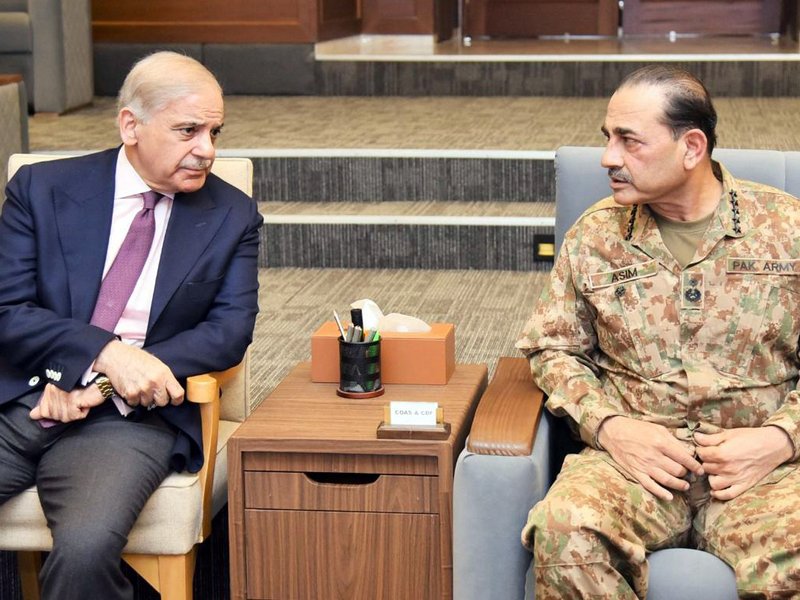
The report highlighted that Pakistan's military leadership under Asim Munir is using this narrative of global relevance to consolidate its grip on Pakistan. It added that whatever little democracy once existed in the country has now been “systematically dismantled”, leaving key institutions such as the judiciary, the media, and the political structures effectively under military control.
“Judges are being shifted, and the Judicial Commission’s recommendations to transfer Justice Mohsin Akhtar Kayani, Justice Babar Sattar and Justice Saman Rafat Imtiaz of the Islamabad High Court, which were approved in April 2026, have been widely criticised for lack of transparency. Broader constitutional changes have altered the structure of the judiciary itself. Military courts are overriding civilian authority, and constitutional changes such as the 27th Amendment have further centralised power,” the report mentioned.
Citing reports, it said that Pakistan's proposed 28th Constitutional Amendment is expected to revisit federal–provincial power balances and shift key sectors towards the centre, further undermining constitutional authority and reinforcing the dominance of Munir.
Expressing serious concerns, the report argued that under the guise of "reform", further centralisation of power could deepen the erosion of institutional autonomy in Pakistan. The Pakistani mainstream media, it said, is being used as a tool to amplify Pakistan’s so-called “rising global status” while overlooking the domestic hardship.
--IANS
scor/as