
New Delhi, Jan 12 (IANS) India pursued strategic autonomy in 2025, which was aimed not at dominating the international system but at balancing it, drawing on historical experience and emphasising institutional continuity, economic resilience, and multidimensional diplomacy, observed a recent report in Europe.
During the Mughal period, the Indian subcontinent functioned as a balancing pillar within a fragmented regional system, not through constant military expansion, but with administrative cohesion, economic strength, and controlled management of rivalries, according to an opinion piece in EuropaWire.
Using different means, present-day New Delhi follows a similar logic, avoiding absolute alignments, investing in institutional continuity, and transforming economic resilience and multidimensional diplomacy into tools of geopolitical influence, it said.
The article explores how India’s evolving foreign policy of strategic autonomy has become a central pillar of its global engagement, and why this approach offers valuable lessons for Europe as it grapples with fragmentation, economic pressures, and geopolitical uncertainty.
India’s policy is framed not as passive non-alignment but as active multi-alignment, where it engages simultaneously with the United States, the European Union, and organisations like the BRICS and G20, while avoiding dependency on any single bloc.
At the BRICS Summit in Rio in 2025, India championed Global South representation and multilateral cooperation. Meanwhile, last year’s G20 Summit in Johannesburg saw India push climate resilience and development priorities, reinforcing its role as a bridge between developed and developing nations.
These moves highlight India’s ability to shape agendas without being subsumed by larger powers, the report said. This allows India to maximise leverage, diversify partnerships, and maintain flexibility in a multipolar world.
It pointed out that political stability under Prime Minister Narendra Modi has enabled India to absorb external shocks, where even aggressive US trade policies in Donald Trump’s current term did not derail New Delhi’s trajectory, thanks to internal cohesion and economic resilience.
With China, the report observed that border tensions and systemic differences remain central to India’s strategic calculations, where New Delhi leverages its democratic model as a counterweight to Beijing’s authoritarianism.
Also, economic growth remained the foundation of India’s global influence, it said, adding that India sustained one of the highest growth rates among major economies in 2025, with GDP expanding by approximately 6.7 per cent and exceeding 8 per cent in one quarter, driven by strong domestic demand and investment.
India’s exports and trade demonstrated notable resilience despite international headwinds, it opined.
Total exports of goods and services, estimated at $73.99 billion in November 2025, were up 15.5 per cent in year-over-year terms, while cumulative exports from April to November reached approximately $562 billion, registering an increase of 5.4 per cent.
These figures reflect that the government’s emphasis on manufacturing and skills development was paying dividends, turning trade policy into a flexible instrument of foreign policy.
Additionally, the year saw India secure improved access to key markets through free trade agreements (FTA) with New Zealand, the United Kingdom, and Oman, while strengthening ties with Gulf states and Southeast Asia and laying the groundwork for new agreements, including with the United States in 2026. Alongside, New Delhi also paid attention to national security.
Following the achievement of its objectives in a brief conflict with Pakistan, in response to the Pahalgam terrorist attack, New Delhi renewed its emphasis on modernising the armed forces and developing indigenous defence technologies.
While strikes on Pakistani military infrastructure under Operation Sindoor highlighted India’s increased precision and operational capability, New Delhi exhibited its intent to act as a mature and responsible power by avoiding undue escalation.
At the same time, heavy investment in indigenous defence technology and military modernisation is seen as both a sovereignty safeguard and a tool for strategic influence.
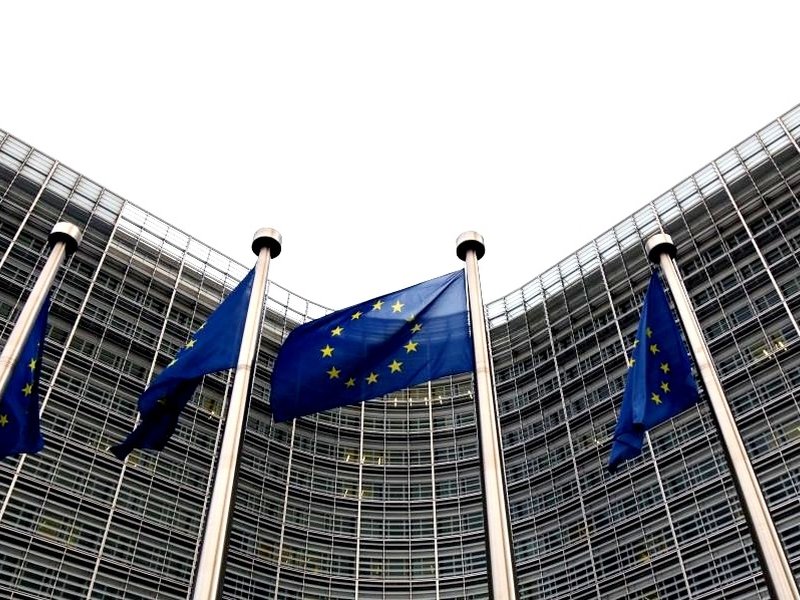
When Europe is facing inflation, geopolitical instability, and dependence on external actors, New Delhi’s emphasis on unity, predictability, and strategic coherence is directly relevant to the euro crisis and geopolitical fragmentation, it further added.
Deeper India-EU cooperation in trade, technology, and defence is framed as imperative to safeguard sovereignty against the weaponisation of economic power by major actors, the article concluded. Incidentally, the India-EU FTA is likely to be firmed up later this month.
--IANS
jb/dan