

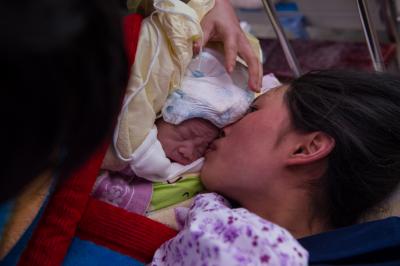
Beijing/New Delhi, Jan 20 (IANS) The continued low birth rate in recent years in China shows that the damage caused to the population demographic, due to its one-child policy, may be irreversible, according to a media report.
While Beijing has accelerated family-support policies and childcare subsidies, the birth count plummeted to a record low last year -- falling by about 10 million from its 2016 peak, the South China Morning Post reported. China’s population shrank for a fourth consecutive year.
As per the National Bureau of Statistics, in 2025, the country saw only 7.92 million births, down 17 per cent from 9.54 million in 2024.
“This marked the lowest birth figure since records began in 1949 and broke the previous record low set in 2023,” the report said.
The data from the Bureau showed that the country’s total population also fell by 3.39 million in 2025 to 1.4049 billion from 1.4083 billion a year earlier -- marking the steepest annual population decline on record.
Notably, 2025 also saw one of the highest total deaths in five decades -- about 11.31 million people.
“The pace of the decline is striking, particularly in the absence of major shocks,” Su Yue, principal economist for China at the Economist Intelligence Unit, was quoted as saying.
Yue blamed the declining population rate on a reluctance among young people to get married, combined with rising economic pressures.
“The data should serve as a strong signal for policymakers to place greater emphasis on domestic structural reforms,” she noted. The expert stated that “a more forceful policy response on fertility in the face of a shrinking population” is crucial to counter "the risk of a smaller consumer base in the future”.
Meanwhile, China has accelerated efforts to revive its declining birth rate by rolling out a series of family-support policies aimed at lowering child-rearing costs and easing the pressures that have deterred couples from having children.
This includes Beijing’s national childcare subsidy scheme offering up to $1,534 per year for each child under three.
“In the early stages of population decline, fluctuations [in births] are common before the trend stabilises,” said Yuan Xin, vice-president of the China Population Association and a professor of demography at Nankai University in Tianjin. “But despite short-term volatility, a return to positive growth is almost off the table.”
Last year, the central authorities also pledged to expand insurance coverage to cover all childbirth-related out-of-pocket expenses, and they have sought to regulate childcare by addressing long-standing shortages, uneven quality, and weak oversight in the sector, the report said.
--IANS
rvt/