

Washington, Dec 18 (IANS) India's relationship with the United States in 2025 has been marked by early diplomatic momentum, followed by trade-related friction and geopolitical disagreements, but is now stabilising as both sides look ahead to a potentially more productive 2026, a senior US-based India expert has said.
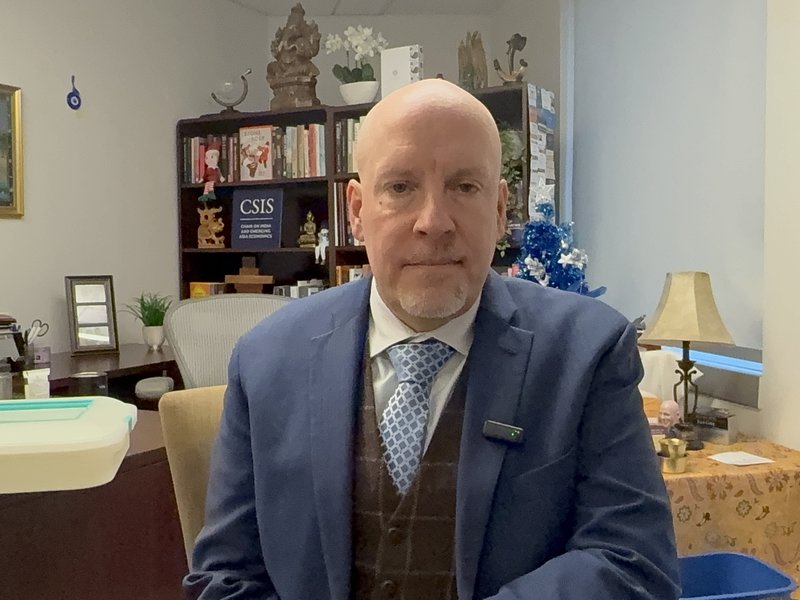
"It's definitely been an up and down," Richard Rossow, senior advisor and Chair on India and Emerging Asia Economics at the Centre for Strategic and International Studies (CSIS), told IANS in an interview, reflecting on the trajectory of bilateral ties over the past year.
Rossow said India "got outta the gates better than most countries with how they engaged the Trump administration," citing early outreach, including a head-of-state meeting and a Quad foreign ministers' meeting.
However, he noted that differences soon emerged over "what settled the India-Pakistan conflict" and concerns in Washington over India's continued purchase of Russian oil, which he said "triggered additional trade sanctions".
Despite these tensions, Rossow said the current phase feels calmer. "We don't have the trade agreement done yet, but you don't have quite the sense of day-to-day vitriol," he said, adding that this could "set the table for a more successful 2026".
On trade, Rossow acknowledged that India remains a challenging partner for US companies, pointing to measures introduced since Prime Minister Narendra Modi first came to power that made it "more harder for US companies to export to India". He said some of those restrictions still weigh on US perceptions, particularly under President Donald Trump.
At the same time, Rossow said India's trade posture has evolved. He cited reductions in duties, fewer mandatory local manufacturing rules, and major trade agreements with Australia and the UAE. "If you weren't following the nuance, you hadn't realised India's position on trade has changed quite a bit," he said, arguing that New Delhi increasingly sees trade openness as a way to integrate into global supply chains.
Despite political "wobbles", Rossow said trade flows remain resilient. "The trade numbers, you still see a year-on-year growth both in imports and exports," he noted, adding that policy disputes have not yet had "quite as big of an impact on real trade flows as we might expect".
Looking at 2025 trade growth, Rossow said final figures are likely to show "high single-digit growth", though he flagged a recent decline in Indian exports to the US. He described this year's outlook as "modest growth", but said a completed trade deal and removal of additional tariffs could significantly improve prospects in the coming years.
Rossow identified agriculture as a key obstacle to finalising a deal, saying the US president is "really kind of demanding access to Indian basic agricultural commodities." He warned that this is "dangerous territory" because most Indian farmers lack alternative employment options, making large-scale liberalisation politically and socially sensitive.
Defending New Delhi's stance, Rossow said India's economy remains uneven, with highly productive services alongside low-productivity agriculture. "Further liberalisation has to be phased appropriately so you don't dramatically disrupt people's lives," he said.
On investment, Rossow said recent multi-billion-dollar US commitments to India's artificial intelligence sector reflect long-term thinking. "The world's gonna have three Titanic economies," he said, predicting India will become a $20–25 trillion economy by mid-century and eventually compete with the US and China for global economic leadership.
Turning to reforms, Rossow said the Modi government moved slowly early in its third term but has recently shown renewed urgency, citing changes to the goods and services tax and legislation to allow 100 per cent foreign investment in insurance. He said New Delhi appears to recognise that "the keys to growth are domestic" and largely within government control.
Looking ahead to 2026, Rossow said the first quarter would be "make or break", with hopes for a trade agreement, a delayed US presidential visit to India, a Quad leaders' meeting, and an AI impact summit in February. He also pointed to upcoming state elections as factors shaping India's reform capacity.
Rossow said India has evolved over the past 11–12 years with a "more robust security posture", deeper security cooperation with the US, and episodic but significant reform efforts.
"The people ties, the commercial ties, security ties, you know, it's enough glue," he said, arguing that even after periods of strain, the relationship has repeatedly shown resilience.
India and the United States have steadily expanded cooperation in defence, technology, and strategic forums such as the Quad over the past decade, even as they have differed on trade policy and global issues. Bilateral trade has grown substantially, making the US one of India's largest trading partners.
--IANS
lkj/sd/