
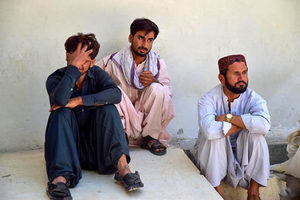
Washington, Feb 7 (IANS) Balochistan’s recurring violence is not merely a law-and-order issue, but a combination of history, geography, and a persistent deficit of trust between its people and the state, a report has stated.
“Balochistan rarely captures sustained international attention unless violence erupts. When it does, the province is often reduced to a narrow set of descriptions: Pakistan’s largest and poorest region, a mineral-rich hinterland plagued by insurgency, a security challenge to be contained,” observed an opinion piece in the US-based Eurasia Review.
It comes following the latest wave of coordinated attacks across the province.
Spread over 3,47,000 sq km, the province comprises 44 per cent of Pakistan, but with less than 15 million residents who occupy the deserts and mountain ranges and outlying valleys between Afghanistan and Iran, described the article.
“The province controls regional trade routes because its 760-kilometre Arabian Sea coastline starts from Gwadar port. The dry landscape of the region conceals Pakistan’s most important mineral resources which include copper and gold and coal and natural gas,” it said, adding, “These assets, however, have been both a promise and a curse.”
The region's inhabitants hold Islamabad in distrust, accusing it of ferrying away resources without sharing the dividends, leaving them stagnant and in poverty.
Meanwhile, its geography favours insurgents where security forces find defending such a large, rugged region with minimal local support a near‑impossible task.
Recently, the Balochistan Liberation Army (BLA) launched simultaneous attacks on police stations, banks, and other facilities in various locations, branding the campaign as 'Herof 2.0'.
Delving into Balochistan’s troubled relationship with the state, the report observed that before Pakistan’s independence, the region was a mosaic of princely states and directly administered areas.
The accession to Pakistan in March 1948 was viewed by many Baloch nationalists as coerced, and sparked the first rebellion. Subsequent uprisings followed in 1958, the 1960s, the 1970s, and again from the early 2000s onward.
“Each phase followed a similar pattern: political exclusion and economic grievance, armed resistance, a forceful state response, and a temporary pause left core issues unresolved,” the article shared.
The grievances remain consistent. Natural gas discovered in the 1950s fuelled industries nationwide long before Baloch districts received access. Today, mega‑projects like Reko Diq and the China‑Pakistan Economic Corridor are seen locally as extraction without consent. Development benefits are perceived as flowing outward, while communities remain marginalised.
Where accountability mechanisms are opaque, mistrust deepens. The result is a vicious cycle: militant violence delegitimizes insurgents, but state repression alienates communities, leaving neither side with clear legitimacy.
While infrastructure and jobs are needed in the region, locals insist their core grievance is lack of control over their own affairs. Decisions affecting Quetta and surrounding districts are often perceived as being made in Islamabad, corporate boardrooms, or foreign capitals, it opined.
“Balochistan’s conflict is neither inevitable nor insoluble. But as long as it is framed primarily as a counterterrorism problem rather than a political one, the cycle of violence will persist-flaring, subsiding, and returning, each time at a higher cost to both the province and the Pakistani state,” the report argued.
--IANS
jb/as