

Washington, Feb 25 (IANS) A heated congressional hearing on America’s growing physician shortage has opened a new fault line that could directly affect Indian medical graduates seeking careers in the United States.
At issue is a proposed “$100,000 supplemental fee for new H-1b visas,” sharply higher than current employer-paid processing costs. Lawmakers on Tuesday debated whether such a move would deter rural hospitals from hiring foreign-trained doctors at a time when the country faces widening workforce gaps.
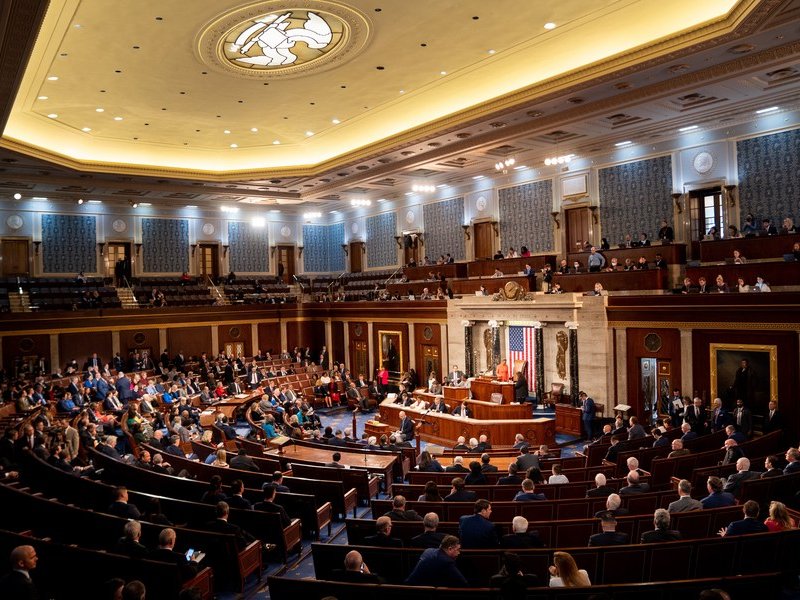
The discussion unfolded during a Ways and Means health subcommittee hearing on expanding graduate medical education (GME) and strengthening rural health care delivery.
Congressman Adrian Smith said the United States faces “a very real problem, a rapidly depleting health care workforce.”
“By 2037, the US will see a shortage of 187,000 physicians. Nearly half of all practicing physicians will retire in the next decade,” he said.
Rural America is particularly strained. “83 million Americans live in an area with too few primary care physicians,” Smith noted, adding that only “2 per cent of residencies can be found in rural America.”
Amid bipartisan calls to expand Medicare-supported residency slots, immigration policy emerged as a flashpoint.
Congresswoman Linda Sanchez pointed to the proposed increase in visa fees and asked whether it would affect underserved communities that rely heavily on international medical graduates. Dr. Andrew Racine, president of the American Academy of Pediatrics, said that “anything that’s going to decrease the supply is going to have an impact on our ability to serve the needs of children.”
Several lawmakers acknowledged that foreign-trained physicians form a significant part of residency programmes and rural care systems.
India was not mentioned in the hearing. But, Indian nationals historically represent one of the largest cohorts of international medical graduates in the United States, particularly in internal medicine, family medicine, and other primary care specialties.
Many international medical graduates, in particular from India, serve in rural and medically underserved areas under visa arrangements tied to service requirements. Any substantial increase in visa costs could make recruitment financially difficult for small community hospitals already operating on narrow margins, lawmakers said.
Jason Shenefield, chief executive of Phelps Health in Missouri, told lawmakers his rural system expects “close to about $ 100,000 loss per resident” under current financial structures. Additional immigration-related costs, members suggested, could further strain such facilities.
At the same time, some Republican lawmakers argued that immigration policy should not substitute for domestic training reform. Congressman Greg Steube said American medical graduates were losing residency slots to foreign doctors and vowed to introduce legislation addressing the issue.
Beyond immigration, lawmakers debated expanding Medicare-funded residency slots. A bipartisan proposal seeks to add 14,000 positions over seven years, prioritising rural and underserved areas.
Medicare currently spends roughly $22 billion annually on GME, but caps imposed in 1997 continue to shape how residency positions are distributed.
For Indian medical students pursuing US licensure and residency — a pathway that requires clearing US licensing examinations and securing accredited training slots — the debate adds uncertainty.
As Congress weighs workforce expansion, immigration rules and funding formulas, the hearing underscored how closely US domestic health policy and global medical mobility have become intertwined.
--IANS
lkj/rs