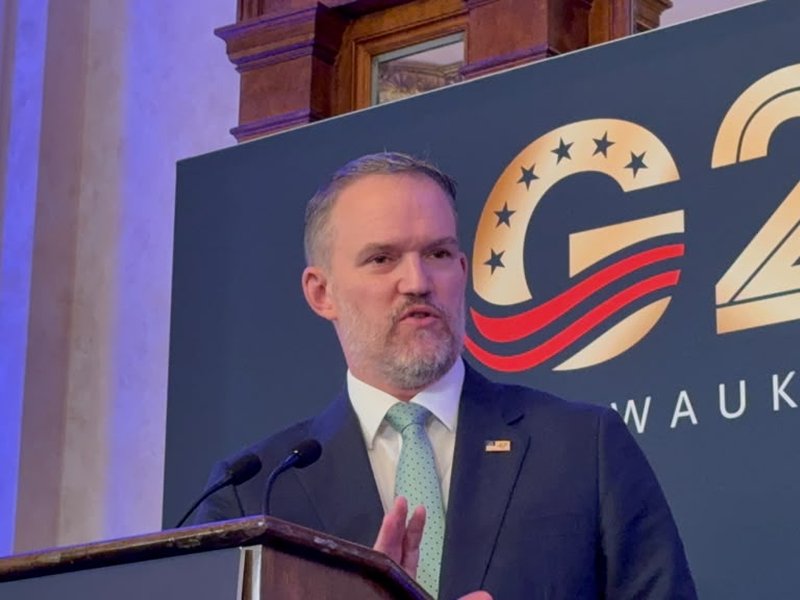

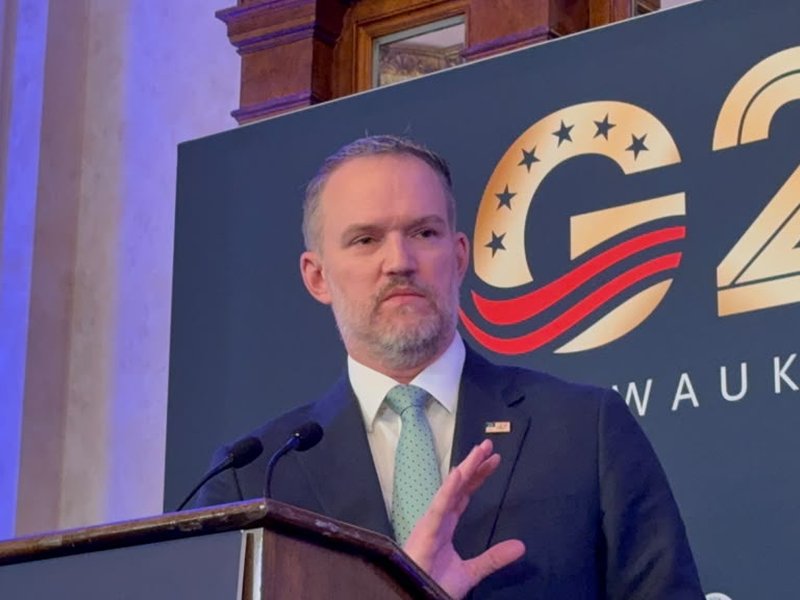
Milwaukee, Oct 2 (IANS) US Trade Representative Jamieson Greer called for reform of the unconditional most-favoured-nation principle that underpins global trade, arguing that countries with vastly different trading relationships should not automatically receive identical treatment.
Greer also delivered a sharp assessment of the World Trade Organization, saying the G20 Trade Ministers' Meeting in Milwaukee had not changed his view about the organisation's ability to tackle major problems confronting global trade.
"For us, we think that the principle of unconditional most favored nation warrants reform," Greer told reporters at the conclusion of the ministerial.
"We think that it actually fails to promote reciprocity and balance in the trading system. It can actually create free riders," he said.
The most-favoured-nation, or MFN, principle generally requires WTO members to extend the same trade treatment to other members.
Greer argued that such an approach did not sufficiently account for differences in America's economic relationships with individual countries.
"In the US case, implementing MFN would mean that the UK and China should be treated the same or Vietnam and Ecuador should be treated the same or Switzerland and South Africa should be treated the same," he said.
Countries could have different levels of reciprocity, trade balance and unfair practices affecting American companies, Greer said.
"We think that it hinders members' efforts to reach agreements or take actions to address unfair practices either individually or in smaller groups," he said.
Greer said WTO members were already departing from the MFN principle in practice while publicly supporting it.
The United States did not seek a formal G20 agreement on changing the principle during the Milwaukee meeting.
"We did not circulate a draft statement on this. We didn't propose a joint statement," Greer said.
"For us, it's an important conversation to start, and it's one that will continue maybe the G20, certainly another forum. It's a robust conversation, and I think there's gonna be some time before there is consensus on that as a general matter," he said.
Greer was even more sceptical when asked whether discussions in Milwaukee had changed his view of the WTO.
"I would not say that this ministerial has changed my view on the World Trade Organization," he said.
Greer said two or three countries had suggested taking the problem of structural excess capacity to the WTO and developing rules to address it.
"The WTO can't even deliver on its current mandate. The idea that it could tackle this issue, I just don't believe that at all because I live in the real world," he said.
Greer cited what he described as shortcomings in transparency and compliance with existing WTO requirements.
"The WTO can't even get people to notify their subsidies, to notify their trade measures," he said. "There's like no transparency. People don't comply with that."
He also pointed to difficulties reaching agreement on digital trade.
Greer said countries had followed a practice for three decades of not imposing taxes or tariffs on digital transmissions, but had still been unable to agree on formalising it earlier this year.
"So something the countries have been doing for 30 years, they can't even agree, the idea that the WTO can take up this massive macroeconomic issue and solve it on a multilateral basis, that's just crazy," he said.
--IANS
lkj/rs