
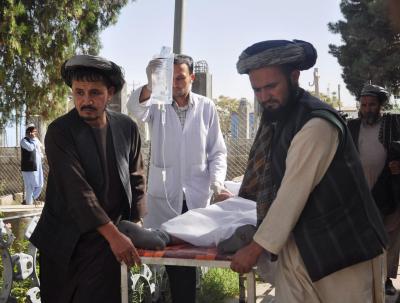
Kabul, Jan 29 (IANS) The United Nations Office for the Coordination of Humanitarian Affairs (OCHA) has predicted that 14.4 million people in Afghanistan will require health services in 2026, local media reported on Thursday.
Among these people, only 7.2 million people are expected to be covered by existing programmes, according to OCHA statement. It stated that 54 per cent of those who need health services are children, 24 per cent are women and 10 per cent are specially-abled people, Afghanistan's leading news agency Khaama Press reported. The OCHA noted that funding of over USD 190 million will be needed to address these health needs.
The OCHA stated that Afghanistan remains the world's largest humanitarian crisis in 2026, with around 22 million people relying on humanitarian assistance. International organisations and NGOs have been ramping up their efforts to provide vaccinations, maternal care and emergency medical services in Afghanistan.
Meanwhile, United Nations Children's Fund (UNICEF) said on Tuesday that Afghanistan is facing one of the worst child malnutrition crisis, with around 3.7 million children facing acute malnutrition annually, local media reported.
UNICEF representative in Afghanistan, Tajudeen Oyewale, stressed the need to address the crisis during the launch of malnutrition prevention and treatment guidelines on Tuesday, Khaama Press reported.
The malnutrition crisis in Afghanistan has deteriorated since 2021 amid economic collapse, drought and humanitarian funding shortages.
According to the World Food Programme, more than 90 per cent of Afghan households cannot buy sufficient food, resulting in children facing permanent developmental damage from hunger and insufficient nutrition.
The updated guidelines include significant changes in treatment and prevention approaches, with more focus on life-saving interventions for the most severe cases of malnutrition. The guidelines have provided care instructions for babies under six months old, showcasing a critical step in reducing child malnutrition. UNICEF expressed hope that these revised guidelines will improve treatment outcomes and save the lives of children in Afghanistan amid the malnutrition crisis.
Various factors, including poverty, food insecurity, limited access to healthcare, and poor maternal nutrition, cause malnutrition among children in Afghanistan. Rural regions are particularly affected due to the crisis, as families face food scarcity and do not have access to medical facilities, while ongoing restrictions on women's healthcare workers have further affected treatment access.
--IANS
akl/as