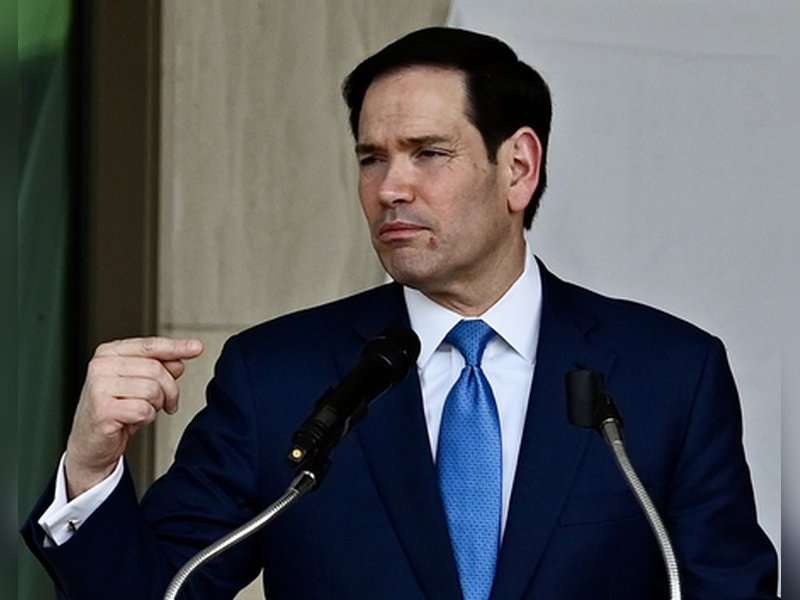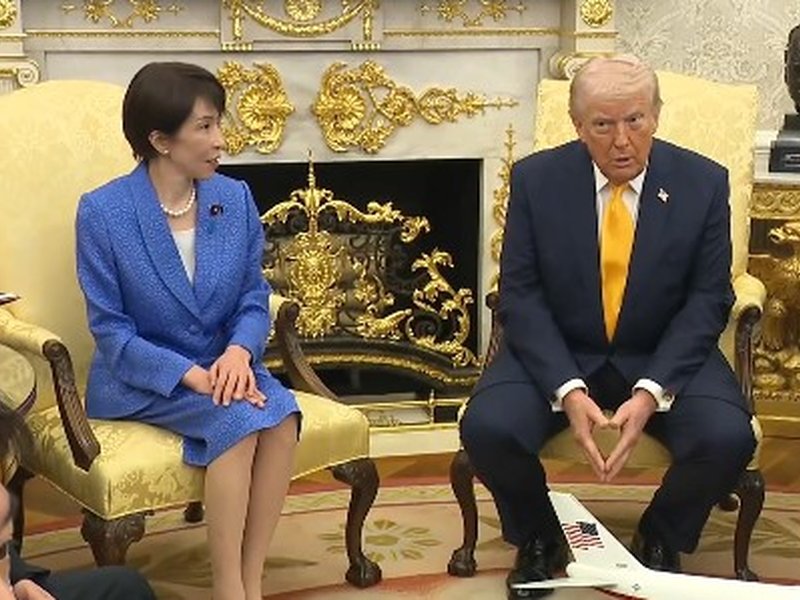
Washington, March 20 (IANS) President Donald Trump’s attempt to defend secrecy over US strikes on Iran by invoking Pearl Harbor appeared to unsettle Japanese Prime Minister Sanae Takaichi during their White House meeting, creating an awkward moment in an otherwise warm display of alliance politics.
The exchange came when Trump was asked why allies in Europe and Asia, including Japan, had not been informed before the attack.
“Well, one thing, you don't want to signal too much,” Trump said. “When we go in, we went in very hard, and we didn't tell anybody about it because we wanted surprise.”
He then turned to Japan’s 1941 attack on Pearl Harbor.
“Who knows better about surprise than Japan, OK? Why didn't you tell me about Pearl Harbor, OK?” Trump said. “You believe in surprise, I think much more so than us, and we had to surprise them, and we did.”
He argued that the decision not to notify allies preserved the military advantage. “Because of that surprise, we knocked out -- the first two days we probably knocked out 50 per cent of what we and much more than we anticipated doing. So, if I go and tell everybody about it, there's no longer a surprise, right?”
According to the foreign pool report, Takaichi reacted instantly when Trump made the comparison. Her “eyes widening and her smile disappearing” as she “leaned back, drawing her hands in, clearly taken aback by the sudden mention of Pearl Harbor”.
The remark stood out because the rest of the visit had been marked by unusually friendly rhetoric from both leaders.
Trump repeatedly praised Takaichi as a “great woman” and said they had “a very fine relationship”. At the dinner later in the evening, he called her “a spectacular woman” and said it was “an honor to have you with us at the White House”.
Takaichi, too, leaned into the personal chemistry. She told Trump, “I am very confident that Donald and I are the best buddies to realize this shared goal,” and later said, “Japan is back.”
Still, the Pearl Harbor line briefly cut through that carefully managed tone.
His broader message to Japan was that allies should “step up” when their own interests are directly involved, especially regarding the Strait of Hormuz. “I expect Japan to step up because, you know, we have that kind of relationship,” he said. “In the case of Japan, I hear they get more than 90 percent of their oil through the Strait.”
Takaichi did not respond publicly to the Pearl Harbor remark during the meeting. On China, she stayed measured, saying Japan had “been consistently open to dialogue with China” and hoped the US-China relationship would support “regional security” and “the global supply chain”.
The United States and Japan rebuilt ties after World War II into one of Washington’s closest post-war alliances. Pearl Harbor remains a deeply symbolic and sensitive historical reference, even as the two countries now cooperate closely on defence, trade, and regional security.
--IANS
lkj/rs