
Tel Aviv, Feb 7 (IANS) As Bangladesh heads to elections next week, the outcome will determine whether the country moves toward stability, faces prolonged uncertainty, or shifts towards a new ideological direction. The future trajectory will depend on how the next government governs, its inclusiveness, and whether it learns from past failures, a report has highlighted.
According to a report in 'Times of Israel', with the ban on Awami League, the upcoming election has largely turned into a contest between two political parties, the Bangladesh Nationalist Party (BNP) and the radical Islamist party, Jamaat-e-Islami
Highlighting concern about the BNP, it said, “When it ruled in the past, the country was known for corruption and weak institutions. The party also depended on Islamist allies. Many voters do not trust it fully and question whether it has really changed.”
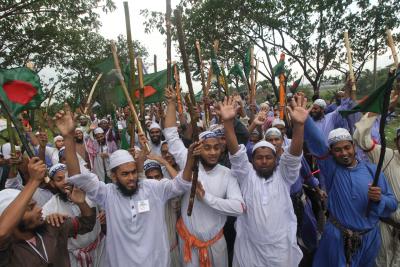
The report stressed that the second camp comprises an Islamist alliance led by Jamaat, a party once politically isolated for its ideology and its role during the 1971 Bangladesh Liberation War, when it aligned with Pakistan.
Following the collapse of the Sheikh Hasina-led Awami League government in 2024, Jamaat has regained its foothold in the country considerably.
“Jamaat presents itself as disciplined, honest, and close to religious values. In many areas, its organisation is stronger than that of secular parties weakened by years of pressure. Its supporters believe it can bring moral leadership and clean government. For many secular Bangladeshis and religious minorities, Jamaat’s rise is frightening. For foreign observers, it raises questions about where Bangladesh could be heading socially and politically,” the report mentioned
If Jamaat and its allies secure power, the report said, Bangladesh would enter a new phase, where the country may not become a religious state, but public debate would shift into a more conservative direction.
“Minorities could feel more insecure. Women’s rights and secular education might face pressure. Internationally, Bangladesh could take a colder position toward India and Western countries, while keeping practical ties with China and others. For Israel and Middle Eastern observers, this scenario could bring more openly hostile language, even if formal policy does not change,” it noted.
On the other hand, the report warned that a hung parliament or disputed result would prove to be the most dangerous scenario.
“Protests could return. Political violence could increase. The military, which never fully left politics, could step in as a power broker. This is the outcome diplomats fear most," it added.
From the global perspective ahead of the February 12 election in the South Asian nation, the report noted, “Bangladesh has no formal ties with Israel. Still, its political direction matters. A more religious and nationalist Bangladesh could become louder in Islamist international forums. A stable civilian government would likely remain distant but predictable.”
--IANS
scor/as