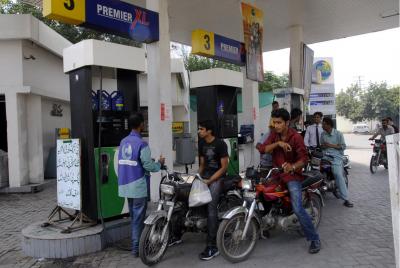
New Delhi, March 11 (IANS) Petrol and diesel prices in Pakistan have shot up by nearly Rs 55 per litre after the outbreak of the Iran war, which reflects the energy import trap that the country has been stuck in during recent years, according to a report in the Pakistani media.
As global oil prices surge and shipping costs rise due to war premiums and security risks, Pakistan has little choice but to pass the increase on to consumers. But the uncomfortable reality is that the Rs 55 per litre hike may only be the beginning, according to the report in the Karachi-based Business Recorder.
If the conflict persists, the increase in oil prices will lead to higher transport costs, rising food prices, accelerating inflation, and a significant rise in the cost of doing business.
The report states that Pakistan is vulnerable to global energy shocks because of a structural policy failure. The country designed its energy system around imported fuels, despite possessing substantial domestic energy resources. In doing so, policymakers largely ignored the most critical principle of national energy planning: energy security, the report lamented.
What makes this situation even more troubling is that Pakistan is not a country lacking energy resources. On the contrary, it is richly endowed with indigenous energy potential.
The Thar coal reserves are among the largest lignite deposits in the world, which have the potential to generate 100,000 megawatts for more than a century. Properly developed, they could supply a substantial portion of Pakistan’s baseload electricity for decades at significantly lower cost than imported fuels.
Pakistan also possesses enormous hydropower potential, estimated at more than 60,000 megawatts, much of which remains untapped. In addition, the country lies in one of the world’s most favourable regions for solar energy, while the wind corridors of Sindh and Balochistan offer significant renewable power potential, the report pointed out.
Given these advantages, Pakistan had a clear strategic option: build its energy system around indigenous resources, but the fact that it did not constitutes a strategic policy failure, the report observes.
The importance of energy security has been raised repeatedly over the past two decades. Many analysts have consistently argued that Pakistan must reduce dependence on imported fuels and prioritise domestic resources. Had Pakistan converted a substantial portion of its energy generation to a combination of hydropower and Thar coal, the country’s economic trajectory would look very different today, the report added.
--IANS
sps/vd