New Delhi, Dec 12 (IANS) In a significant decision, the government on Friday (December 12) approved a two‑phase, fully digital Census 2027 with an allocation of Rs 11,718 crore. According to officials, the digital design will speed operations and improve data quality.
The decadal count was postponed from 2021 largely because of the COVID‑19 pandemic and its aftermath, with authorities arguing that immediate post‑pandemic enumeration in many countries produced quality and coverage problems.
Additionally, it was also pointed out that logistical and human‑resource disruptions warranted a delay.
The Census is India’s foundational demographic exercise, involving extensive planning, resource allocation, and the legal process of delimitation that shapes electoral rolls.
Incidentally, India’s last full census in 2011 recorded a population of 1.21 billion, documented trends in urbanisation, literacy gains, and a slowly improving sex ratio. Such data help in guiding a decade of policy and planning. These decadal snapshots are the primary source for socio‑economic indicators used by ministries, states, and researchers to design welfare schemes and infrastructure investments.
The population count helps the constitutional process of delimitation, redrawing constituency boundaries to ensure, roughly, equal representation. It supplies the demographic frame that forms the base for electoral rolls and for sample groups selected for surveys.
However, the delayed process and the decision to include caste data have raised political and technical concerns; while in southern states, there are worries over population‑based seat redistribution. The delimitation exercise that follows the decennial Census reallocates seats among states based on updated population figures.
The freeze on the total number of Lok Sabha seats is due to be revisited after 2026, which opens the door to redistribution and potential increases in total seats if Parliament so decides.
The southern states have publicly expressed concern that fresh census figures could trigger delimitation that reduces their relative representation, given slower population growth in parts of the South compared to those in the north.
The Centre has assured that such concerns will be discussed at the appropriate time.
Meanwhile, the inclusion of caste enumeration has also added political sensitivity, with debates over how the data might be used in reservation and electoral calculations. Considering that the increase in population through this period would result in a larger number of lawmakers, the government had to design a Parliament building to comfortably accommodate them.
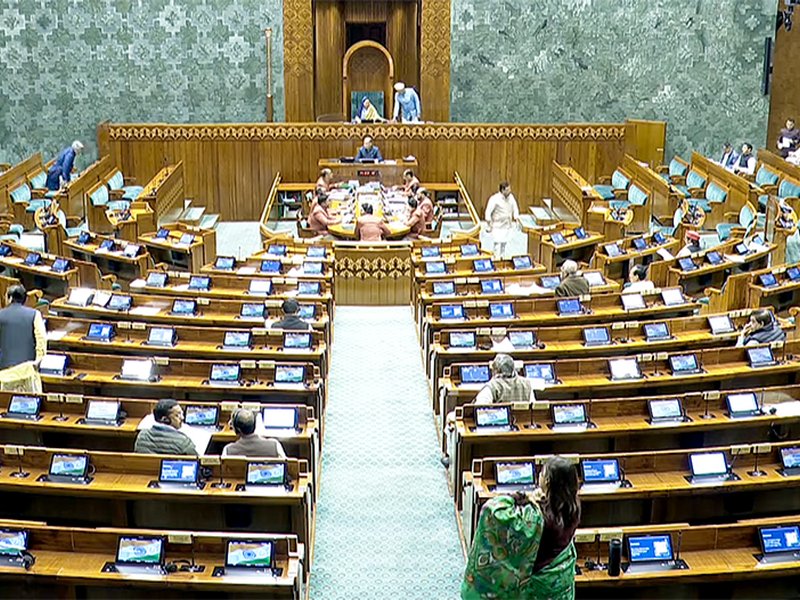
Thus, planning ahead, the government built the new building where the Lok Sabha can seat up to 888 members and the Rajya Sabha, up to 384. The exact number of future representatives would be known only after appropriate legal and political steps, following the conclusion of the 2027 Census and a delimitation process. The increased capacity removes a physical constraint that previously limited how many members could be accommodated in each house at one time.
The new complex was planned not only as a modern workplace but also to future‑proof India’s legislature for a larger membership and more complex committee work.
Reports quoting experts emphasised that the old circular chamber was cramped for a growing democracy and lacked space for expanded membership, modern technology and committee rooms. Thus, the practical rationale was for a larger, triangular complex that can host more simultaneous legislative activity.
The new Parliament building thus removed a practical bottleneck, being ready to accommodate a larger legislature, but actual seat increase requires political consensus and legal action after the Census and delimitation. Until those steps are taken, the building’s greater capacity remains a contingency rather than a guarantee.
In practice, Parliament would need to pass enabling legislation or a constitutional amendment to change the total number of seats; the Delimitation Commission then redraws boundaries and allocates seats among states using the new population data.
-- IANS
jb/uk