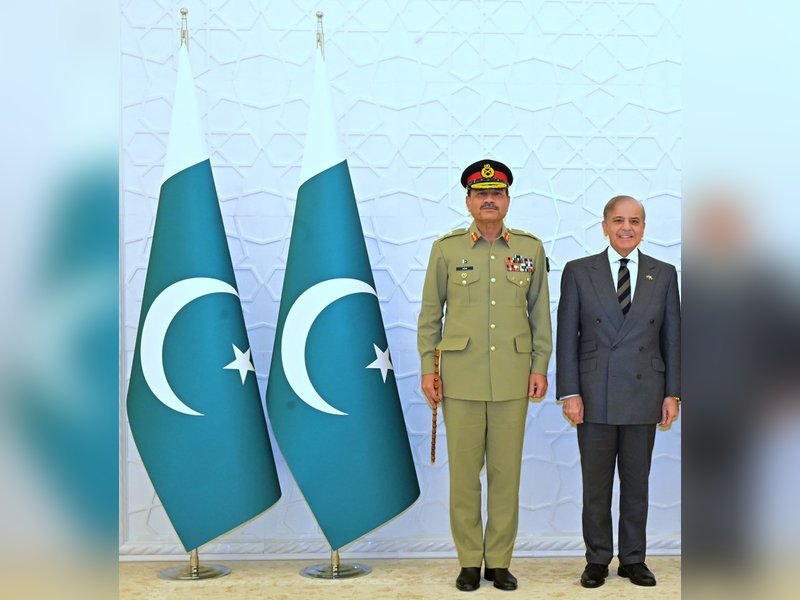
Tel Aviv, Jan 3 (IANS) Pakistan, under its Army Chief Asim Munir, risks normalising transnational repression through threats to families, digital intimidation, and court-backed censorship-- a move that would not only silence its nationals abroad but also undermine the principle that free speech cannot be controlled by foreign regimes, a report said on Saturday.
It stated that by consolidating military rule and exporting intimidation through legal and digital channels, Pakistan is no longer just a troubled democracy, but is cultivating the habits of a transnationally repressive regime.
“Pakistan’s Generals have long understood a simple political truth: repression works best when it travels. In 2025, under the tightened grip of Army Chief Field Marshal Asim Munir, Pakistan’s coercive toolkit has become more systematic and increasingly transnational. Dissidents can flee Karachi, Lahore, or Quetta, build new lives in London, Toronto, or New York, and still find that the Pakistani state can reach them: through intimidation, digital harassment, legal choke points, and the most potent leverage of all—family members left behind,” a report in 'Times of Israel' detailed.
“This is not a theoretical concern. Pakistan’s deteriorating human rights environment has been documented in the US government’s own reporting, which describes harassment of activists and threats that extend to families. In the US State Department’s 2024 human rights report on Pakistan, state agencies are described as routinely harassing activists, including those connected to ‘missing persons' advocacy, within a broader pattern of intimidation and curbs on civil liberties,” it mentioned..
According to the report, when intimidation campaigns target US residents, diaspora activists begin to self-censor in American cities and protests are muted out of fear that families in Pakistan could face reprisals, the Pakistani state is not merely regulating speech at home--it is projecting coercion into a separate constitutional order—colliding directly with foundational American principles.
“The US Constitution’s protection of speech and assembly is not a courtesy extended by the state, but a restraint imposed on power. When foreign governments intimidate people on US soil for expressing political views, especially through threats, harassment, and coercion via family members abroad, they are effectively attempting to rewrite the boundaries of American liberty,” it mentioned.
At the very least, the report stressed that US agencies should address credible allegations of Pakistani transnational repression as both a national security and civil liberties concern.
“Washington must document cases, support threatened communities, and insist that bilateral cooperation cannot be a shield for coercion on American soil,” it noted.
--IANS
scor/as