
New Delhi, April 22 (IANS) It was on this date, 22 April, 2025, when terrorists in Pahalgam massacred more than 26 innocent tourists and injured many others in the Baisaran valley after asking their religious identity first.
The attack was carried out in a brutal and targeted manner in a peaceful tourist destination, creating panic and chaos and leaving civilians with a very limited chance to escape in the difficult terrain of the valley.
These terrorists, who carried out this attack, were later neutralised under Operation Mahadev. They were identified as Suleman Shah (Hashim Musa/Musa), Abu Hamza (Hamza Afghani), and Jibran, and were linked to Pakistan-based terror networks.
Soon after this terror attack, TRF, an offshoot of the terrorist organisation Lashkar-e-Taiba, initially claimed responsibility for the Pahalgam attack twice, on the day of the attack and the following day, through its affiliated online communication channels.
However, following widespread public outrage and the way the massacre unfolded, Pakistan pressured them to disown the attack and deny any involvement.
Even Pakistan, at that time, said that it did not know anything about TRF, but later at the United Nations Security Council, it got the TRF name removed from the statement, reflecting complicity and diplomatic manoeuvring in shaping the final wording, with China also reported to have been involved in discussions around the language of the statement.
Later, Pakistan Defence Minister Ishaq Dar boasted about this incident in the National Assembly and said that he got the TRF name deleted, reflecting their complicity and the dilution of the United Nations Security Council statement on the condemnation of terrorism.
He said that they had had the reference to The Resistance Front removed from the United Nations Security Council statement, confirming that Pakistan ensured changes to the final wording.
These statements are widely cited in political and media discourse as part of the broader controversy surrounding the diplomatic handling of the incident and its implications for the sponsorship and condemnation of terrorism against Indians.
This terror attack in Pahalgam came shortly after Pakistan’s Field Marshal Asim Munir, in a public address, reiterated the Two-Nation Theory, stating that their forefathers believed they were different from Hindus in every possible aspect of life, including religion, culture, traditions, thoughts, and ambitions, and that they were two nations, not one nation.
He further emphasised that Hindus and Muslims are fundamentally distinct in their identity and worldview.
Later, these terrorists came to Pahalgam and killed people based on their Hindu identity.
Moreover, Pakistanis constantly justify their terror against India. They use different narratives to justify terror against India, including Islamophobia, victimhood, and other frames.
Through a well-orchestrated strategy, it presents India’s actions in Kashmir as settler colonialism, comparing it with Gaza, or as demographic change.
It is also widely reported that people in Pakistan are told that in Jammu and Kashmir, all mosques are closed and people cannot offer prayers, which contributes to propaganda and radicalisation against India.
They radicalise the youth of Kashmir and Pakistan alike and tell them to fight against India.
Pakistan has a long history of sponsoring terrorism against India and causing the deaths of numerous innocent civilians, ranging from 26/11 to Pulwama, Uri, and other recent terror attacks.
It has constantly spread terror against India, and the terror infrastructure and ecosystem are largely based in Pakistan-occupied Jammu and Kashmir, including networks of madrassas, terror launch pads, and other logistical and training facilities.
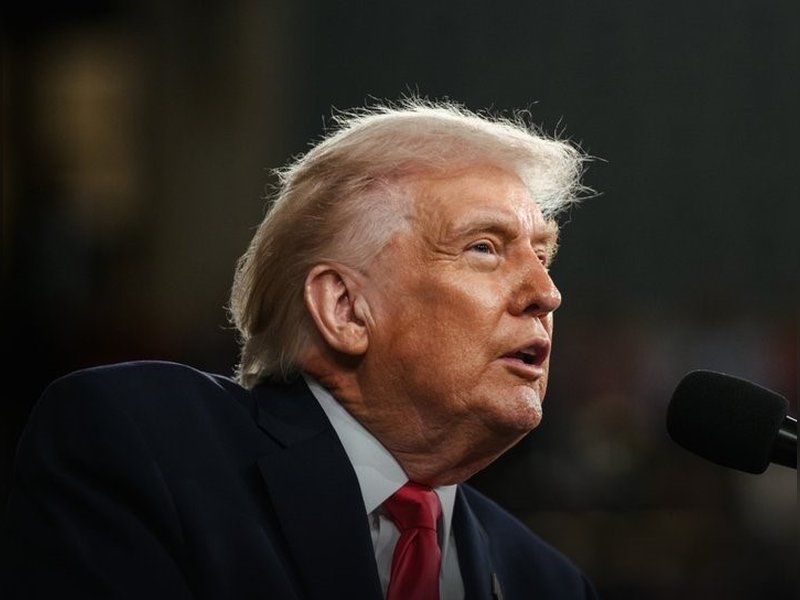
Now, the problem is that this “terror state” is being courted by Donald Trump, which emboldens it further to spread more terror against India, including its neighbouring regions like Afghanistan, where it recently bombed hospitals, killing more than 400 patients. If they can kill patients, they can kill anyone.
This is why India has a problem when Washington or any other country courts it, because it is seen as emboldening such behaviour and indirectly encouraging the continuation or escalation of terror activities against India.
Today, the situation in Jammu and Kashmir would have been different if Pakistan had not started sponsoring terrorism in Kashmir from the 1980s onwards, when it initiated this jihad against India.
For decades, there has been a constant effort on the part of Pakistan to keep Kashmir in a state of instability and tension, preventing it from moving towards sustained peace and development.
--IANS
scor/dan