
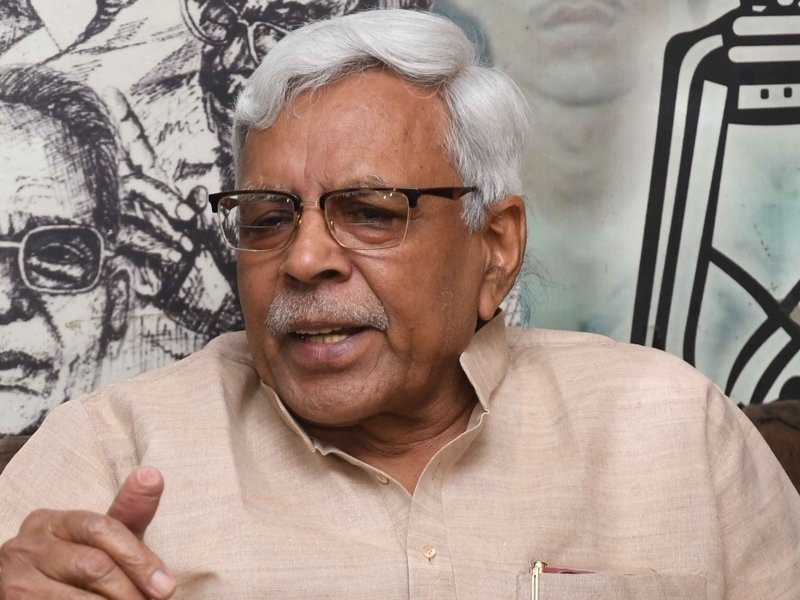
Patna, Jan 5 (IANS) On the birth anniversary of Sushil Kumar Modi, one of the most influential figures in Bihar’s political history, senior socialist leader and his long-time associate-turned-rival Shivanand Tiwari shared poignant memories on Monday, offering rare insights into Modi’s personality, ideology, and political journey.
Despite standing on opposite ends of the political spectrum, Tiwari’s tribute underlines the deep mutual respect that defined their relationship—from the days of the JP movement, through imprisonment in Bankipur Jail, to their parallel journeys in the Bihar Legislative Assembly.
Political differences, he notes, never translated into personal bitterness.
Shivanand Tiwari recalls that Sushil Modi was among the earliest leaders in the Bihar BJP to embrace the idea of social engineering, a concept later systematised by party ideologue Govindacharya.
At a time when the Jan Sangh and early BJP leadership were dominated largely by upper castes, leaders from backward classes—such as Sushil Modi, Nandkishore Yadav, and Prem Kumar—earned prominence through sheer organisational ability and perseverance.
According to Tiwari, Sushil Modi possessed an exceptional understanding of Bihar’s political landscape.
He was not only a sharp strategist but also a grassroots organiser who knew party workers by name—an increasingly rare quality in contemporary politics.
Recalling their days of incarceration during the JP movement, Tiwari writes that both he and Sushil Modi were passionate readers. It was Modi who introduced him to Ramdhari Singh Dinkar’s seminal work, “Sanskriti Ke Char Adhyay,” while they were lodged in Bankipur Jail.
Though the two often disagreed sharply—especially on how to deal with jail authorities and address the issues faced by ordinary prisoners—these ideological debates never affected their personal bond.
Tiwari notes that Modi always argued based on facts and remained firmly committed to his party’s principles.
One of the most striking aspects highlighted in Tiwari’s memoir is Sushil Modi’s liberal worldview and personal integrity.
He emphasises that Modi never resorted to communal or hateful language, even during politically charged times.
Tiwari points out that Sushil Modi married Jessica, a Christian woman, without insisting on religious conversion. Their marriage, solemnised through an Arya Samaj ceremony, was attended by none other than Atal Bihari Vajpayee, symbolising the inclusive ethos Modi embodied.
Tiwari remarks that such openness and modernity are increasingly rare in today’s political climate.
During the peak of Lalu Prasad Yadav’s political dominance, Sushil Modi emerged as the most formidable voice of the opposition in Bihar.
He challenged Lalu relentlessly on issues of governance and corruption and consistently rebutted personal allegations made against him—allegations that, Tiwari notes, were never substantiated.
In his tribute, Shivanand Tiwari expresses deep concern over the vacuum created by the passing of seasoned leaders like Sushil Kumar Modi.
“The political void left by leaders of his stature is not being filled today,” Tiwari observes.
Honouring him as a “formidable opponent” and a principled politician, Tiwari’s reflection stands out as a rare acknowledgement of respect across ideological lines—an increasingly uncommon gesture in contemporary politics.
--IANS
ajk/dan