
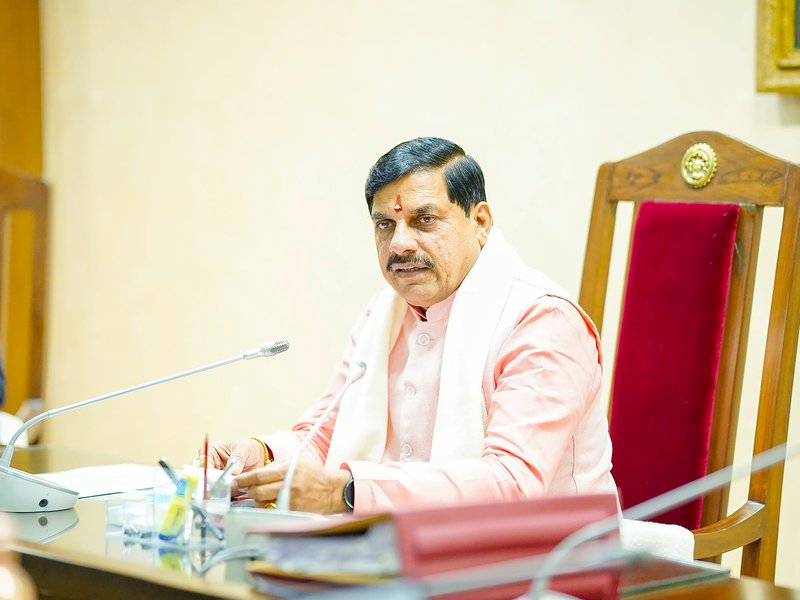
Bhopal, Feb 19 (IANS) The Madhya Pradesh cabinet, chaired by Chief Minister Mohan Yadav, on Thursday approved the state's excise policy for the financial year 2026-27, retaining key restrictions on liquor sales while introducing measures aimed at enhancing transparency, revenue protection, and support for traditional liquor production.
Under the new policy, no new liquor shops will be opened across the state, and existing shop premises will not be expanded or relocated. The existing ban on liquor shops within five kilometres on either side of the Narmada river banks and the prohibition of liquor outlets in designated holy cities will continue.
The policy also discontinues the longstanding practice of automatic renewal of liquor shop licences. Instead, all 3,553 existing liquor shops will be allotted through e-tendering and e-auction processes to ensure transparency and prevent monopolistic practices.
To establish a revised baseline for allocations, the reserve price for liquor shops will be fixed by increasing the current year’s licence fee by 20 per cent.
Liquor shops will be grouped into clusters, with each cluster comprising a maximum of five shops to facilitate streamlined bidding. District administrations will categorise these clusters into three to four groups, and the e-tendering and e-auction process will be conducted in phases accordingly.
To enhance financial transparency and reduce the scope for irregularities, only electronic invoices and e-bank guarantees will be accepted as security deposits. Traditional bank guarantees and fixed deposits will no longer be permitted under the new system.
The policy maintains existing liquor duty rates and licence fees for manufacturing units, bars, and other related establishments, ensuring continuity and operational stability for stakeholders in the sector.
In a move to promote exports and ease business operations, liquor manufacturers will no longer require prior government approval to determine product prices and may declare prices directly through the designated government portal in accordance with prescribed procedures. Simplifications have also been introduced in fee structures and label registration processes to encourage international exports.
The policy includes special provisions to support tribal self-help groups engaged in producing tribal Mahua liquor production. To facilitate the sale of Mahua-based products in other states, reciprocal arrangements will be allowed under which heritage or traditional liquors from other states may enter Madhya Pradesh on a duty-free basis, subject to similar treatment for Mahua products.
The new excise policy will come into effect from April 1, 2026, and is expected to improve regulatory transparency, prevent monopolistic control, and strengthen state revenue while maintaining regulatory safeguards on liquor availability.
--IANS
sktr/pgh