
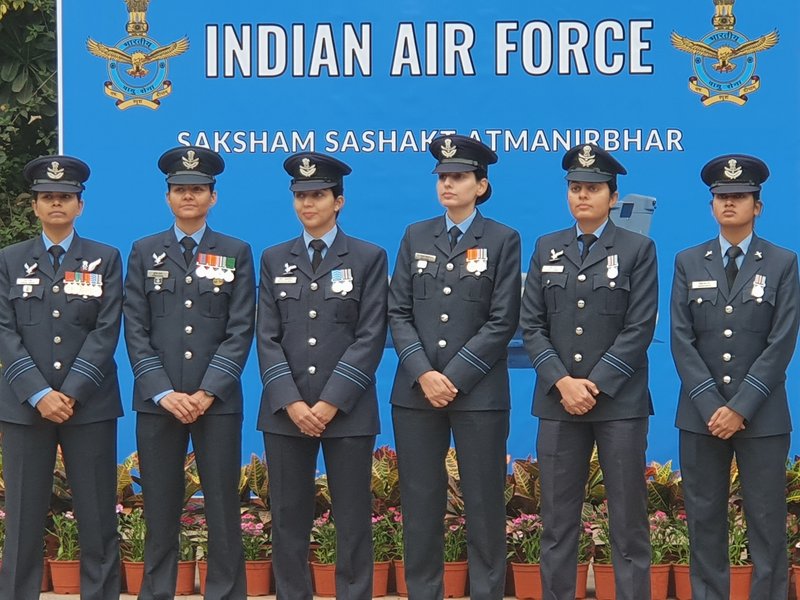
New Delhi, March 10 (IANS) Women are steadily expanding their role in India’s armed forces, marking a significant shift in the traditionally male-dominated defence establishment as policy reforms and institutional changes open new avenues across the Army, Navy and Air Force.
India currently has around 11,000 women officers serving in the three services, reflecting both the progress achieved over the decades and the scope for further inclusion.
The participation of women in the armed forces traces its origins to the late 19th century, when military nursing services were first organised in India. For decades, women were largely confined to medical and support roles.
A major turning point came in 1992, when the Army introduced the Women’s Special Entry Scheme, the Navy inducted its first women officers, and the Air Force began commissioning women into flying, technical, and non-technical branches.
In recent years, women officers have reached several milestones. Lieutenant General Sadhna Saxena Nair became the first woman to head the Directorate General of Medical Services (Army). Colonel Ponung Doming commands the world’s highest Border Task Force in the northern sector, while Squadron Leader Shivangi Singh flies the Rafale fighter aircraft in the Indian Air Force.
The Navy has also seen key breakthroughs, with Sub Lieutenant Aastha Poonia becoming the first woman pilot to be streamed into the fighter branch of Naval Aviation in 2025.
Women officers are also contributing to India’s global engagement. Wing Commander Anjali Singh became the country’s first woman military diplomat when she was posted as Deputy Air Attache in Russia, while Lieutenant Commanders Dilna K and Roopa A completed a 238-day circumnavigation of the globe aboard INSV Tarini.
A major structural shift came in 2021 when the Supreme Court allowed women to be admitted to the National Defence Academy (NDA), India’s premier military training institution. Since then, women cadets have begun graduating from the academy, marking a new phase in the training pipeline for future officers.
At the school level, girls are now being admitted to Rashtriya Military Schools and Sainik Schools, with a portion of seats reserved for them, strengthening the pipeline for entry into defence academies.
According to an article by India Narrative, these developments reflect a gradual but steady transformation in the armed forces as institutional reforms open more operational and leadership roles for women.
India’s contribution of women personnel to UN peacekeeping missions has also earned recognition. Major Radhika Sen was named the United Nations Military Gender Advocate of the Year for 2023, while Major Swathi Shanthakumar received the UN Secretary-General’s Gender Award in 2025.
However, women still form a relatively small share of the overall armed forces strength, and certain roles such as submarine operations and most enlisted ranks remain largely male, as highlighted in the India Narrative report.
Despite these challenges, recent reforms — including permanent commissions for women officers and expanded opportunities in operational roles — signal a long-term transformation in the armed forces as India’s daughters increasingly step forward to serve the nation.
--IANS
sn/uk