
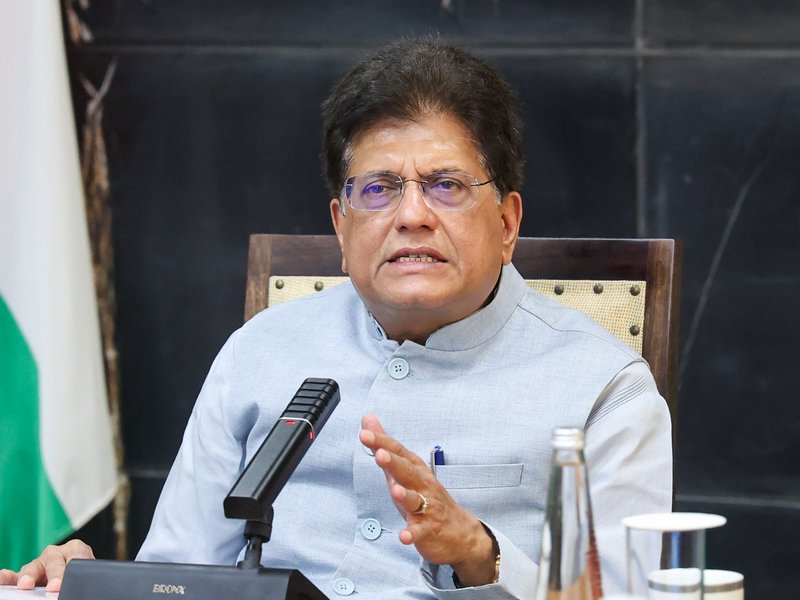
New Delhi, April 3 (IANS) Commerce and Industry Minister Piyush Goyal said on Friday that the government may review around five crore pending cases relating to minor offences following the passage of the Jan Vishwas (Amendment of Provisions) Bill, 2026, as part of reforms to facilitate the ease of doing business.
Addressing a press conference, Goyal said prosecutors could approach the courts to close such cases in accordance with the new provisions, which aim to reduce criminal proceedings in cases involving minor regulatory violations.
“At the local level, we encourage officials or prosecutors to try and finish these cases based on the new law,” the minister explained.
He said that persons affected by such cases can now approach prosecuting offices, and the authorities could act under the new provisions and close the litigation.
A central feature of these Jan Vishwas reforms is the replacement of criminal penalties, particularly imprisonment for minor procedural violations, with graded monetary penalties.
This marks a shift towards a more facilitative regulatory framework while retaining strict action for serious violations affecting public health and safety.
The Jan Vishwas (Amendment of Provisions) Bill, 2026, has been passed by both Houses of Parliament, marking a significant step towards further enhancing Ease of Doing Business and Ease of Living in the country.
The Bill reflects the government’s commitment to fostering a trust-based governance framework and ensuring proportionate regulation by reducing the compliance burden on individuals and businesses.
As per the provisions of the Bill, 784 provisions across 79 Central Acts administered by 23 Ministries have been amended.
Of these, 717 provisions have been decriminalised to promote Ease of Doing Business, while 67 provisions have been amended to facilitate Ease of Living.
Overall, the Bill seeks to rationalise more than 1,000 offences by removing minor offences, thereby improving the regulatory environment and enabling a more conducive ecosystem for businesses and citizens alike.
Goyal said the government’s objective was to move away from criminal punishment in cases where there was no deliberate intent to break the law and instead adopt a compliance-based enforcement approach.
In such cases, regulators could issue warnings or improvement notices, or impose small penalties that may escalate if violations are repeated, he said.
Criminal prosecution would be reserved for serious offences that cause harm to the public, specific sections of society, or public property, he added.
--IANS
sps/dan