
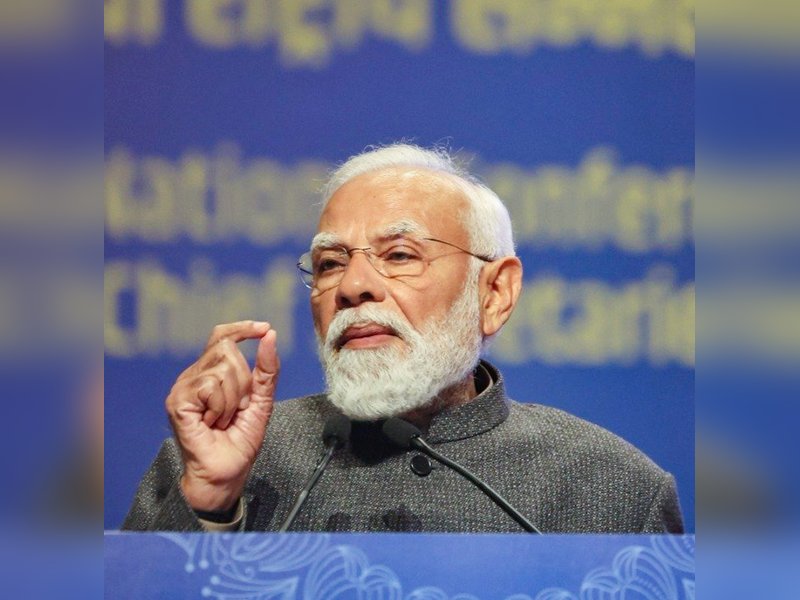
New Delhi, Dec 30 (IANS) Prime Minister Narendra Modi on Tuesday said that India’s growth story is being shaped by credibility, stability, and long-term confidence, driven by a series of sustained reforms across sectors ranging from labour laws and trade agreements to logistics, energy, and market reforms.
In a post on X, the Prime Minister referred to Union Minister Hardeep Singh Puri’s write-up on "Reform Express 2025", which reflects the "quiet but consistent work of governance that has helped clear long-pending bottlenecks week after week".
PM Modi said these steady reforms are laying a strong foundation for India’s future growth.
"Union Minister Hardeep Singh Puri writes on Reform Express 2025. He reflects on the quiet, cumulative work of governance that cleared bottlenecks week after week," he said.
"From labour laws and trade agreements to logistics, energy and market reforms, India's growth story is being built on credibility, stability and long-term confidence," he added.
In his article, Union Petroleum and Natural Gas Minister Puri highlighted how the PM Modi government’s reform push is improving ease of doing business and strengthening investor confidence.
Puri had described “Reform Express 2025” as the cumulative impact of consistent governance, where obstacles are addressed regularly rather than through sudden, disruptive changes.
He had said that in an uncertain global environment marked by political instability, the steady leadership of Narendra Modi stands out.
Puri had pointed out that key steps such as modern labour codes, major trade agreements, the Securities Market Code Bill and the Indian Ports Act 2025 are creating a solid base for long-term economic expansion.
He also said that the SHANTI Bill is a major step towards modernising India’s civil nuclear framework.
According to the minister, these reforms follow a clear pattern of cleaning up outdated laws, decriminalising minor offences, modernising labour compliance, strengthening market oversight, digitising trade processes, improving logistics, and reducing risks in long-term energy investments.
--IANS
pk/vd