
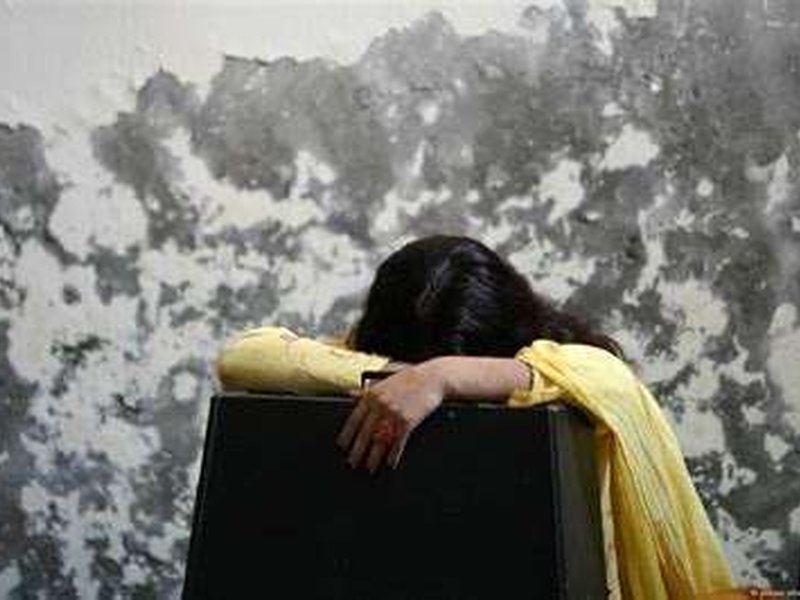
Islamabad, Feb 7 (IANS) The persistence of child marriage in Pakistan, despite legislative progress, underscores deep entrenchment of social norms and structural inequalities that laws alone cannot dismantle, an editorial in the country's financial daily 'Business Recorder' observed.
It quoted Gallup Pakistan’s latest Digital Analytics report that revealed nearly one in 10 adolescents aged 15–19 as married, a figure that starkly illustrates the disconnect between legal frameworks and lived realities.
In recent years, Islamabad and Sindh have passed laws criminalising marriage below the age of 18, while Punjab remains an outlier with a minimum age of 16. These reforms were hailed as milestones in protecting adolescent rights. Yet the data show that legislation has not translated into meaningful change.
“Balochistan tops the list with 22.5 per cent of adolescents married, followed by Sindh at 17 percent and Khyber Pakhtunkhwa at 13.8 per cent. Punjab and Islamabad record lower rates – 6.9 per cent and 4.7 per cent, respectively – but even these figures represent thousands of young lives altered prematurely,” it shared.
The practice is far more common in rural areas, it observed, where poverty, lack of education, and weak service delivery intersect with entrenched cultural norms. In communities where schooling is inaccessible or undervalued – especially for girls – marriage is seen as a form of social and economic security.
This rural‑urban disparity reveals that geography plays a decisive role. Laws passed in provincial capitals often fail to penetrate remote districts where traditional structures dominate social life.
According to the newspaper, girls bear the overwhelming brunt of early marriage. Nationally, 15 per cent of females aged 16–19 are reportedly being married, but in rural pockets of Khyber Pakhtunkhwa, Sindh, and Balochistan, the figure rises to 30 per cent. Boys, by contrast, are more likely to marry later, once economically established, it found.
This gender imbalance reflects patriarchal norms that normalise early marriage for girls while reserving adulthood and autonomy for boys, inferred the article, adding that the practice perpetuates cycles of dependency, reinforcing women’s subordinate position in society.
Early and repeated pregnancies increase maternal mortality, obstetric complications, and poor neonatal outcomes, it stated. Girls often drop out of school permanently, limiting economic prospects and reinforcing poverty.
Additionally, young brides face heightened risks of domestic violence and abuse, particularly in extended family systems where they lack autonomy, it added.
These outcomes are not just personal tragedies; they represent systemic failures that undermine national development goals.
“As Gallup Pakistan rightly notes, national averages mask substantial sub-national variations. Geography and gender play a far greater role in shaping outcomes than legal changes alone,” said the editorial.
It pointed out that the reality demands a shift in policy thinking, where passing laws is only the first step, with enforcement being the real test. Meaningful enforcement requires community engagement to challenge entrenched norms; access to education, especially for girls in rural and marginalised areas; also, ensuring health and social support systems reach marginalised communities.
“Without such targetted, region-specific interventions, early marriage will continue in pockets of Pakistan, despite improvements in national averages. Provincial authorities must go beyond legislation to protect adolescent girls’ rights, health, and futures by enforcing existing laws, expanding education, and challenging outdated local norms,” it concluded.
The article has highlighted an issue that is not merely legal, but a socio‑economic one where poverty, gender inequality, and weak governance converge to sustain early marriage.
For Pakistan, the challenge is clear: move beyond legislative symbolism to substantive action. Protecting adolescent girls’ rights, health, and futures requires confronting poverty, dismantling patriarchal norms, and investing in education.
--IANS
jb/as