

New Delhi, Feb 2 (IANS) Indian agencies have busted several plots hatched by ISI-backed terrorists, which were aimed at carrying out strikes in India. What the Indian agencies have learnt in recent months is that Pakistan has set up multiple networks within the country aimed at disturbing peace.
An Intelligence Bureau official stated that it is not just one type of network that the ISI has established. The Pakistani spy agency is not only limiting itself to setting up terror modules meant to carry out attacks. There are spy rings that have been established, and in addition to this, a major honey-trapping network has emerged in the country. The ISI has been using its proxies to target individuals in Jammu and Kashmir, whom they feel are anti-Pakistan.
Further, there are hit squads too that have come back. These squads have prepared hit lists of prominent people. Officials say that this only indicates the scale at which the ISI wants to operate in the country. Following the Pahalgam attack, India hit back by carrying out Operation Sindoor. This has led to heightened security at the borders, as a result of which the infiltrations have dried up.
With no terrorist being able to infiltrate, Pakistan has reactivated existing modules in Jammu and Kashmir. Those terrorists who had infiltrated much earlier were kept on standby mode, and now they have been instructed to strike in Jammu and Kashmir.
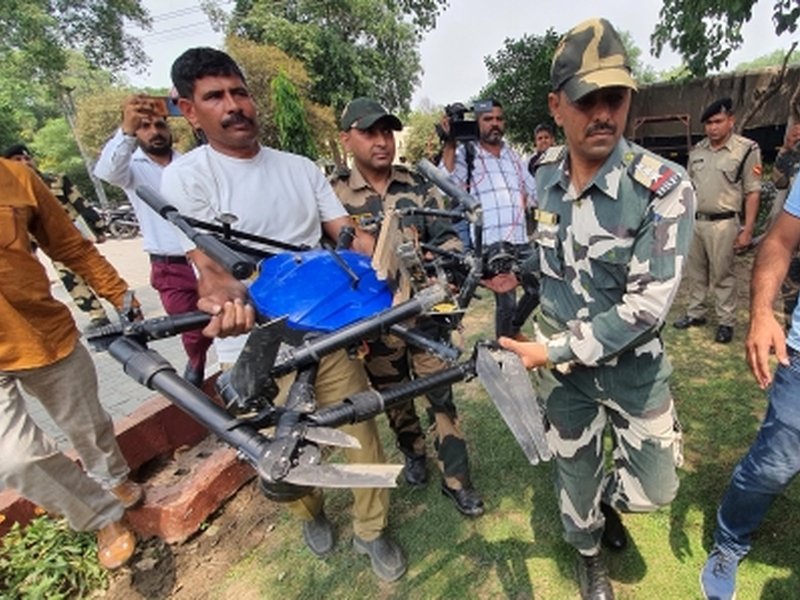
Another official said that there is also heightened drone activity in the bordering areas. The drones are sent in to drop off drugs and arms in Punjab. The intention is to revive the Khalistan movement there, officials say. The ISI has also instructed its proxy, the Lashkar-e-Taiba, to carry out a sustained campaign in Jammu and Kashmir whereby prominent individuals would be targeted and labelled anti-Pakistan and anti-Kashmir. This operation is aimed at maligning such individuals and attempting to get the locals to act against such persons.
Last week, the Lashkar-e-Taiba targeted noted counter-terrorism expert Junaid Qureshi. He has been critical of the ISI, and hence, the threat was issued to him. Qureshi’s father, Hashim Qureshi, was one of the hijackers of the Air India flight IC-405 in 1971. However, Qureshi does not subscribe to his father’s view.
Recently, the Gujarat ATS arrested a youth, originally from Uttar Pradesh, for propagating the ideology of terror groups such as the Jaish-e-Mohammed and Al Qaeda. Based on what his handlers advised him, he had been spreading the ideology of these terror groups. He also prepared a hit list of seven persons. Investigations found that he had plans to eliminate these persons with the intention of spreading panic in Gujarat.
Intelligence Bureau officials say that there is a clear pattern that can be found. The ISI wants to keep the Indian agencies busy and hence is pushing its agenda on a very large scale. The aim is to confuse the Indian agencies so that they end up making a mistake. The ISI would wait for such an opportunity before it attempts to carry out a major strike. Further, the agenda is also to recruit as many youth as possible. The ISI is ready to buy out individuals to further their cause.
Another official explained that in the months to come, Pakistan would continue to further a similar agenda aimed not only at confusing the agencies, but also with the intention of recruiting more youth. Pakistan wants terror in India to be completely homegrown in nature. This would spare them the trouble of infiltration and also give Pakistan the deniability factor during a terror strike. The homegrown network is being pushed hard after India changed its doctrine, in which it said that any act of terror would be considered an act of war and not cross-border terrorism.
--IANS
vn/skp