
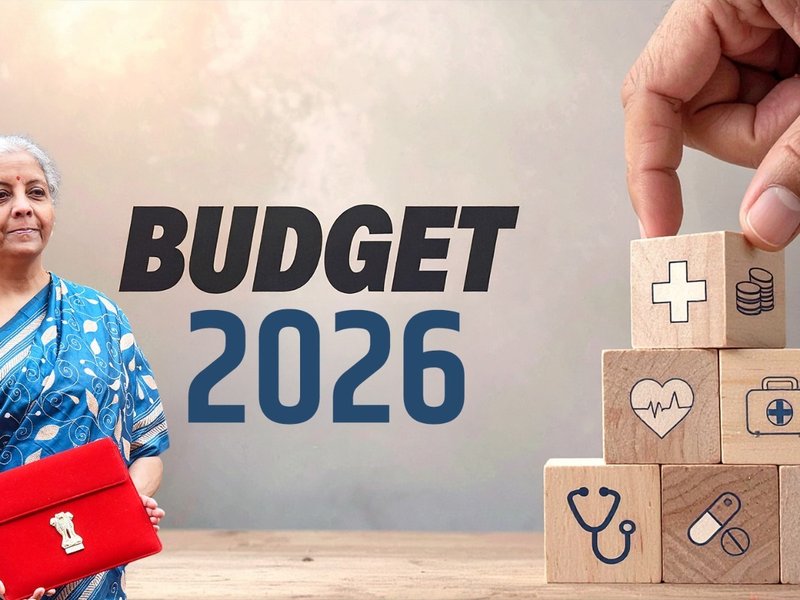
New Delhi, Jan 27 (IANS) Health experts on Tuesday urged the government to introduce tax-funded Universal Health Care, and boost resources at government hospitals in the upcoming Union Budget 2026.
The experts also highlighted the lack of funds to in public health care institutions to deliver adequate services to a large number of patients and stressed the need to expand PMJAY to include outpatient care.
“We advocate tax-funded Universal Health Care with a basic health package for all citizens and to increase public health allocation to 2.5-5 per cent of GDP, strengthening government hospitals and human resources,” said Dr Vinay Aggarwal, past National President, Indian Medical Association.
“The government should reform PMJAY to include outpatient care, realistic package rates, DBT, copayments, and timely reimbursements,” he added.
The expert also urged the government “to provide GST exemption on lifesaving equipment, consumables, and all vaccines".
A recent report by The Lancet Commission stressed that the public sector healthcare system is the backbone for achieving the universal health coverage goal. An accompanying Comment paper examined India’s progress towards universal health coverage and highlights structural weaknesses in the health system.
It particularly highlighted fragmented governance, poor coordination across levels of care, health services organised around institutions rather than citizens, and persistent gaps in quality, equity, and continuity of care as major barriers to UHC.
The paper suggested that India’s path to universal health care requires multiple programmes and noted that operating in silos can weaken accountability and service continuity.
Healthcare delivery must remain facility-centred rather than focused on patient journeys and long-term care needs. It also mentioned that weak referral systems and poor integration between primary, secondary, and tertiary services limit efficiency and outcomes.
The study stressed that policy intent alone is insufficient without institutional capacity to execute reforms.
“While over the last few years, the government has increased the allocation for healthcare in its budget, the continued prioritisation on capacity building has often left public healthcare facilities with insufficient funds to deliver adequate services to the large number of patients that they serve,” said Aditya Banerjee, Member at Medical Technology Association of India (MTaI).
“A deliberate shift in the public procurement criteria, from the lowest upfront price to the best long‑term value for the overall healthcare system, is essential for delivering better patient outcomes for every Rupee spent,” he added. Banerjee said that it will help avoid the spiralling healthcare budgets, that today is becoming unsustainable in many developed economies of the world.
--IANS
rvt/