
New Delhi, Jan 19 (IANS) Mob violence and arson following communal flare‑up have become a pattern in Murshidabad district of West Bengal, where fresh protests in Beldanga on Friday over the death of a migrant worker in Jharkhand spilt into the weekend.
Incidentally, former Trinamool MLA Humayun Kabir’s proposed Babri Masjid replica is also intended for Beldanga, which turned into a fortress on December 6 last year during the foundation stone laying event.
Riot police and central forces patrolled the streets even as visuals showed people carrying bricks on their heads thronging the venue. While Humayun Kabir, building a mosque, is not the point of contention, the fact that he chose the name of Babar and the day commemorating the pulling down of Ayodhya’s disputed structure for laying the foundation is of significance.
The district, with an estimated Muslim population of close to 70 per cent, is a tinderbox. In 2019, following the passing of the Citizen Amendment Act (CAA) in Parliament on December 13, violence rocked the district, where in Beldanga, a violent mob attacked the railway station the next day, vandalising the signalling system, a loco train, and other vehicles.
In April last year, violence broke out in several of Murshidabad’s towns following protests against the Waqf (Amendment) Act, 2025. Rampaging protestors vandalised properties, setting fire to homes, which led to prolonged unrest where many Hindu families were forcefully made to flee.
The Waqf protests led to multiple deaths, internet suspensions, widespread arson and destruction of Hindu properties, leading to displacements, with central forces being deployed after court orders. Those events heightened communal anxieties in neighbouring towns and fed into the Beldanga tensions by creating a charged local atmosphere.
The violent protests created a durable fault line in West Bengal politics, where mass demonstrations, counter‑mobilisation and a narrative of identity politics have since weaponised for electoral gain.
West Bengal’s Opposition parties, especially the Bharatiya Janata Party (BJP), allege tacit administrative support for arsonists. They also claim “an understanding” in allowing illegal immigrants from neighbouring Bangladesh, which has skewed the demography. Even during their long rule (1977–2011), the Left Front too allegedly targeted welfare and reservation policies to consolidate minority support, with an argument that resurfaces in contemporary debates about appeasement versus social justice.
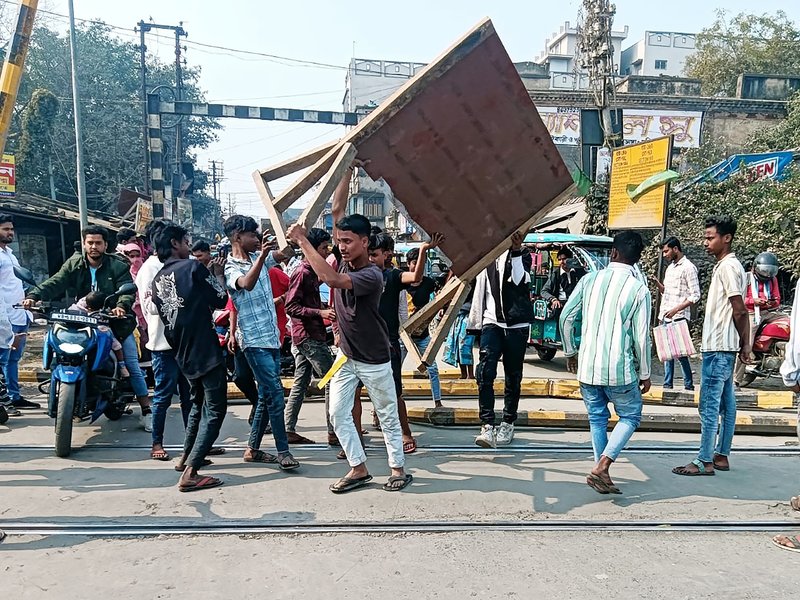
Under Mamata Banerjee-led Trinamool Congress rule, critics allege electoral engineering through reservation and welfare moves aimed at consolidating minority support. Late last week’s unrest in Beldanga involved roadblocks, stone‑pelting, mob attacks on journalists and around 30 arrests as police and Rapid Action Force conducted route marches to restore calm.
The railway station was again a target, and reports pointed to police inaction.
Courts have seen PILs seeking deployment of central forces amid fears of escalation. Shops were closed, and patrols intensified while local leaders and opposition figures demanded gubernatorial or central intervention.
Murshidabad has been a strong base for the ruling party. All three Lok Sabha constituencies in the district are now represented by Trinamool MPs. Of these, Murshidabad and Jangipur have been won by the party in the last two Parliamentary polls. Baharampur, which has been represented by Congress leader Adhir Ranjan Chowdhury for five consecutive terms, went to Trinamool’s Yusuf Pathan in last year’s Lok Sabha election.
Residents also complain of Pathan’s alleged indifference towards the region when the area is burning in communal flames. In Beladanga, the sitting MP remained elusive in the recent violence while Chowdhury was on the ground, even meeting the dead worker’s family.
Of the 20 Assembly segments in these Parliamentary constituencies (one seat is in Nadia district), 18 went to the Trinamool in the 2021 state poll. In the 2021 Assembly election, Beldanga constituency mandated Trinamool’s Hasanuzzaman Sheikh the victory over his closest BJP rival Sumit Ghosh by almost 54,000 votes. The clear division was apparent with the polarisation pushing the 2016 winner, Safiujjaman Sheikh of Congress, to a distant third position.
While the Congress candidate's vote share fell by over 36 per cent, the BJP consolidated its share by more than 14 per cent, and the Trinamool by about 23 per cent.
--IANS
jb/uk