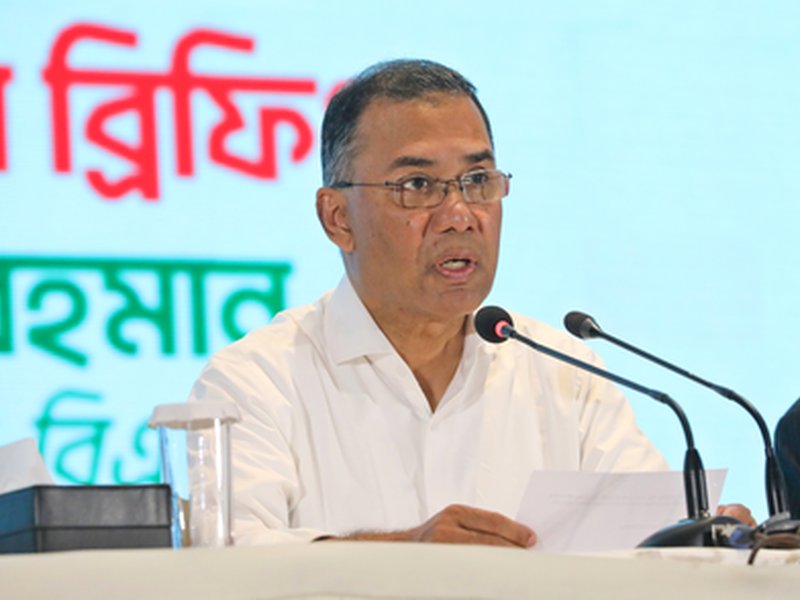
Dhaka, Feb 21 (IANS) Bangladesh’s Prime Minister Tarique Rahman on Saturday unveiled commemorative postage stamps to mark Language Martyrs’ Day and International Mother Language Day, local media reported.
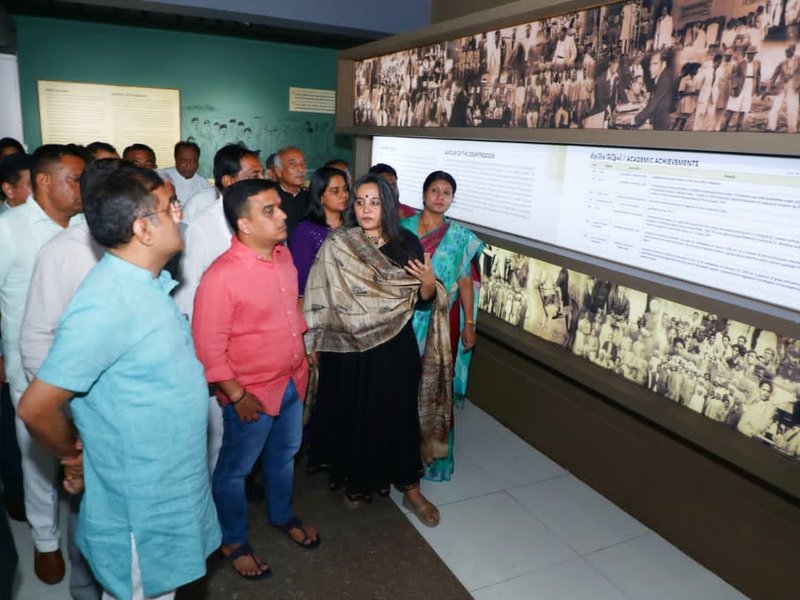
The stamps were released in the morning at the Prime Minister’s Office (PMO) in Tejgaon in the presence of several ministers and senior officials.
Prime Minister Rahman also paid tribute to the language martyrs, laying a wreath at the altar of the Shaheed Minar in Dhaka in memory of the martyrs of the Language Movement.
Ahead of the Prime Minister's tribute, President Mohammed Shahabuddin placed a wreath at the Shaheed Minar and stood in solemn silence in honour of the language martyrs.
Subsequently, cabinet members and other important dignitaries offered floral wreaths following the President and the Prime Minister, Bangladeshi daily Dhaka Tribune reported.
In a historic first, the leader of the Opposition and Bangladesh Jamaat-e-Islami’s chief, Shafiqur Rahman, paid rich tributes to the 1952 Language Movement martyrs by placing wreaths at the Shaheed Minar.
On the other hand, Rumeen Farhana, the newly elected independent MP from Brahmanbaria-2 constituency and a former BNP leader, was allegedly obstructed from offering tribute on the occasion at Shaheed Minar.
Citing local sources, Dhaka Tribune reported that BNP leaders and activists obstructed her from paying floral tributes at the memorial, forcing her to leave without honouring the Language Movement martyrs.
Following the incident, in the early hours of Saturday, her supporters set ablaze tree trunks and bamboo to block the Dhaka–Sylhet highway in Shahbazpur under Sarail upazila. The blockade led to a traffic jam stretching nearly 10 kilometres on both sides of the highway until police reached the spot to restore order.
Bangladesh is marking Language Martyrs’ Day on Saturday, paying tribute to the heroes of the 1952 Language Movement who laid down their lives to secure the rightful place of Bangla as the mother tongue.
On February 21, 1952, a police crackdown outside Dhaka Medical College killed Salam, Rafique, Shafique, Jabbar, and Barkat while they were demanding the recognition of Bangla as a state language of then-West Pakistan.
Their deaths ignited a larger movement that ultimately led to the independence of Bangladesh.
The Pakistani government officially recognised Bangla as a state language alongside Urdu on February 29, 1956. However, the language movement continued to fuel broader demands for political and cultural rights, ultimately leading to the 1971 Liberation War and the creation of Bangladesh as an independent nation.
--IANS
scor/rs