
New Delhi, April 4 (IANS) Assam Chief Minister Himanta Biswa Sarma recently underscored the importance of Barak Valley in the state’s poll battleground and the area’s role expected in the ruling Bharatiya Janata Party (BJP) achieving a target of 90 to 100 seats in the state Assembly that has a total strength of 126 legislators.
In 2016, the BJP broke the Congress’ 15-year rule and inaugurated its political dominance in the Northeast, forming a government in Assam with support from its allies. But since it assumed power, the party has repeatedly plateaued at 60 seats, falling short of the halfway mark by itself, without a coalition.
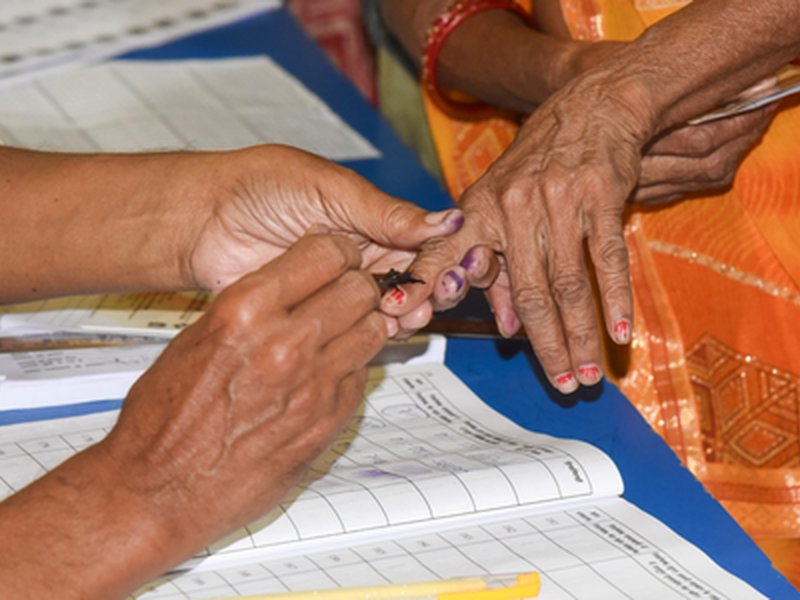
With Assam elections scheduled for April 9, Barak Valley is among the state’s regions gearing up for a fiercely competitive political battle.
In the 2024 Lok Sabha election, the BJP retained the two Parliamentary seats of Karimganj and Silchar constituencies since it defeated the All India United Democratic Front (AIUDF) and Congress candidates, respectively, in 2019. The party also led in four of the six Assembly segments that comprise Karimganj Lok Sabha constituency and in six of the seven Vidhan Sabha seats that make up Silchar.
Incidentally, the 2024 Lok Sabha election was held after the Election Commission carried out its delimitation exercise in the state.
The upcoming Assembly election will thus be the first state poll to be held after the reorganisation process. Before delimitation, the Congress and AIUDF held sway in the region where, according to the last held Census in 2011, Hindus made up over 18 lakh of a total population of more than 36 lakh, Muslims about 17 lakh, Christians some 58,000, while others comprised the rest.
In percentage terms, the religious composition of the valley’s population stood at Hindus comprising 50%, Muslims 48.1%, Christians 1.6%, and others 0.3%. Among districts, in 2011, Hindus were the majority in Cachar at around 60%, with Muslims making up about 38%. In Silchar, the numbers stood at 72% and 26.4% of the district's population, respectively.
Meanwhile, Muslims were the majority in Hailakandi district, constituting 60.3%, and made for 56.3% in Karimganj (now Sribhumi). Incidentally, Hailakandi and Karimganj towns have a Hindu majority, the percentage being 67.3% and about 86.6%, respectively, as of the 2011 Census.
The Chief Minister appears confident in the BJP winning the Hailakandi Assembly seat despite the Opposition Congress claiming a surge in favour of its alliance bloc.
However, in the rural elections held last year, the BJP emerged as a dominant political force in Barak Valley, scoring major gains in the region. It swept the polls in Cachar and Sribhumi districts, while in Hailakandi the party shared an equal number of Zila Parishad seats. A significant challenge facing both the ruling and the Opposition bloc is that of a split in its larger vote base.
Though a polarisation on religious grounds may stand to help the ruling party, Sarma has reiterated caution against vote splitting. If independent candidates manage to split their base, even to a small part, the Opposition bloc would stand to gain.
On the other hand, the Congress and the AIUDF, contesting separately this time, also may be affected in case of a division in minority votes. The final outcome will be known once the final results are announced on May 4.
--IANS
jb/uk