
New Delhi, Jan 22 (IANS) Assam’s Republic Day tableau this year will shine a national spotlight on Asharikandi, a renowned terracotta craft village in Dhubri district, celebrating the state’s rich riverine culture and the spirit of self-reliance rooted in traditional livelihoods.
The tableau was previewed for media persons on Thursday at the Rashtriya Rangshala Camp in the national capital in the presence of Nodal Officer Bikram Newar and officials of the Cultural Affairs Department, Government of Assam.
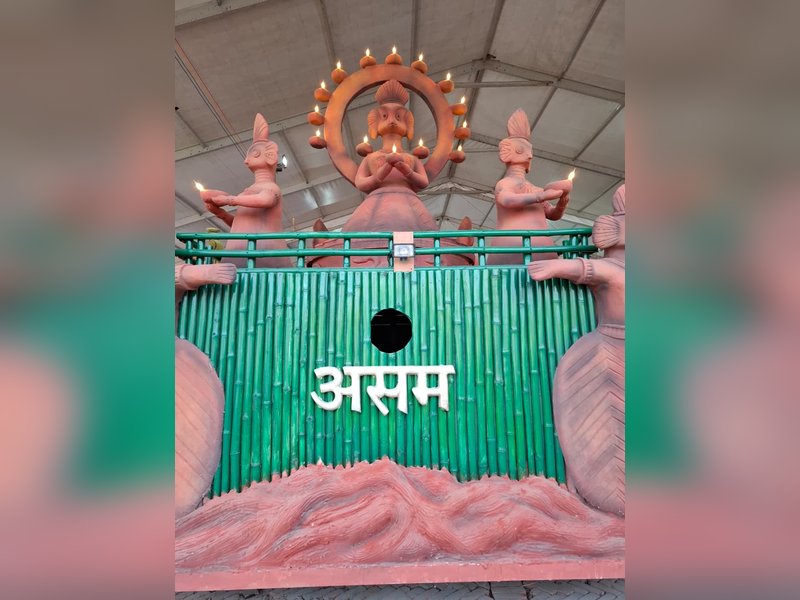
At the centre of the tableau is a striking terracotta installation featuring a towering doll holding earthen lamps arranged in a circular formation, symbolising continuity, light and the enduring legacy of Assam’s indigenous crafts.
The tractor-mounted structure is flanked by earthen sarai placed along bamboo fencing, underscoring the importance of bamboo as a sustainable resource and its role in the socio-economic life of the state. The trailer portion takes the shape of a traditional Mayurpangkhi boat, reflecting Assam’s intimate relationship with its rivers.
Artisans are shown at work, moulding hiramati (local clay) into idols of deities such as Ganesh, Kartik, Durga, Lakshmi and Saraswati, offering a live depiction of the terracotta-making process.
A traditional pall (sail canvas) at the rear enhances the authenticity of the riverine theme. Conceptualised around the theme of Atmanirbhar Bharat, the tableau presents Asharikandi as a model of cultural entrepreneurship, where generations of artisans have sustained livelihoods through age-old skills adapted to contemporary markets.
The village stands as a symbol of self-reliance achieved through the preservation and promotion of traditional knowledge systems.
Located in western Assam’s Dhubri district, Asharikandi is recognised as the largest terracotta and pottery craft cluster in the state. Its artisans are known for creating puttola—terracotta toys and idols—including the iconic Hatima doll.
The craft tradition dates back over a century, tracing its roots to pottery communities that migrated from erstwhile East Bengal in the early 19th century.
The village received national recognition through the late Sarala Bala Devi, who won the National Award for Terracotta Craft in 1982.
In March 2024, terracotta crafts of Dhubri district were accorded the Geographical Indication (GI) tag, further cementing Asharikandi’s status as a centre of excellence.
Through its Republic Day tableau, Assam brings a living craft tradition to Kartavya Path, celebrating heritage, resilience and self-reliance, an official release mentioned.
--IANS
tdr/dan