
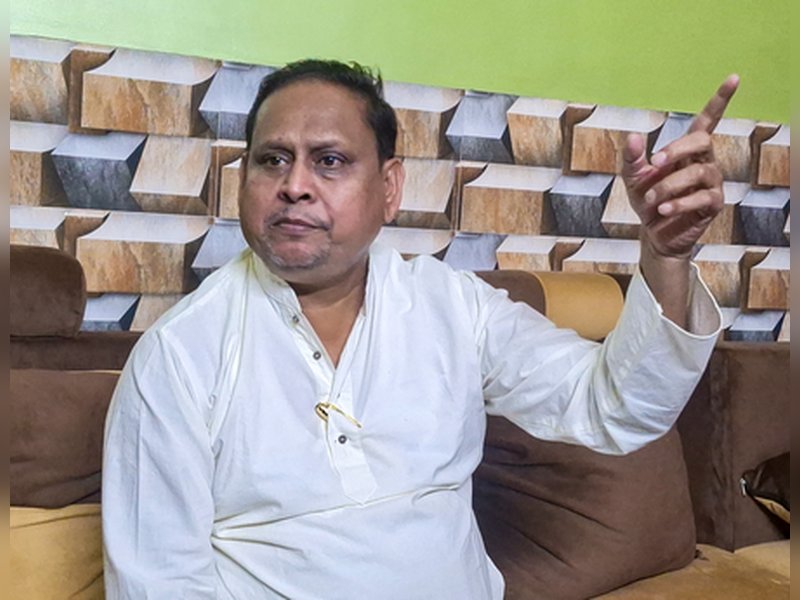

New Delhi, Dec 22 (IANS) West Bengal's IPS officer-turned-politician Humayun Kabir may not be the first leader to eye a favourable mandate from more than 30 per cent Muslim population in the state, but perhaps the leader holding an extra edge in capturing religious sentiments with his intent of building a "Babri Masjid" in Murshidabad district.
Most political parties have been influencing minority voters in this state which shares a border with Bangladesh -- that has witnessed immigration through times, many of which are reportedly undocumented.
The 2011 Census of India recorded West Bengal's population at more than nine crore with a Muslim population comprising nearly 27 per cent of the total number.
The estimated number in current projections reflect an additional increase of around nine per cent across the state, with Muslims forming the majority of the population in some districts, including Murshidabad, Malda, and Uttar Dinajpur.
While most of the state's political entities -- including the Congress, the Left Front, and the ruling Trinamool Congress -- have publicly exhibited minority leanings, the principal Opposition Bharatiya Janata Party (BJP) labelled it as "minority appeasement".
The BJP has alleged political parties like the Congress, CPI-M, and the Trinamool Congress, of conspiring with conservative and divisive elements in Muslim communities for electoral gains without working for their real upliftment.
Much like Humayun Kabir's claim that his just-launched Janata Unnayan Party (JUP) being an "anti-BJP, anti-Trinamool" and "secular" political outfit, the Indian Secular Front (ISF), was formed ahead of the 2021 Assembly elections apparently aimed on similar lines.
And much like JUP, the ISF -- which was founded by the Furfura Sharif Sufi shrine's cleric Pirzada Abbas Siddiqui -- had announced its objective as to ensure "social justice" for the Muslims and Dalits in the state.
While launching the JUP, Humayun Kabir almost echoed the words that the Abbas Siddiqui had said on ISF, that in West Bengal, neither during the Congress regime or the Left, nor of Trinamool Congress, was anything done for the betterment of Muslims, Dalits, and Adivasis (tribals).
As JUP intends to make its debut in the 2026 state Assembly election, the ISF began its foray in 2021, then contesting in alliance with the Congress and the Left Front.
While Humayun Kabir himself represented Trinamool Congress in the state Assembly, Abbas Siddiqui's uncle Toha Siddiqui has had close ties with the ruling party.
In 2021, the Asaduddin Owaisi-led All India Majlis-e-Ittehadul Muslimeen (AIMIM) had reached out for a poll alliance with ISF to mark its entry in West Bengal.
It did not materialise, forcing Owaisi to withdraw his party from the political contest.
Four years later, AIMIM's flags were being waved at Humayun Kabir's Monday event marking the launch of his own party.
However, unlike 2021, the Congress and Left Front are still waiting and watching since the last tie-up did not augur too well at the hustings.
While the two parties failed to open their accounts, the ISF bagged a single seat in the Muslim-dominated Bhangar constituency in South 24 Parganas district near Kolkata.
Since then, it has made some inroads in state politics where in 2023, the ISF cornered 325 seats in gram panchayats, 10 in panchayat samitis, and one in zila parishad, amid a contentious and bloody process that the ruling Trinamool Congress swept.
In the three-tier panchayat polls, the Congress-Left alliance again had an understanding with the ISF.
However, the ISF snapped its ties with the allies before the 2024 Lok Sabha elections, with its candidates contesting independently in several seats.
Now, according to a section among Humayun Kabir's followers, JUP may propose a "anti-BJP, anti-Trinamool" united front before the 2026 state polls.
How far the others will agree is yet a question but AIMIM appears to have already acquiesced.
In case of a fractured mandate from the minority voters, West Bengal's ruling party stands to lose the most.
--IANS
jb/khz