

New Delhi, Jan 8 (IANS) Venezuela's political crisis has once again captured global attention.
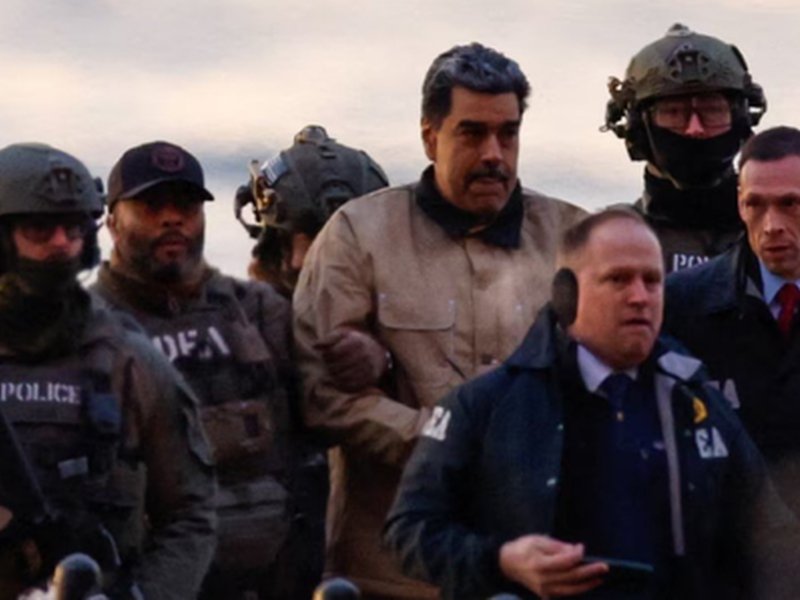
On January 3, 2026, Venezuelan President Nicolas Maduro was captured by the US military and taken into American custody.
The Trump administration has said that it will oversee the South American nation through "safe political transition".
The US administration claims this move is intended to restore democracy and stability in Venezuela.
However, from an international law perspective, it constitutes a clear violation of national sovereignty and has drawn widespread criticism as a blatant act of intervention into another nation's sovereignty.
United Nations members, human rights organisations, and global observers have condemned the incident as a modern example of imperial overreach.
The 2025 Nobel Peace Prize was awarded to Maria Corina Machado, a prominent Opposition leader known for her firm anti-Chavismo and anti-Maduro stance.
Born in Caracas' elite and politically active Altamira neighborhood, Machado has long been involved in pro-democracy activism and human rights advocacy.
Though professionally trained as an engineer, her political profile is built on her relentless opposition to Venezuela's socialist government and her advocacy for democratic reforms.
The Nobel Committee cited her efforts to protect democracy and uphold minority rights in Venezuela as the basis for the award.
The prize was announced on October 10, 2025, and formally presented in Oslo on December 10, 2025.
Interestingly, this recognition came just weeks before Maduro's removal, highlighting the sharp contrast between international praise for pro-democracy actors and the chaotic reality on the ground.
The Political Context of the Nobel Peace Prize
The 2025 Nobel Peace Prize sparked controversy, with some analysts speculating that former US President Donald Trump could have been a contender due to his involvement in international peace negotiations. Ultimately, the committee awarded Machado, emphasising her struggle for democratic governance and human rights.
Machado could not attend the Oslo ceremony in person and sent her daughter Ana Corina Sosa to receive the award on her behalf, delivering a speech that underscored the ongoing fight for democracy in Venezuela.
Public reaction within the country has been mixed: supporters hailed the award as a beacon of hope, while critics accused it of serving foreign political agendas.
Venezuela now faces an uncertain future.
The arrest of an elected President has plunged the country into uncharted political territory.
International observers caution that while the US frames its actions as promoting peace, these measures may instead spark a new cycle of instability.
The recent events underscore a recurring pattern: in the name of peace, foreign powers often intervene, leaving chaos behind.
The Venezuelan case is a stark reminder that awards and diplomacy can sometimes mask real-world political maneuvering.
(The writer is a political analyst and independent commentator)
--IANS
mr/khz