
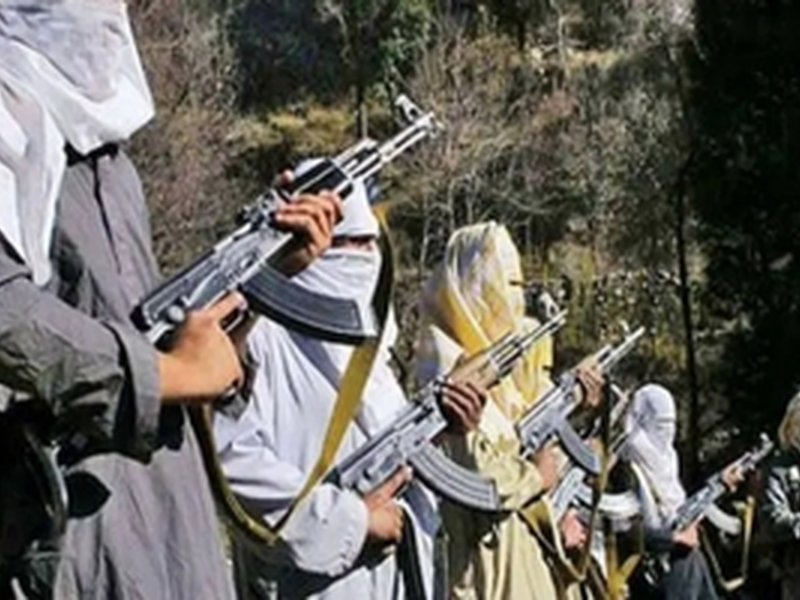
New Delhi, Jan 22 (IANS) The growing alignment between terror groups Lashkar-e-Taiba (LeT) and Islamic State Khorasan Province (ISKP) demonstrates the strategic manoeuvring of Pakistan's Inter-Services Intelligence (ISI), a report highlighted while detailing a recent episode in which ISKP coordinator Mir Shafiq Mangal presented a weapon to LeT leader Rana Mohammad Ashfaq, symbolising a partnership that brings together jihadist and sectarian factions under ISI oversight.
“Pakistan’s Deep State has turned terrorism into a deliberate instrument of state policy, commissioning rather than condemning it. This calculated strategy is playing with fire, demonstrated by a troubling consolidation among terrorist groups under the orchestrating hand of the Inter-Services Intelligence. Central to this operation is the ISI, which acts not just as a protector but as the architect, bringing together groups like Lashkar-e-Taiba, Jaish-e-Mohammad, Islamic State Khorasan Province and Hamas into what can be described as an ‘unholy alliance,’ a report in India Narrative detailed.
“The aftermath of Operation Sindoor, which severely impacted LeT’s headquarters in Muridke and exposed the underlying connections, saw the ISI double down on its efforts. It ordered LeT and JeM to work together as a “pack” rather than as isolated factions. Army officers are seen openly attending the funerals of terrorists, while politicians share platforms with LeT deputy Saifullah Kasuri. Rauf, a prominent leader within LeT, proudly declares the ease of jihad recruitment under state support during parades attended by Talha Saeed, son of Hafiz Saeed,” it added.
According to the report, the ISI-linked network combines LeT’s urban logistics and operatives with JeM’s suicide bombing capabilities, strengthened by tactical support from Hamas, to pursue a strategy of sustained violence against India.
It also stressed that Indian forces equipped with cutting-edge technology are well-prepared to confront the challenges posed by new front fusion,
“Drone jammers, anti-drone swarms, and laser countermeasures are in place to prevent IED drops. Precision artillery, human performance-enhancing exosuits, and rapid-response units from the Para Special Forces stand ready to handle hybrid fidayeen and urban sieges. Sensor grids along the Line of Control and strategic helicopter pads enable swift interventions; cyber units focus on disrupting hawala networks and propaganda efforts. The Indian Armed Forces are patrolling the skies to ensure a denial of air support over Jammu and Kashmir, all while safeguarding against potential leaks of foreign intelligence,” the report noted.
--IANS
scor/as